




Why KISS’ “Silly” Makeup Made Them Superstars
via "Luis Garcia" / Youtube
There is a photograph tucked away somewhere: a young fan and his father standing in their living room before a first concert. The son’s face is painted like Paul Stanley, the father’s like Gene Simmons—a shared tribute before stepping into the world of Kiss.
At the arena, it quickly became clear they were far from alone. Fans filled the space, their faces meticulously painted in homage to the band. It wasn’t just admiration—it was participation in something larger, a visual extension of the Kiss phenomenon.
For a first concert experience, Kiss set an impossibly high standard. The music delivered exactly what fans expected—classic, booming stadium rock—but it was the spectacle that elevated the night. Pyrotechnics exploded into the rafters, flames surged along the stage, and Gene Simmons was hoisted high above the crowd to unleash a thunderous bass solo. It was overwhelming in the best possible way. For a young fan, it wasn’t just a performance—it was unforgettable.
The Look That Built the Legend
Over time, that early experience evolved into a lasting appreciation for the band. Despite criticism from peers and even fellow music writers, the admiration remained firm. Still, one undeniable truth becomes clearer with hindsight: Kiss owes much of its enduring success to its iconic makeup.
To understand this, one must return to early 1970s New York, where Paul Stanley and Gene Simmons first met. Both were playing in separate bands when they connected at a mutual friend’s apartment. After jamming together, Simmons saw immediate potential—but Stanley was less certain.
“I think he thought Lennon, McCartney and Gene were the only three songwriters in the world,” Stanley said. While he respected Simmons’ musical ability, he questioned how collaboration would work, adding, “All of a sudden he had to make room for a fourth.”
Eventually, Stanley agreed to move forward, and the foundation of Kiss was formed. Inspired in part by the unified image of 1960s British bands, they set out to create something visually distinct.
“Those ‘60s British groups all looked like real bands,” he said. “No member of The Beatles could have fit into the [Rolling] Stones. No member of The Who could have been in the Dave Clark Five. You had unified images of those bands, and at the same time, there was an emphasis on the individual members.”
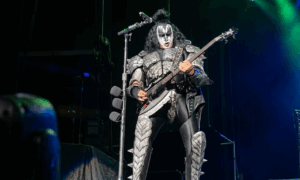
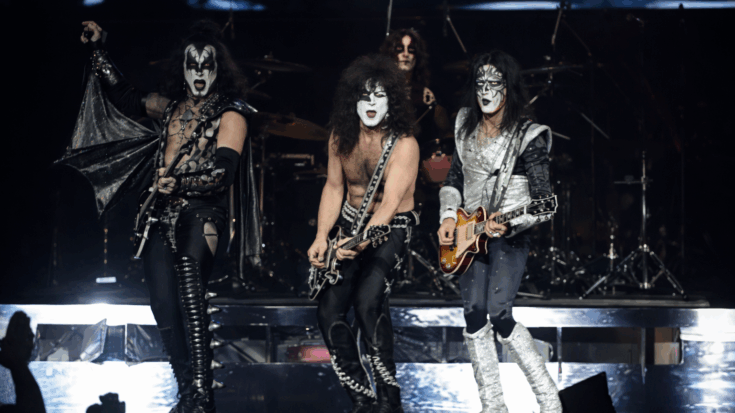
Kiss expanded on that idea, using makeup to create both unity and individuality. Each member became a character, and together they formed a cohesive visual identity that amplified their live shows. While their music was solid, it was their theatrical presentation that truly set them apart.
Their impact extended beyond their own fanbase. Even alongside heavyweights like Black Sabbath, Kiss often stole the spotlight—not necessarily through superior songwriting, but through sheer spectacle.
“Kiss was the first one to use pyro,” said Geezer Butler. “It was a completely new direction for people. People had to start thinking about stage production after Kiss. It was tough to follow them. We went on as just an ordinary band, no effects or anything, and everybody else still had their mouths wide open from seeing Kiss.”
Unity in Disguise
The brilliance of Kiss’s image extended far beyond the stage. It became a mechanism for survival during periods of internal tension. Like many successful bands, creative differences began to surface, threatening to pull them apart.
Instead of collapsing, Kiss reframed the narrative. In the late 1970s, as divisions grew, all four members released solo albums simultaneously. Rather than signaling a breakup, the move felt deliberate—almost cinematic. Each member, already perceived as a larger-than-life character, seemed to be stepping into their own storyline.
Paul Stanley later admitted he never wanted to make a solo record. “I didn’t have a choice,” he said. “The idea was to present group unity, which is kind of interesting, because the solo albums came out of the band being on the verge of splitting up. In the long run, it was putting a Band-Aid on a serious wound.”
That illusion of unity carried into their next release, Dynasty. The album’s shifting styles—from rock to funk to disco—reflected the band’s internal diversity. Yet, rather than alienating audiences, it became one of their most commercially successful records.
Gene Simmons attributed this flexibility to their strong visual identity. “We also took pride in having the same freedom The Beatles had,” he said. “Their philosophy was, ‘No matter what kind of music we do, it’s still The Beatles’. That’s what was amazing about them… The Beatles were not trapped in that way. They could do music hall, psychedelia, anything, and they did. Yet somehow it always sounded like The Beatles.”
This concept allowed Kiss to weather lineup changes as well. When members like Ace Frehley and Peter Criss departed, their replacements simply adopted the makeup. To fans, the characters remained intact—even if the individuals behind them changed.
More Than Just Music
This is not a dismissal of Kiss’s musical achievements. Their catalog remains powerful and influential, and their live energy is undeniable. However, to separate their success from their visual identity would be to ignore a fundamental truth.
The makeup was more than a gimmick—it was a strategy, a shield, and a unifying force. It elevated their performances, sustained their brand, and allowed them to navigate challenges that might have ended other bands.
Kiss proved they could exist without it, particularly during the Lick It Up era. But without the makeup, they were simply a rock band. With it, they became icons.