




This 1969 Track Turned a Simple Track Into Rock’s Most Celebrated Guitar Riff
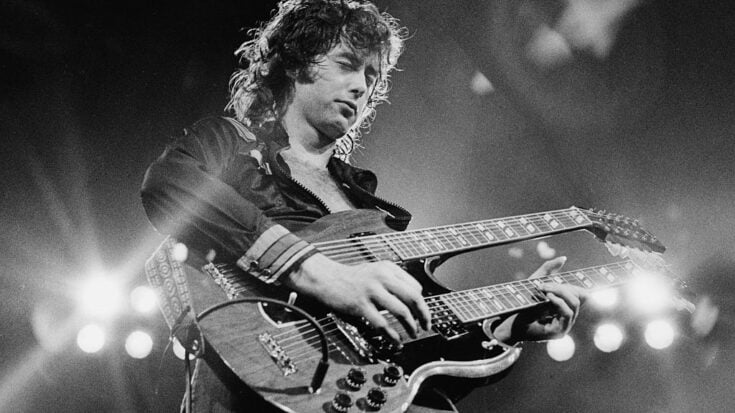
Guitarist Jimmy Page performing with his band 'Led Zeppelin' at the Seattle Coliseum, June 1972. (Photo by Robert Knight Archive/Redferns/Getty Images)
A breakthrough moment in chart history
When the track arrived in 1969 as the opening piece on Led Zeppelin’s second album, it marked a turning point for the band in the United States. It quickly became their first single to reach the Top 10, ultimately climbing to No. 4 on the Billboard Hot 100. For a hard-edged rock recording at the time, that level of mainstream success was unusual and significant.
Over time, the song’s reputation only grew. It has repeatedly appeared in major rankings of influential music, including placement at No. 75 on Rolling Stone’s 500 Greatest Songs list and No. 3 on Q magazine’s guitar-focused countdown. Industry voices continue to treat it as one of the most important recordings in rock.
The origin of a defining sound
The central guitar idea behind the track was created by guitarist Jimmy Page in 1968 while he was spending time on a houseboat along London’s River Thames. He later presented the idea to his bandmates, who initially thought it might have come from earlier live performances. Page clarified that it was entirely new, built from scratch rather than borrowed from older material.
That simple clarification became part of rock folklore, especially as the riff took on a life of its own after release.
Why the riff stands apart
The recording contains many striking elements: pounding drums, raw vocals, and a hypnotic groove. Still, listeners consistently return to the guitar line as the core of its identity. Page performed it using layered string techniques that created the impression of multiple guitars playing together, even though it came from a single instrument.
In rock history, few musical ideas have been as instantly recognizable as the driving guitar figure that opens Whole Lotta Love by Led Zeppelin. Decades after its release, that short burst of sound is still treated as a defining moment in electric guitar music, shaping how later generations understood power and simplicity in rock composition.
Influence beyond its era
The impact of the song stretched far beyond its initial chart run. It encouraged other musicians to rethink how riffs could drive a track rather than simply support it. Earlier bands such as The Beatles had already revived interest in guitar hooks through songs like “Day Tripper” and “Paperback Writer,” but those moments were often brief sections within larger compositions.
In contrast, Page’s idea runs continuously through the structure of “Whole Lotta Love,” shifting only slightly as vocals enter. Even then, the underlying pattern remains steady and forceful, creating a sense of constant motion rather than interruption. That persistence is part of why it continues to be studied and copied.
The riff’s structure, repetition, and intensity helped redefine what a rock introduction could achieve. Instead of acting as a short introduction, it became the backbone of the entire performance. That approach influenced countless bands that followed, many of whom still reference it when discussing essential guitar work in modern rock music.