The Rise of Nostalgia in Guitar Sales
via "LiveRockofAges" / Youtube
While every member of a rock band contributes to its overall sound, the guitarist has long been central to shaping the genre’s identity. From the earliest days of rock’s rise, it has been the instrument’s riffs, solos, and tonal experimentation that have unified and elevated the music.
When considering the figures who propelled rock into global prominence, attention inevitably turns to trailblazers such as Jimi Hendrix, Jeff Beck, Eddie Van Halen, Jimmy Page, Keith Richards, and Slash. Each brought a distinctive approach to the instrument, crafting memorable riffs and solos that not only defined songs but also expanded the possibilities of rock music itself.
The genre’s explosion sparked a cultural shift, introducing the archetype of the rock star while pushing the boundaries of sound and expression. Rock became more than entertainment—it evolved into a medium capable of reflecting social change and conveying the full spectrum of human emotion. As a result, listeners formed deep connections to the music, often seeking tangible ways to hold onto something inherently intangible.
Owning History: The Rise of Guitar Collecting
For many fans, collecting vinyl or merchandise provides a physical link to their favorite artists. For others, however, those items are not enough. Instead, they pursue instruments once played by legendary musicians—objects that represent not just fandom, but participation in music history.
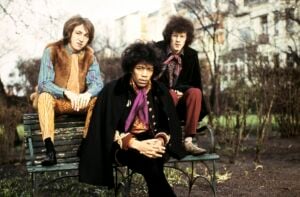
Among the most revered figures in this regard is Jimi Hendrix, whose expressive and flamboyant playing style transformed the role of the guitar. His solos were not simply technical displays; they were extensions of the songs themselves, capable of conveying themes of love, conflict, or social unrest through sound alone. Recalling his first encounter with Hendrix’s performance, Jeff Beck said:
“He came on, and I went, ‘Oh, my God’. He had the military outfit on and hair that stuck out all over the place. They kicked off with [Bob Dylan’s] ‘Like a Rollin’ Stone’, and I thought, ‘Well, I used to be a guitarist’.”
Hendrix’s appearance at the Woodstock Festival remains one of the defining moments in rock history. The guitar he played during that performance later sold for $2 million—an impressive figure that has since been eclipsed by more recent sales.
In recent years, the value of iconic instruments has surged. David Gilmour’s black Stratocaster sold for a record-breaking $14.5 million, a dramatic increase from its $5 million purchase price in 2019. Not far behind, Jerry Garcia’s guitar fetched $11.5 million. These sales underscore a growing demand for instruments tied to pivotal moments in rock’s history.
Nostalgia, Legacy, and the Modern Guitarist
The escalating value of these guitars speaks to more than simple market trends—it reflects a deep sense of nostalgia and reverence for rock’s formative years. While contemporary musicians continue to produce exceptional work, the genre itself is no longer in a state of rapid evolution.
Modern guitarists are often tasked with making every solo count, ensuring it enhances the emotional depth of a track rather than serving as mere embellishment. This level of intentionality has led to increasingly expressive performances. However, unlike their predecessors, today’s players are operating within an already established musical framework.
By contrast, pioneers like Jimi Hendrix were redefining the language of rock in real time. Similarly, David Gilmour and Jerry Garcia are remembered not only for their technical skill but also for their roles in shaping entire movements, from psychedelic rock to the broader countercultural wave.
As time passes, these instruments have taken on new significance. They are no longer viewed simply as tools of performance, but as cultural artifacts—symbols of moments that helped define modern music. For collectors, owning such a guitar offers more than prestige; it provides a tangible connection to a transformative era.
With that distance from rock’s golden age continuing to grow, the value of these instruments is likely to rise even further. It is not a reflection of declining quality in contemporary music, but rather an acknowledgment that certain moments in history carry a weight that cannot easily be replicated.