Five Pink Floyd Songs Some Say Should Be Forgotten

via "David Gilmour" / Youtube
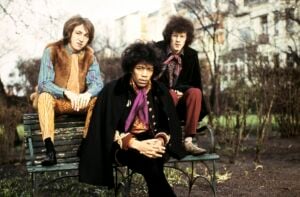
Here’s a fascinating (and maybe shocking) piece of music trivia: Jimi Hendrix wasn’t exactly a fan of Pink Floyd—or at least not of the wave of psychedelic bands they were part of at the time.
In the late 1960s, psychedelic music was blossoming with wild sounds, extended jams, and brilliant light shows. But all that spectacle sometimes got in the way of the music itself for Hendrix. He believed too many bands relied on visuals and strange effects instead of strong songwriting. As he once said:
“Here’s something I hate, man. When these cats say, ‘Look at the band. They’re playing psychedelics!’ What they are doing is flashing lights on them and playing ‘Johnny B. Goode’ with the wrong chords. It’s terrible.”
It’s a biting critique—and one that, in a way, applies to early Pink Floyd.
Jimi Hendrix died in 1970, just as Pink Floyd were beginning to discover their true identity and evolve into the iconic band they would become, known for their expansive concept albums and polished soundscapes. In those early years, however, they were still experimenting—testing limits and sometimes missing the mark entirely.
That’s the nature of being an experimental band: not everything works. You have to push boundaries, challenge yourself, and occasionally release material that doesn’t quite land. Pink Floyd eventually mastered this process, but along the way, they produced a few tracks that they themselves seem to regret.
Sure, their discography is filled with timeless classics, but there are songs scattered throughout their early years (and even later) that feel like rough drafts. In fact, some of these tracks are so unfocused or awkward that even band members have openly admitted they would rather forget them.
Here are five Pink Floyd songs that, for one reason or another, might have been better left unheard.
5. Point Me at the Sky
In a curious twist, one of Pink Floyd’s more notable singles is also among their weakest. “Point Me at the Sky” was released during a crucial transitional period for the band. Their original frontman and creative force, Syd Barrett, had recently departed, and the remaining members were still figuring out how to move forward without him.
Roger Waters and David Gilmour attempted to capture some of Barrett’s eccentric songwriting magic, but it never quite came together.
Still, the failure proved valuable. It taught them that imitating Barrett was not the way forward. Instead, they needed to forge a new direction—one that would evolve into their signature style of expansive, conceptual compositions filled with rich storytelling and layered sound.
The song played a role in shaping their future, but the track itself falls short. It feels tentative, like a band trying on someone else’s identity. As Waters later reflected, it was “one notable failure when Syd left the band.”

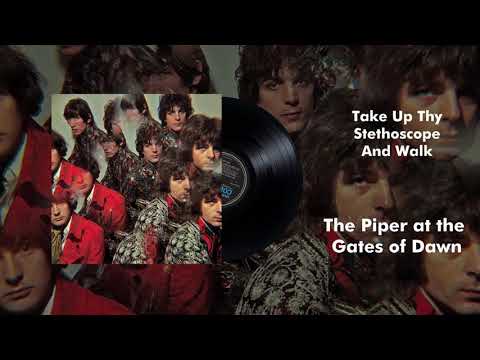
4. Take Up Thy Stethoscope and Walk
Pink Floyd’s debut album, The Piper at the Gates of Dawn, is widely praised for its bold originality. Many fans and critics consider it an early blueprint for progressive rock, full of inventive ideas and groundbreaking concepts.
However, not every experiment on the album succeeds. “Take Up Thy Stethoscope and Walk” ventures so far into unpredictability that it loses any clear sense of direction. Rather than feeling innovative, it comes across as unfocused and difficult to follow—more like an unstructured jam session than a fully realized song.
Even Waters has spoken critically about that era. Reflecting on the album, he admitted:
“I don’t want to go back to those times at all. There was nothing ‘grand’ about it. We were ridiculous. We were useless. We couldn’t play at all, so we had to do something stupid and experimental.”
It’s a brutally honest assessment—and one that helps explain why some early tracks are more confusing than compelling.
3. Remember a Day
Sometimes, the clearest sign that a song doesn’t quite work is when its own creator avoids it. That’s the case with “Remember a Day,” written by keyboardist Richard Wright.
The track has a whimsical, almost carnival-like quality that makes it stand out—but not necessarily in a positive way. It doesn’t so much clash with Pink Floyd’s style as it feels oddly misplaced, as though it belongs somewhere else entirely.
Wright himself later admitted he had little interest in revisiting those early recordings. In fact, he largely avoided them. “They’re kind of an embarrassment,” he said. “I don’t think I’ve listened to them since we recorded them. That was a learning curve. Writing these songs made me realize that I’m not a lyricist. But you have to try it to find out. The lyrics are appalling, terrible—but a lot of lyrics were terrible in those days.”
His remarks highlight an important truth: even great musicians go through difficult creative phases. “Remember a Day” may not be among their strongest songs, but it reflects Wright’s growth as an artist.

2. The Narrow Way
Ummagumma is one Pink Floyd album that seems to unite the band, for all the wrong reasons. Its highly experimental structure gave each member significant creative independence, but that freedom often resulted in music that felt disjointed and overly complex.
A prime example is “The Narrow Way,” largely driven by Gilmour. The track is heavily overdubbed and packed with ideas, making it feel less like a cohesive song and more like a collection of loosely connected concepts.
Gilmour later admitted the piece came from uncertainty rather than inspiration. At the time, he was still new to writing music independently and was essentially learning as he went. “It was just desperation, really, trying to think of anything to do, to write myself,” he said. “I’d never written anything before. I just walked into a studio and started waffling around, gluing bits and pieces together. I haven’t heard it for years. I don’t know what it feels like.”
That candid reflection says it all—“The Narrow Way” is less a finished work than a snapshot of an artist learning through trial and error.

1. Have a Cigar
Unlike the other songs on this list, “Have a Cigar” isn’t included because it is poorly constructed or overly experimental. In fact, it appears on one of Pink Floyd’s most celebrated albums, Wish You Were Here.
So why include it? Because it highlights a deeper issue—one that would eventually contribute to tensions within the band and their eventual breakup.
Written by Waters, the song criticizes the music industry’s greed and superficiality. However, not everyone in the band agreed with how that message was delivered. Gilmour, for instance, declined to sing it, as he did not connect with its tone. As a result, the band brought in guest vocalist Roy Harper.
Harper delivered a distinctive performance, but it wasn’t exactly what Waters had envisioned. Looking back, Waters expressed regret:
“He was singing some kind of parody and I don’t appreciate that. I never liked it, I regret it. I think if I’d stuck with it, I would have done it better. I think if I’d sung it, it would have been more vulnerable and less cynical than the way he did it.”
It’s one of the rare cases where a strong song is overshadowed by artistic disagreements. While “Have a Cigar” remains popular with fans, it also marks an early sign of fractures within the band.

Concluding Remarks
Pink Floyd’s legacy is built on innovation, risk-taking, and a willingness to explore new ideas. That same fearlessness enabled them to create some of the greatest albums in rock history.
However, experimentation always comes with a downside. For every groundbreaking song, there is often another that falls short. Pink Floyd’s missteps, however, were crucial to their success. Each imperfect track and failed idea brought them closer to the sound that would ultimately define them.
In a way, even the songs that fans—and the band themselves—might wish didn’t exist serve an important purpose. They remind us that artistic growth is rarely smooth, and that even legends experience moments they would rather forget. And perhaps that’s exactly what makes their journey so compelling.