

Is Bob Dylan More Real on Film Than in His Songs?
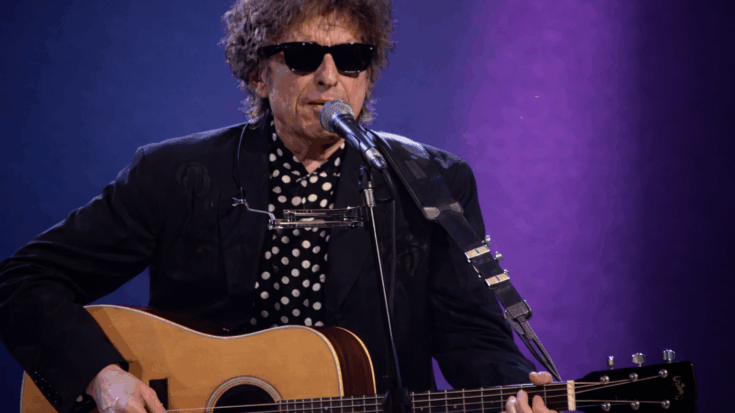
via "BobDylan" / Youtube
In a 2011 press statement responding to claims that his setlists had been censored during performances in China, Bob Dylan issued an unexpected challenge to writers everywhere. Rather than simply addressing the controversy, he turned the spotlight outward, encouraging both established authors and aspiring storytellers to document their own encounters with him.
“Everybody knows by now that there’s a gazillion books on me either out or coming out in the near future… You never know, somebody might have a great book in them.”
Many have taken that invitation seriously, and the steady stream of Dylan-related publications shows no sign of slowing. In recent years, the scope of these works has expanded, exploring previously overlooked facets of his artistry. Scholars like Steven Rings, Robert Polito, and Michael Glover Smith have each contributed significant studies, examining everything from Dylan’s musical language to his later-period creative psyche.
A Cinematic Side Long Overlooked
While Dylan’s biography, songwriting, influences, and cultural impact have been dissected extensively, one dimension has remained relatively underexplored: his work in film. This gap is surprising, given his lifelong connection to cinema—an affinity rooted in his childhood spent at the Lybba Theatre in Hibbing, Minnesota.
Influenced by icons such as James Dean, Charlie Chaplin, Humphrey Bogart, and Gregory Peck, and inspired by filmmakers like Federico Fellini and François Truffaut, Dylan developed a cinematic voice that is as enigmatic as his music. His films—including Eat the Document, Renaldo and Clara, and Masked and Anonymous—offer a layered, often cryptic window into his creative mind.
Michael Glover Smith’s Bob Dylan as Filmmaker: No Time to Think arrives as a timely and much-needed exploration of this neglected territory. Drawing on his own filmmaking experience, Smith delivers a detailed analysis of Dylan’s screen work, examining everything from production processes to thematic depth. The book also situates Dylan’s films within a broader cinematic tradition, referencing auteurs such as Jean-Luc Godard and Orson Welles.
Identity, Contradiction, and Reinvention
Smith’s central argument is that Dylan’s films represent the clearest arena in which the artist interrogates identity, fame, and selfhood. These works reveal a creator constantly reshaping himself—an idea Dylan himself underscored by quoting George Bernard Shaw:
“Life isn’t about finding yourself. Life is about creating yourself.”
Across films like Eat the Document, Renaldo and Clara, and Masked and Anonymous, Dylan repeatedly constructs and deconstructs his persona. This process mirrors his live performances, where songs are continually reinterpreted, though those experiences are fleeting. On film, however, these explorations are preserved, offering audiences a lasting record of his artistic evolution.
Dylan remains a figure defined by contradiction. He is famously elusive, yet consistently visible; resistant to interviews, yet widely documented; unpredictable in performance, yet at times rigid in structure. Through his films, he appears to both conceal and reveal himself, embodying the paradox of “hiding in plain sight.”
In Masked and Anonymous, his character Jack Fate delivers a line that encapsulates this duality:
“It always has been hanging out.”
The films, much like his music, suggest that Dylan’s true project is not self-definition but perpetual transformation. As another line from the same work reflects:
“Sometimes it’s not enough to know the meaning of things… sometimes we have to know what things don’t mean as well.”
Ultimately, Dylan emerges not just as a songwriter, but as a philosophical artist—one who resists easy interpretation and instead invites audiences to question, reinterpret, and look beyond surface meanings.