




Tom Hanks Names the Artist He Believes Will Never Be Forgotten
Rock and roll was never designed to last forever. Despite the record industry’s continued profits from endlessly recycling classic catalogs, the genre was born out of immediacy—music created to electrify listeners in the moment rather than endure like sacred hymns across generations.
That fleeting quality gave early rock its urgency and spark. It carried a reckless, joyful spirit that inspired millions of young listeners, including a young Tom Hanks. Growing up and frequently relocating from city to city, Hanks found consistency and comfort in rock and roll, which became a kind of emotional companion during his formative years.
Ironically, that sense of impermanence is exactly what allowed the music to endure. The most influential figures in rock history transcended their time, achieving a kind of immortality. Hanks long believed that George Harrison belonged firmly in that category—an artist whose work would continue long after his passing.
Soundtrack of a Generation
As a child, Hanks was already deeply tuned into the evolving American rock scene. Before British acts like The Beatles and The Rolling Stones arrived on U.S. shores, Elvis Presley had already sent shockwaves through popular culture. His music carried a raw excitement that felt almost illicit, tapping into emotions rarely expressed so openly in public.
For Hanks, the power of rock music extended beyond melody and rhythm. Those three-minute singles played in cars were moments of release—small celebrations of life itself. They told stories of everyday existence or captured dreams people hoped to live out someday, but never quite reached.
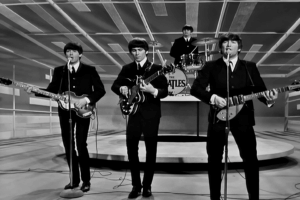
Following the assassination of President John F. Kennedy, the country entered a period of collective grief. Against that backdrop, The Beatles’ first appearance on The Ed Sullivan Show felt like a burst of light. While Paul McCartney and John Lennon quickly emerged as the band’s central figures, George Harrison remained quietly observant, preparing for his own creative breakthrough.
The Quiet Beatle Finds His Voice
Early on, Harrison contributed fewer songs than his bandmates and often limited his vocal appearances to a handful of tracks per album. His early compositions, such as “Don’t Bother Me,” leaned darker and more introspective than the rest of the group’s catalog. But as The Beatles transitioned into a studio-focused band in the late 1960s, Harrison evolved rapidly.
By that point, he had grown into a formidable songwriter—one whose work could rival, and at times surpass, that of Lennon and McCartney. Songs like “While My Guitar Gently Weeps” showcased a depth and emotional weight that struck listeners with visceral force.
Life After the Fab Four
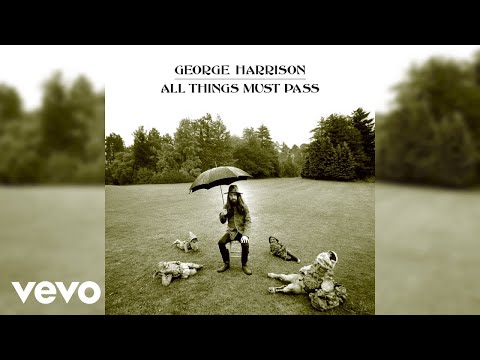
Harrison’s departure from The Beatles marked the beginning of his most expansive creative period. His 1970 solo album All Things Must Pass revealed an artist fully in bloom, drawing heavily on spiritual themes in songs such as “Behind That Locked Door” and “Beware of Darkness.” While Hanks admired The Beatles as a collective, he recognized that Harrison’s reflections on faith, salvation, and inner peace extended far beyond the optimism of the 1960s counterculture.
When Harrison was honored with a star on the Hollywood Walk of Fame, Hanks spoke publicly about the lasting power of his music, stating:
“[The Beatles] were when the world turned. That’s when we escaped the doldrums and moved on to a brighter, better future…every record was an event, every cut was an opera. Their entire story told ours. All things must pass, sure, but George is going to live forever.”
Decades later, that sentiment continues to hold true. Songs like “Isn’t It a Pity” and “What Is Life” still carry the same emotional weight for listeners in 2024 as they did upon their release in 1970. Harrison may never have sought to lead a generation, but when given a platform, he chose to use it with intention—aiming to leave the world better than he found it.
As Harrison himself once said,
“I think people who truly can live a life in music are telling the world, ‘You can have my love, you can have my smiles. Forget the bad parts, you don’t need them. Just take the music, the goodness, because it’s the very best, and it’s the part I give most willingly.’”
That philosophy defined both his music and his legacy, rooted in generosity rather than ego. Long after the noise fades, Harrison’s songs continue to offer listeners something rare—quiet reassurance, emotional clarity, and a sense that music, at its best, is a gift meant to be shared.