




David Lee Roth Vs Sammy Hagar Feud Nobody Wanted
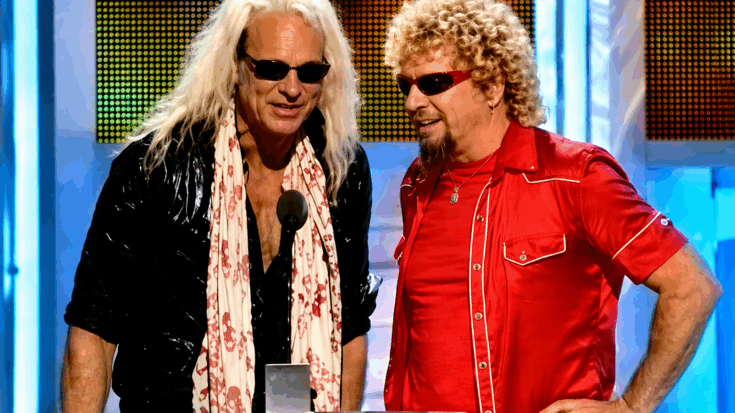
via "couchtv english" / Youtube
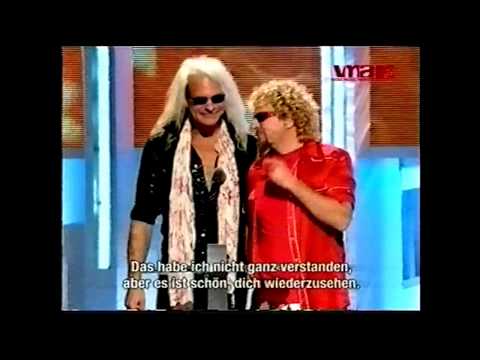
Few rivalries in rock history have been as enduring—or as overanalyzed—as the one between David Lee Roth and Sammy Hagar. For more than four decades, the two singers have been positioned as opposing forces in the story of Van Halen, each representing a distinct era of the band’s evolution.
The origins of that divide stretch back to the early 1970s, when Roth—then a teenage vocalist in the Red Ball Jets—crossed paths with a rising Pasadena outfit called Mammoth, led by brothers Eddie Van Halen and Alex Van Halen. After two unremarkable auditions, Roth was eventually recruited as the group’s frontman. By 1974, the band had adopted the name Van Halen, setting the stage for a meteoric rise.
With Roth at the helm, the band cultivated a reputation steeped in excess. His flamboyant stage presence and offstage indulgence—equal parts charisma and chaos—became inseparable from the band’s identity. As their popularity surged through the late ’70s and early ’80s, so too did the perception of Van Halen as the ultimate embodiment of rock ‘n’ roll decadence.
But behind the spectacle, tensions were mounting. When Roth departed in 1985 after more than a decade, Eddie Van Halen did not hold back, telling Rolling Stone, “12 years of my life, putting up with his bullshit.” He later walked back the remark, offering a more nuanced perspective:
“I slagged him in the press because I was pissed and I was hurt. The thing was, Dave is a very creative guy and working with him was no problem. It was living with the guy. And that’s what I meant by all the years of putting up with his bullshit. I didn’t mean musically. But, boy, it just freaked me out. He left us hanging.”
Enter Sammy Hagar
In the wake of Roth’s exit, the band briefly considered an unconventional approach, with Eddie Van Halen floating the idea of rotating vocalists, including names like Patty Smyth and Joe Cocker. That plan was ultimately abandoned in favor of a more stable lineup, leading them to Sammy Hagar—a seasoned performer known for his work with Montrose.
A now-legendary jam session at Eddie’s home studio sealed the decision. Recalling the moment, the guitarist said:
“Our jaws just dropped… After 20 minutes, we all hugged and kissed and said, ‘Fuckin’ A, here we go.’”
Hagar brought a different energy to the band—still theatrical, but rooted more in exuberance than swagger. His onstage antics, which often included joking with audiences and donning clothing tossed from the crowd, reflected a lighter tone. More importantly, he aimed to reshape the band’s internal dynamic. “I like being happy, and these guys have been unhappy for a long time,” he said. “They’re used to coming in, everybody trying to hold each other back. It was a real mess toward the end.”
At the outset, Hagar attempted to remain diplomatic regarding Roth. He even expressed interest in meeting him before officially joining. “I’m hearing it from these guys, and not that I disbelieve them, but I’d just like to shake hands with Roth and say, ‘Hey, we’re two grown men, life goes on. I had a nice solo career, you’ll probably have a great one yourself.’” He added:
“But I doubt he really wants to talk to me. I think he’s got more against me than I got against him.”
Rivalry, Revisited
Despite Hagar’s early attempts at neutrality, the narrative of a feud quickly took hold—fueled by fan debates, media framing, and the unavoidable comparisons between two vastly different frontmen. Both were consummate entertainers, yet their approaches to performance and persona diverged sharply, creating a contrast that proved irresistible to audiences.
That rivalry reached a theatrical peak in 2002, when Roth and Hagar co-headlined the “Song for Song: Heavyweight Champs of Rock and Roll” tour. Structured as a competitive showcase, the tour leaned into the mythology surrounding their supposed animosity. Roth described the dynamic succinctly:
“Sam and I are like fraternity brothers that have been through the same shitty hazing. There’s a rivalry between us, so the audience gets the absolute best out of both of us. You have to think of it as two title fights with no undercard.”
Hagar, however, had initially envisioned a more collaborative approach. In his autobiography, he recalled proposing a joint performance to “make it a friendly thing,” only to be rebuffed. “He envisioned something more along the lines of WWF Smackdown,” Hagar wrote.
In reality, the tour did little to bridge the gap. The two singers reportedly avoided each other behind the scenes, and the final shows were canceled due to Hagar’s illness—bringing an abrupt end to what might have been a reconciliation.
In recent years, Hagar has continued to downplay the notion of any true hostility. Speaking in 2021, he stated, “Him and I don’t even have a feud. To be honest with you, I have no problem with Dave.” He added:
“I don’t know what he’s got going with me, but I think he always feels competitive. So I think he feels like he has to raise his flag, like, ‘I’m Van Halen.’”
Reflecting on his own career—spanning his early success with Montrose and later work with Chickenfoot—Hagar suggested he has little need to cling to comparisons. “Dave has got Van Halen, so I think he has to hold on to that kind of tight,” he said. “But I don’t care about that. If someone said, ‘Oh, I never knew you [were] in Van Halen,’ I’d say, ‘Eh…’”
Ultimately, what has long been framed as a feud appears less like outright animosity and more like a clash of personalities—one shaped and sustained by decades of expectation. The question of who stands as Van Halen’s definitive frontman remains unresolved, but the enduring fascination with Roth and Hagar ensures that the rivalry, real or perceived, continues to echo through rock history.