




Sebastian Bach Unleashes Powerful New Song with Nuclear Messiah
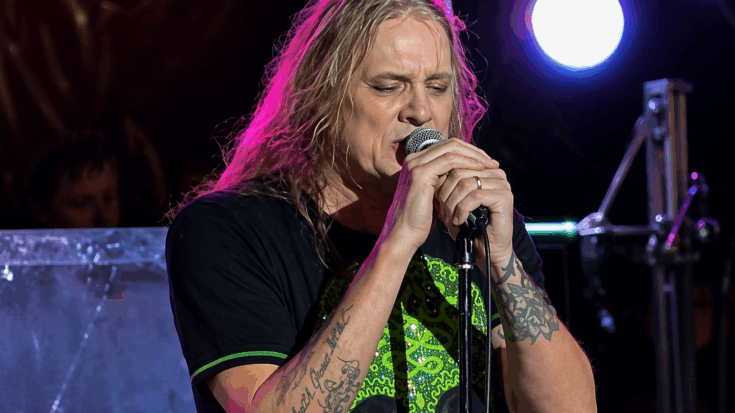
via "keithaalto6815" / Youtube
“Look at Yourself,” the latest single from Nuclear Messiah’s forthcoming Black Flame album, is set to arrive on April 24, offering a reimagined take on a deep cut by Uriah Heep. The track—accompanied by a newly released video—leans into a heavier, modern sound while preserving the spirit of the original.
At the core of the project is former Megadeth guitarist Chris Poland, who assembles a formidable lineup for the reinterpretation. Among them is ex-Skid Row frontman Sebastian Bach, whose unmistakable voice drives the track’s renewed intensity. Additional contributions come from bassist Bob Daisley—known for his work with Ozzy Osbourne—as well as keyboardist Derek Sherinian and drummer Carmine Appice, forming a lineup that bridges multiple eras of hard rock and metal.
Honoring the Past While Reworking the Sound
Daisley, who once played with Uriah Heep alongside drummer Lee Kerslake, reflected on the enduring strength of the song:
“‘Look at Yourself,’ for me, has always been a great song. The proof of the pudding is in the eating, as the saying goes, and this song still holds up so well. When I was with the Heep we didn’t include this in the live set, but it was a buzz for me to play on this now; I’ve always loved the Heep and I am proud to have been a part of that Heep family!”
For Bach, the track carries a more personal resonance. “Uriah Heep is a band that my dad listened to a lot…that was my introduction to Uriah Heep. Of course the song ‘Easy Livin’’ was a big hit song, but ‘Look At Yourself’ was a deep cut and it also reminds me of Deep Purple a little bit, the sound of it,” he said. “I love ’70s rock n’ roll and the fact that Mick Box from Uriah Heep is on this track is incredible. Bob Daisley from Ozzy’s band—I never thought I would record with him so it’s unbelievable.”
Expanding on his performance, Bach added:
“I’m adding the tone of my voice to the song ‘Look At Yourself’ and I’ve added some high harmonies that are not on the original. I’m trying to make it different, but the same. So I hope Mick Box can hear that it’s honoring the original version, but then I throw in a couple of harmonies and screams and what have you!”
A Collaborative Album Fueled by Legacy and Ambition
Poland, who serves as the album’s central creative force, admitted that “Look at Yourself” proved to be one of the most demanding tracks to complete.
“‘Look at Yourself’ was the hardest song for me on the record, to tell you the truth. I had done an extended solo on it, but they went with the solo from Mick Box because it was just so good.”
He was particularly struck by Bach’s vocal performance:
“I had a chance to go to Las Vegas when he recorded that, and I just couldn’t make it. And I wish I did. But when I heard it, it was already, like, the most progressive song on the record. But man, his vocal on that, it is so him. It just makes that song. Especially when his harmonies come in in the second verse, chorus area? Oh, my God. I was just like, ‘You gotta be kidding me!’ Man, he was singing like he was when he was 20 years old. Again!”
The album, produced by Brian Perera, Derek Hughes, and Jürgen Engler for Cleopatra Records, brings together an extensive roster of musicians, including Marty Friedman, David Ellefson, Jonathan Cain of Journey, Rick Wakeman of Yes, Vinny Appice, Joe Bouchard of Blue Oyster Cult, Vinnie Moore of UFO, Joe Lynn Turner, and Tim “Ripper” Owens, among others.
Reflecting on the process, Poland emphasized both the challenge and the reward of coordinating such a large ensemble:
“Everything on the record, a little bit of magic happens on every song. That’s what makes records [really work]. This is the kind of record you can play over and over again and then go back to it a couple months later and play it over and over again, because it has magic.”
With Black Flame set for release on April 24, the project is more than just a collaborative exercise—it is a deliberate fusion of classic rock reverence and contemporary ambition. Rather than simply revisiting the past, Nuclear Messiah’s approach suggests a broader intent: to recontextualize legacy material for a new generation while reaffirming the enduring power of the genre’s foundational voices.