




David Bowie’s Most Harrowing Night Revealed
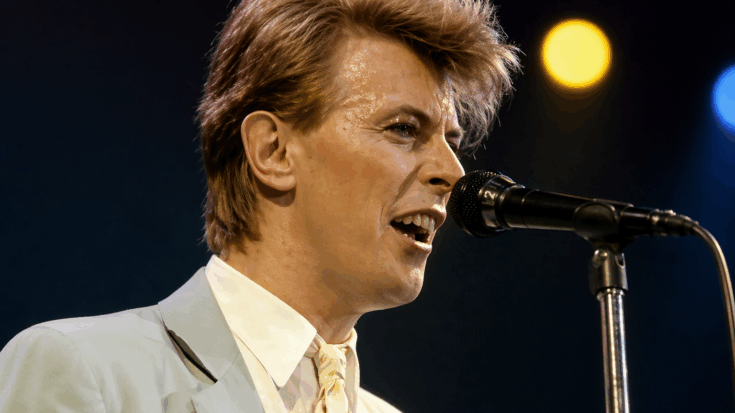
via "davidbowie" / Youtube
On December 9, 1980, David Bowie stepped onto the stage at Booth Theatre to perform The Elephant Man, but the weight of the previous night’s events hung heavily in the air. Three empty seats in the front row served as a stark and unsettling reminder of what had just occurred.
“I can’t tell you how difficult that was to go on,” Bowie later said, still visibly shaken by the memory. “I almost didn’t make it through the performance.”
Less than 24 hours earlier, John Lennon had been fatally shot outside the Dakota Building. Lennon and Yoko Ono had just returned from a recording session when Mark David Chapman approached him, called out “Mr Lennon,” and fired multiple shots into his back. Lennon was later pronounced dead that same evening, sending shockwaves across the world.
The Three Empty Seats
The following night’s performance carried an eerie and deeply personal resonance for Bowie. The three vacant seats in the front row had been reserved for Lennon, Ono, and Chapman himself.
“I was second on his list,” Bowie later revealed. “Chapman had a front-row ticket to The Elephant Man the next night. John and Yoko were supposed to sit front-row for that show too. So the night after John was killed there were three empty seats in the front row.”
The image was impossible to ignore—a chilling visual of absence that underscored the brutality of the crime. For Bowie, the moment was not just symbolic but terrifyingly real. He had lost a friend, and at the same time, come face-to-face with how narrowly he may have avoided the same fate.
“I was second on his list, the detectives said,” Bowie recalled in a later interview, reinforcing the proximity of danger that lingered behind the tragedy.
Obsession and a Twisted Motive
Chapman’s actions were rooted in a disturbed worldview shaped in part by his fixation on The Catcher in the Rye by J. D. Salinger. Immersed in the novel’s themes, he identified with its protagonist Holden Caulfield and adopted a warped interpretation of its critique of “phoniness.”
To Chapman, figures like Lennon and Bowie represented hypocrisy—public icons he believed were undeserving of admiration and harmful to society. His delusions intensified during a period of personal instability, ultimately culminating in the fatal act.
When questioned in court about his motives, Chapman offered little defense. Instead, he read a passage from Salinger’s novel:
“I keep picturing all these little kids playing some game in this big field of rye and all… What I have to do, I have to catch everybody if they start to go over the cliff… I’d just be the catcher in the rye and all.”
The haunting justification only deepened the tragedy.
For Bowie, the events of that week left a lasting imprint. As he embodied Joseph Merrick on stage, he did so in the immediate aftermath of a cultural shock that blurred the line between fame and vulnerability. The empty seats in the front row were more than a coincidence—they were a stark reminder that even the most celebrated figures could find themselves dangerously exposed.