



The Childhood Story Behind Flea’s Famous Bass Style
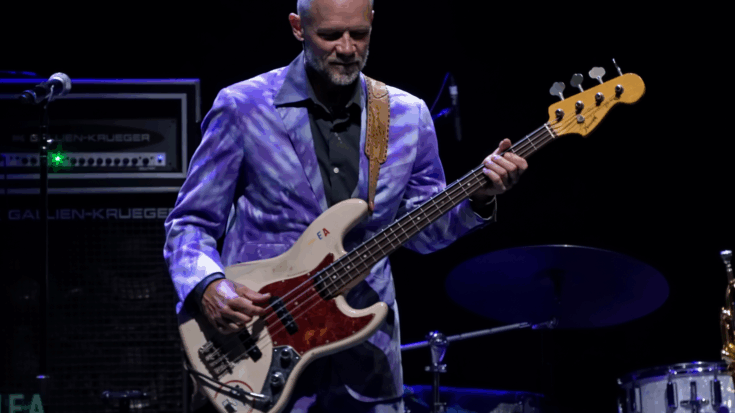
via "RHCPtv1" / Youtube
Today, Flea stands as one of the most electrifying bassists in modern music—an exuberant, boundary-pushing performer whose presence is as unforgettable as his sound. Yet behind that kinetic energy lies a childhood marked by instability, absence, and constant upheaval.
Born in Melbourne, Flea’s life shifted early when he moved to New York City at the age of four with his mother. His father, frequently traveling for his role with the Australian Consulate, remained largely absent and eventually returned to Australia when Flea was still a young child. What followed was a formative period shaped by transience and emotional uncertainty.
His mother later entered a relationship with a jazz musician battling addiction, and the family relocated again—this time to Los Angeles. For a ten-year-old Flea, the move only deepened an already fragile sense of grounding. Music and drugs became parallel forms of coping, offering both escape and identity in a world that rarely felt stable.
Fear, Violence, and the Sound of the Bass
Flea’s introduction to music—specifically the bass—came through his stepfather, Walter Urban. But rather than nurturing inspiration, the household environment was fraught with fear. Urban, whom Flea later described as “violent and abusive,” cast a long shadow over his early years.
“I had a rug in the garage,” Flea recalled in an interview with MOJO, “and I would roll myself in the rug and go to sleep because I was scared to sleep in the house.”
Yet even within that fear, there was observation. Urban’s performances on the upright bass were intense, chaotic, and emotionally charged—he would pluck the strings with force, sometimes shouting as he played. For the young Flea, music became inseparable from raw expression. The aggression he witnessed at home translated directly into the sonic energy he would later develop.
When Flea picked up the bass himself, it was initially an act of defiance. “I thought I was just going completely against my stepfather,” he said. “Because he frowned on me for playing punk rock and rock music, which he thought was ridiculous and had nothing to do with music.”
Rebellion That Became Identity
Like many musicians, Flea believed he was using music to distance himself from his past. In reality, he was internalizing and reshaping it. His shift toward punk and rock may have rejected his stepfather’s jazz purism, but the emotional core—the urgency, the volatility, the need to be heard—remained strikingly similar.
Reflecting on his upbringing, Flea described it as “bohemian,” shaped by a household where artistic frustration and ego often overshadowed stability. That environment, however turbulent, became the foundation of his musical voice.
“It has always been all this anger and fear and anxiety,” he said. “I played so aggressively, and so much of it was what I learned from him subconsciously: that the instrument is a vehicle for getting out your anger and your fear and your feelings of not being understood.”
But what defines Flea today is not simply that he carried those emotions forward—it’s how he transformed them. Over decades of performing with the Red Hot Chili Peppers, his playing has evolved from sheer catharsis into something more nuanced: still explosive, but also joyful, melodic, and deeply human.
Where once the bass was an outlet for survival, it has become a language of connection. The aggression is still there, but it’s no longer untamed—it’s purposeful. The fear has not disappeared, but it has been reframed into expression rather than isolation.
In that sense, Flea’s legacy isn’t just about technical brilliance or stage presence. It’s about transformation—proof that even the most chaotic beginnings can be reworked into something vibrant, expressive, and enduring.