




The Only Drummer John Bonham Truly Admired
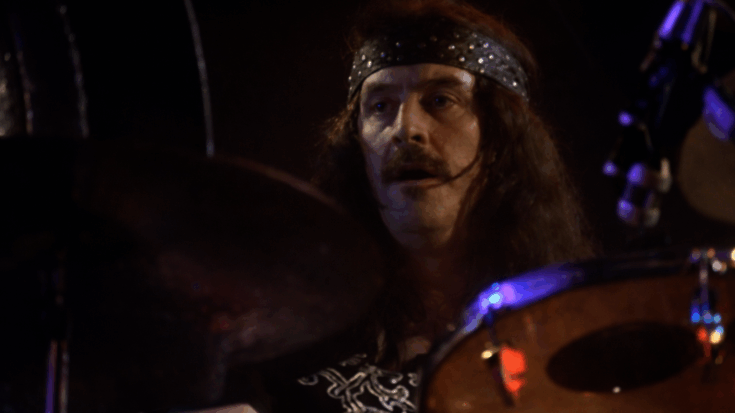
via "Marcos Lelo Craveiro" / Youtube
Few drummers in rock history have embodied their instrument as completely as John Bonham. Even his name feels percussive—three sharp syllables that mirror the explosive force he brought to Led Zeppelin. Emerging during a golden age of musicianship, Bonham thrived in an era where virtuosity and volume defined greatness.
His playing combined brute strength with remarkable precision. Tracks like “Black Dog” and “When the Levee Breaks” highlight a drummer capable of standing shoulder-to-shoulder with the soaring vocals of Robert Plant and the seismic guitar work of Jimmy Page. Bonham’s style was primal yet controlled—an unmistakable force that helped shape the band’s colossal sound.
From Homemade Kits to Rock Royalty
Bonham’s journey began early. At just five years old, he was already building makeshift drum kits from tins and containers, inspired by jazz legends such as Max Roach, Buddy Rich, and Elvin Jones. His dedication quickly became all-consuming, prompting a schoolteacher to famously predict he would become either a “dustman or a millionaire.”
By the mid-1960s, Bonham had established himself on the live circuit. When Page spotted him performing with Tim Rose in Hampstead, he immediately recognized his potential. At the time, Bonham was working as a joiner in Redditch, but Page’s persistence paid off, bringing him into what would soon become one of rock’s most influential bands.
A Rivalry Rooted in Respect
Despite his reputation as one of rock’s most formidable drummers, Bonham held deep admiration for Ginger Baker of Cream. He regarded Baker as the pinnacle of drumming excellence, stating plainly:
“I don’t think anyone can ever put Ginger Baker down.”
Bonham credited Baker—alongside pioneers like Gene Krupa—with elevating the drummer’s role from the background to the spotlight. “People hadn’t taken much notice of drums before Krupa,” Bonham once said. “And Ginger Baker was responsible for the same thing in rock.”
He also admired Baker’s individuality and jazz-driven approach:
“[Baker] was the first to come out with this ‘new’ attitude – that a drummer could be a forward musician in a rock band, and not something that was stuck in the background and forgotten about.”
Bonham added:
“I think Baker was really more into jazz than rock… He plays with a jazz influence. He’s always doing things in 5/4 and 3/4 tempos. Ginger’s thing as a drummer is that he was always himself.”
However, the respect was not mutual. Baker, known for his volatile personality, dismissed Bonham in typically blunt fashion:
“The general public are so fucking dumb that anybody could think Bonham was anywhere near this kind of drummer that I am. It’s just extraordinary. Bonham had technique, but he couldn’t swing a fucking sack of shit; or Moony, for that matter. If they were still alive today, (you could) ask them.”
When the two finally met, the tension was palpable. Attempting to flatter his idol, Bonham once suggested that there were only two great drummers in British rock: himself and Baker. The response, as Baker later recalled, was cutting: “You cheeky little bastard!”
Yet Bonham’s admiration endured. In an industry often driven by ego, his willingness to celebrate a rival who openly criticized him revealed a rare humility—one that only deepened his legacy as both a musician and a man.