Why Bob Dylan’s Lyrics Are So Hard to Understand
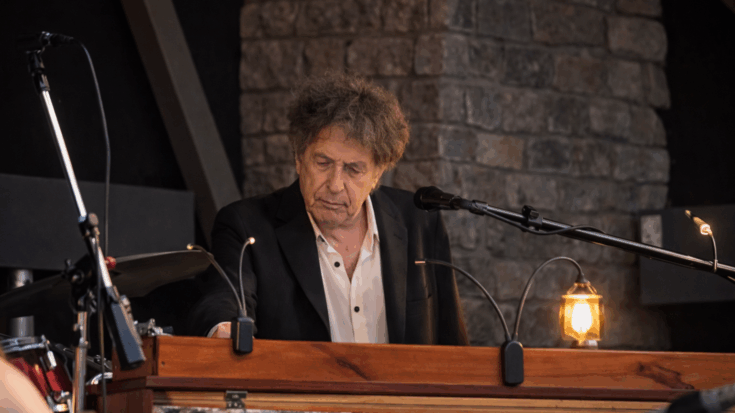
via "georgiannalee" / Youtube
Back in 1966, a reporter cornered Bob Dylan and asked him what his songs were actually about. Bob, being Bob, didn’t give a straight answer. Instead, he cracked a joke:
“Oh, some are about four minutes; some are about five, and some, believe it or not, are about 11.”
He’s always been the kind of guy who would rather let a mystery sit than solve it for you. Fast forward twenty years to 1986, and he was still dodging those personal questions when talking to Maurice Parker. He explained:
“I can’t describe myself in one or two words, considering the fact I’ve written over 300, 400 songs that do describe me. I gotta let other people speak for me, you know? If you want to find out what I’m like, you usually have to ask other people. Usually you can find out better from some people that don’t know me.”
He clearly wasn’t interested in being his own biographer. To Dylan, your work is your witness. He firmly believes, “I think it’s wrong for a person to talk about themself,” and that “A person’s life speaks for itself.”
This vibe flows right through his music. His greatest hits don’t come with a manual or an FAQ section. They just are. They don’t need him to sit us down and explain what he was thinking or how we’re supposed to feel when the harmonica kicks in. Of course, that hasn’t stopped the rest of us from spending decades, literally years of our lives, trying to peel back the layers of his lyrics. We want to know if there’s a secret message or if we’re just overthinking a catchy tune.
Even big tech got in on the action. In 2015, IBM used their super-smart AI, Watson, to scan every single lyric Dylan ever wrote for an ad. The computer’s big takeaway? His “major themes are that time passes and love fades.” When Bob heard that, he didn’t argue. He just gave a little half-smile and muttered, “Well, that sounds about right.”
A Little Bit of Everything (and a Whole Lot of Nothing)
Dylan’s songs are a wild mix. They cover the holy and the trashy, the deep stuff and the boring everyday chores. They are about the “here and now,” the “back then,” and whatever comes next. Some of them are pretty easy to follow if you know your history. For example, when he sings “God says to Abraham, ‘Kill me a son!’, Abe says ‘Man, you must be putting me on’, God says ‘No!’, Abe says ‘What!?’, God says ‘You can do what you want, Abe, but the next time you see me coming? You better run,” it’s pretty obvious he’s putting a gritty, modern spin on that famous Bible story from Genesis.
Other times, he wears his heart on his sleeve. When he belts out “if not for you, my sky would fall and rain would gather, too / without your love I’d be nowhere at all, oh what would I do? If not for you?” Everyone knows he’s head-over-heels. But then, on the flip side, he can sound totally over it: “Most of the time, she ain’t even in my mind / I wouldn’t know her if I saw her, she’s that far behind / Most of the time, I can’t even be sure / If she was ever with me, or if I was ever with her.” In that one, he’s still clearly in love, but he’s trying his best to pretend he’s moved on.
Lately, on his never-ending Rough and Rowdy Ways tour, he’s been sounding a bit more reflective. Every night, he tells the crowd, “I’ve already outlived my life by far” and “I hope that the God’s go easy with me.” It feels like he’s coming to terms with getting older, much like he did years ago when he sang “I feel like I’m knockin’ on Heaven’s Door” or when he described “I’ve been walking through the middle of nowhere, trying to get to Heaven before they close the door” and then realized “the door has closed forevermore, if indeed, there ever was a door.”
When the Lyrics Get Weird
Not every Dylan song is a straight line, though. Some aren’t direct hits to the heart; they’re more like giant, confusing puzzles. Songs like ‘Desolation Row’ are so massive that you’d think they’d fall apart, but somehow they just work. Then you have songs like ‘Gates of Eden’ that sound incredibly deep, but might just be a fancy dance of words that don’t mean much of anything at all.
“The lamppost stands with folded arms
Its iron claws attached
To curbs ‘neath holes where babies wail
Though it shadows metal badge
All and all can only fall
With a crashing but meaningless blow
No sound ever comes from the Gates of Eden”
That’s some heavy imagery! But honestly, a lot of those early, cryptic songs were probably written in a fever dream. Between his weirdly difficult novel Tarantula and tracks like ‘Chimes of Freedom’ or ‘Subterranean Homesick Blues’, Bob was basically leading the “Beatnik” charge in music. He was hanging out in the same world as the writers of On the Road and Howl, pushing language to its absolute limit just to see what happened. While these songs made him a literary legend, some fans argue they aren’t as powerful as his more simple, emotional stuff like ‘Simple Twist of Fate’ or ‘Not Dark Yet’.
The Basement Haze
Things got even weirder in the summer of 1966. After a motorcycle accident, Dylan vanished. He hid out in the basement of a big pink house with his band, and the music that came out was pure chaos. It was bizarre, confusing, and totally mesmerizing.
Good luck trying to figure out what he was talking about in songs like ‘Tiny Montgomery’ or ‘Apple Suckling Tree’. Take a look at these lyrics from an early version of ‘You Ain’t Goin’ Nowhere’: “Look here you bunch of basement noise, you ain’t no punchin’ bag / I see you walkin’ out there, and you’re the one to do it / Pick up your nose, you canary, You ain’t goin’ nowhere – Just pick up that oil cloth, cram it in the corner / I don’t care if your name is Michael, you gonna need some boards / Get your lunch, you foreign bib / You ain’t goin’ nowhere.” If you can explain what a “foreign bib” is in that context, you’re doing better than most!
One of the most mysterious songs from this era is ‘I’m Not There’. Most of the lyrics are barely audible he slurs his words and makes sounds that aren’t even real words—but the emotion is so thick you can feel it. It’s the ultimate proof that Dylan is a master singer; even when you can’t understand him, he can still make you want to cry.
People are still finding clues to these mysteries today. Not long ago, someone found a typed-out draft of ‘I’m Not There’ inside an old book. It had lines like “She’s a lone-hearted miss, and she daren’t carry on” and “When I’m there she’s alright but she’s not when I’m gone.” It also had a line that is hard to hear in the song: “2 hearts mistaken / I don’t far believe / it’s so bad / For it’s amusing / and she’s so hard to please.” Still, even with the “cheat sheet,” the song keeps its secrets.
Jewels, Binoculars, and the Sixties
Dylan’s best work usually sits right in the middle of “I get it” and “What did he just say?” Think about the masterpiece ‘Visions of Johanna’. He hits you with lines that change how you see the world: “Ain’t it just like the night to play tricks when you’re tryin’ to be so quiet? We sit here stranded, though we’re all doin’ our best to deny it” and “Inside the museums, infinity goes up on trial / Voices echo ‘this is what salvation must be like after a while’.”
He paints scenes that are so vivid they belong in a classic novel: “Lights flicker from the opposite loft, In this room the heat pipes just cough / The country music station plays soft, but there’s nothing, really, nothing to turn off.” But then, he throws in something totally wild: “See the primitive wallflower freeze / When the jelly-faced women all sneeze / Hear the one with the mustache say, ‘Jeez, I can’t find my knees’ / Oh, jewels and binoculars hang from the head of the mule.”
Back then, he had so many ideas he didn’t know what to do with them. He sang “I need a dump truck, mama, to unload my head” and “I got a headful of ideas that are driving me insane.” You can really feel that “insanity” in songs like ‘Stuck Inside of Mobile With the Memphis Blues Again’. Just look at this verse:
“Grandpa died last week
And now he’s buried in the rocks,
But everybody still talks about
How badly they were shocked.
But me, I expected it to happen,
I knew he’d lost control
When he built a fire on Main Street
And shot it full of holes.
Oh, Mama, can this really be the end,
To be stuck inside of Mobile
With the Memphis blues again”
The Parade of Characters
Dylan knows his era was a big deal, even if he plays it cool. In 2006, he said, “You know, everybody makes a big deal about the Sixties. Did I ever want to acquire the Sixties? No. But I own the Sixties.” And he really does. ‘Stuck Inside of Mobile’ is like a weird parade of characters. You’ve got Shakespeare in the alley, a French girl, a Senator with a gun, a preacher, and the “rainman.”
Each character represents a piece of Dylan’s world. Shakespeare is the literary side. The Senator shows his cynical view of politics. The Preacher represents the religious themes he always revisits, and the rainman is the magical, mystical side of his music. The “neon madmen” are likely his fellow musicians and night-owls living it up in New York City.
The song feels desperate and repetitive, just like life can feel sometimes. It’s about trying to escape yourself but ending up right back where you started. It’s about falling for someone who doesn’t even know your name and trying to find your identity in the wreckage of your old life. It’s the sound of someone who wants to be anywhere else, but realizes they’ll probably be unhappy there, too. It’s the irony of being “mobile” (moving) but “immobile” (stuck) in a city called Mobile.
In the end, everyone has their own version of the “Memphis Blues.” Maybe Dylan stopped trying to figure out what it all means a long time ago. He’s looking forward, not back. As he says in the final lines of that song: “And here I sit so patiently, waiting to find out what price / You have to pay to get out of going through all these things twice.” Whatever the price is, Bob’s probably already paid it.