The Strange Reason Zakk Wylde Lost His Chance With Ozzy
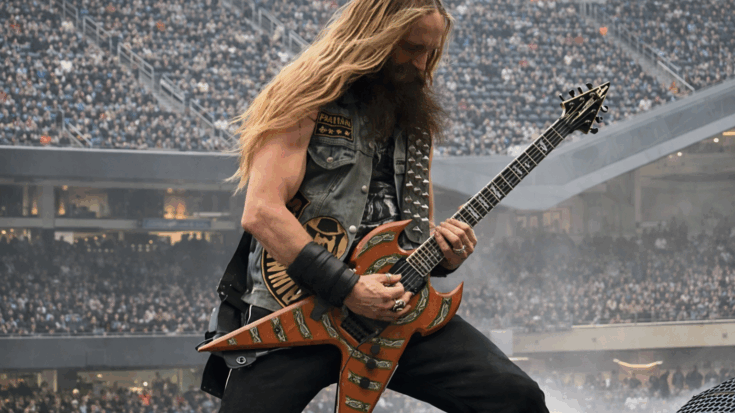
via "GermTheCreator" / Youtube
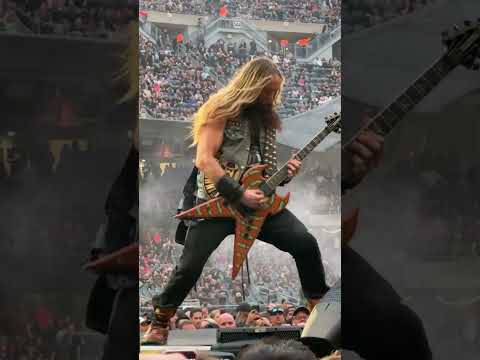
In the mid-1990s, at a time when hard rock’s biggest names were navigating uncertainty and shifting lineups, Zakk Wylde found himself at the center of a career crossroads. What began as a casual invitation to jam with Guns N’ Roses would ultimately cost him his position with Ozzy Osbourne—and inadvertently spark the creation of a band that would define his legacy.
A Call From Axl
Wylde’s connection to Guns N’ Roses came naturally. Already familiar with key members of the band, he was approached during their search for a new guitarist following lineup changes in the early ’90s. The invitation soon turned into a direct call from frontman Axl Rose—an interaction Wylde had never experienced before.
“So, the guys were looking for another guitar player. I knew Slash, Duff [McKagan, bass], and Matt [Sorum, ex-GN’R drummer] at the time, and it was just like, ‘Let’s ask Zakk if he wants to jam with us.’ So Axl called me up, and I had never spoken with Axl before,” Wylde recalled. “He says, ‘Zakk, you want to get together and jam?’ I said, ‘Yeah, sure. Why not?’”
The sessions that followed were informal but promising. Wylde joined the band at Duff McKagan’s house and in rehearsal spaces, where they explored ideas and worked through early riffs.
“So, we were noodling on ideas and demoed a couple riffs over at Duff’s house, and then we’re all jamming. The guys are all great guys. They’re awesome.”
Stuck Between Two Worlds
Despite the creative chemistry, the collaboration never moved beyond loose experimentation. No firm decisions were made about Wylde’s role in the band, leaving him caught in a professional limbo—especially as Ozzy Osbourne prepared for an upcoming tour.
“So we’re noodling on stuff, and nobody was making any decisions or anything, like, if we’re going to do this or not,” Wylde explained. “And then, Ozz was like, ‘Zakk, you playing with the fellas or you jamming with me? What are we doing? We’re getting ready to do the tour.’”
Attempting to navigate the uncertainty, Wylde sought clarity from Guns N’ Roses but found no definitive answers. The lack of direction forced Osbourne to make a practical decision.
“I said, ‘Ozz, let me try and find out what’s going on with the fellas.’ And it was just, everything was up in the air. And Ozz was like, ‘Zakky, I gotta find another guy, because I can’t be sitting around wondering whether you’re jamming with the guys.’”
With time running out, Osbourne hired guitarist Joe Holmes, leaving Wylde without a place in either camp.
From Setback to Self-Made Legacy
The fallout left Wylde in an unexpected position—without a band, but not without direction. Rather than dwell on the missed opportunity, he turned inward, channeling his backlog of riffs into a new project.
“So, Ozz ended up getting Joe Holmes. I’m friends with Joe. Joe’s awesome. And then Oz was playing with Joe. I wasn’t playing [with] anybody, everything was just sitting around. I was like, ‘I gotta do something,’” Wylde said. “And then, right after that, that’s when Black Label was born. I got all these riffs sitting around. I said, ‘I’ll just sing on them myself.’ And that was it.”
That decision led to the formation of Black Label Society—initially a modest endeavor, but one that would evolve into a major force in heavy metal. Some of the material developed during the Guns N’ Roses sessions even found new life, including riffs that would later appear on the band’s debut album Sonic Brew.
At the time, the broader landscape only added to the instability. Guns N’ Roses was navigating internal changes following Gilby Clarke’s departure, while legal issues surrounding Axl Rose further stalled progress during the sessions. Meanwhile, Wylde was simultaneously working on Osbourne’s Ozzmosis, making the timing all the more complicated.
In hindsight, what appeared to be a professional setback became a defining turning point. While Guns N’ Roses continued to cycle through lineup changes in the years that followed, Wylde carved out a successful independent path. Despite the circumstances, he has maintained strong relationships with those involved and continues to credit Ozzy Osbourne as the foundation of his career.
What began as a missed opportunity ultimately became the catalyst for one of heavy metal’s most enduring acts—a reminder that, in rock history, detours often lead to something greater.