Why Anthony Kiedis Vanished After Hillel Slovak Died
via "Olympics" / Youtube
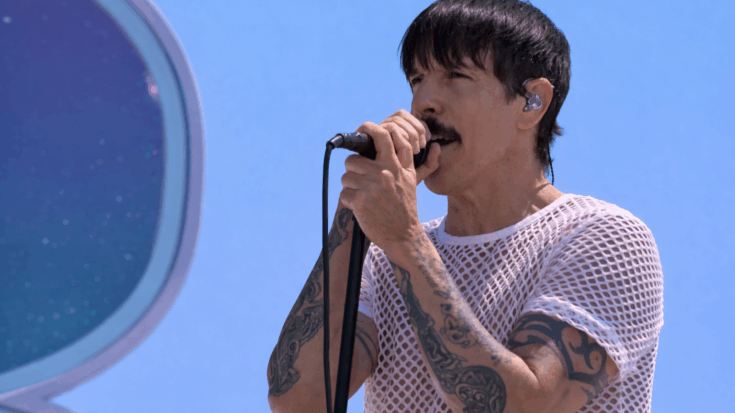
In the Netflix documentary The Rise of the Red Hot Chili Peppers: Our Brother, Hillel, Anthony Kiedis revisits one of the most painful chapters in the history of the Red Hot Chili Peppers—the death of founding guitarist Hillel Slovak.
Kiedis speaks candidly about the emotional weight he carried in the aftermath, including the belief that Slovak’s mother held him partly responsible. At the time, his struggles with addiction shaped both his public image and his personal decisions.
“I remember hearing that his mother was holding me responsible to some degree,” Kiedis said. “I had such a reputation at that time as a druggie, so I decided this was a person who I’m just going to give space to forever and not put her through… me. And I tried to just disappear.”
Rather than confront the situation, Kiedis chose distance—an absence that would last for decades, underscoring the depth of his guilt and the complexity of grief within the band’s inner circle.
Addiction, Collapse, and Realization
Following Slovak’s death in 1988 from a heroin overdose, Kiedis found himself spiraling further into addiction. What once served as an escape quickly became ineffective, forcing a moment of stark clarity.
“I continued to try to get high for a while, and that truly stopped working — like nothing could… nothing could shut my mind off at that point, and I knew that the gig was up,” he continued.
This realization marked a critical turning point. The loss of Slovak was not only a personal tragedy but also a catalyst that exposed the limits of self-destruction, pushing Kiedis toward eventual recovery.
A Final Goodbye and Lasting Legacy
Years later, an unexpected message from Slovak’s younger brother, James, reopened a door Kiedis had long believed closed.
“And then a couple of years ago, Hillel’s younger brother James reached out to me and said, ‘My mom’s only got a few days left. I think you should come and say goodbye to her,’” Kiedis revealed. “I was like, ‘But I thought she hated me,’ and he’s like, ‘No, she’s loved you this whole time.’ So I went to see Hillel’s mom on her deathbed and had a nice goodbye moment with her.”
The encounter offered a sense of closure that had eluded him for years, reframing a relationship once defined by silence into one marked by forgiveness.
Kiedis ultimately reflects on Slovak’s enduring imprint on the band’s DNA, emphasizing that his presence never truly left.
“Because of our family, our friendship, our love, Hillel’s genius musical consciousness continued in the innate energy of the Red Hot Chili Peppers,” he said. “He’s not forgotten. Yeah, Flea and I don’t forget him.”
More than three decades after his passing, Slovak’s influence remains embedded in the band’s sound and spirit—an unbroken thread connecting its origins to its ongoing legacy.