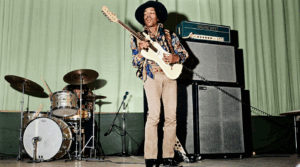





Bob Dylan Once Roasted Led Zeppelin—and They Never Forgot It
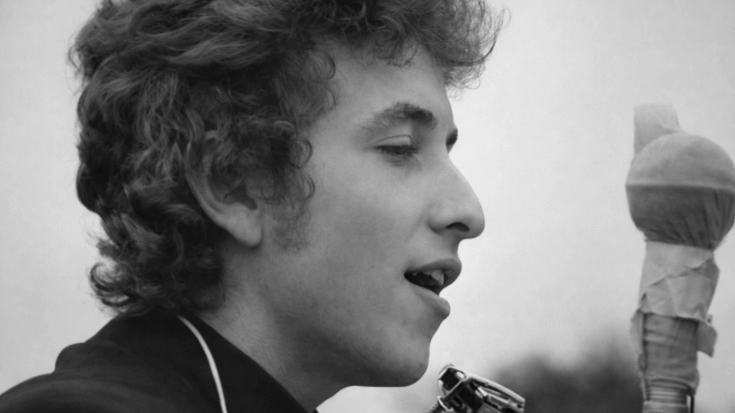
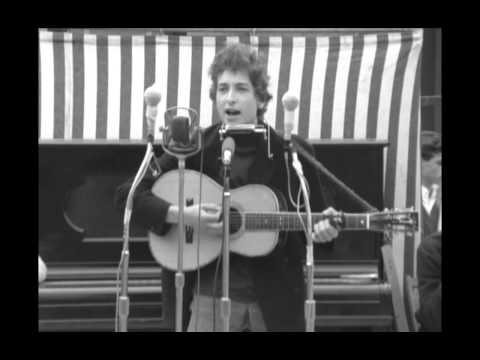
via "Bob Dylan" / Youtube
Few figures in modern music cast a shadow as long as Bob Dylan. Revered as both a pioneer and a provocateur, his impact stretches far beyond folk, shaping the very language of contemporary songwriting. Often described as a kind of artistic Rosetta Stone, Dylan’s work has influenced generations—though not always in ways he has openly embraced.
The Blueprint of Modern Songwriting
Every cultural movement begins with a catalyst, and in the case of alternative and modern rock, Dylan stands at the source. Much like the oft-repeated notion that Russian literature emerged from Gogol’s Overcoat, it is hardly an exaggeration to suggest that much of modern music emerged from beneath Dylan’s brown suede jacket.
This level of influence has never been lost on the artist himself. Dylan once remarked, “The highest purpose of art is to inspire,” a philosophy that has defined his career. Yet, inspiration is not always flattering in its outcomes. While countless musicians have drawn from his work, Dylan has not consistently admired what they’ve created in return.
Jimmy Page’s Awakening—and Dylan’s Sharp Wit
Among those deeply affected by Dylan’s artistry is Led Zeppelin guitarist Jimmy Page. Reflecting on an early encounter, Page recalled witnessing Dylan perform in May 1965 at the Albert Hall—a moment that left a lasting impression.
“In May 1965, I experienced the genius of Bob at the Albert Hall,” Page reminisced. “He accompanied himself on acoustic guitar and cascaded images and words from such songs as ‘It’s Alright, Ma (I’m Only Bleeding)’ and ‘She Belongs To Me’ to a mesmerised audience. It was life-changing.”
Despite Page’s admiration, Dylan’s response to Led Zeppelin’s rise was far less enthusiastic. A now-legendary backstage encounter in Los Angeles in 1974 highlights his characteristically dry humor. When the band’s formidable manager, Peter Grant, introduced himself—“Hello Bob, I’m Peter Grant, I manage Led Zeppelin”—Dylan fired back: “Do I come to you with my problems?”
Whether playful or pointed, the remark underscored Dylan’s apparent distance from Zeppelin’s grand, amplified sound.
Respect, Distance, and the Road That Never Ends
At the time, Dylan seemed to favor a different kind of rock and roll entirely. His admiration for The Rolling Stones was unmistakable:
“They are the greatest rock and roll band in the world and always will be. Everything that came after them – metal, rap, punk, new wave, pop-rock, you name it – you can trace it all back to The Rolling Stones.”
Still, his relationship with Led Zeppelin’s members has remained amicable. Robert Plant, in particular, continues to hold Dylan in the highest regard. Recalling a meeting at a festival in Roskilde, Denmark, Plant described a quiet, almost surreal encounter backstage.
“I recently did a gig in Roskilde, Denmark, and Bob Dylan wanted to talk to me about touring,” he said. “So I met him where all the buses are parked, at this big festival, and we eyeballed each other and smiled in the darkness.”
Even in his 80s, Dylan’s relentless touring schedule remains a defining trait. As Plant recalled:
“It was pissing with rain, two hooded creatures in a blacked-out car park, and I said to him: ‘Hey, man, you never stop!’ He looked at me, smiled and said: ‘What’s to stop for?’”
Despite his admiration, Plant admits that engaging Dylan in conversation about his own music is no easy task.
“I couldn’t ask him about his songs, because as much as I’ve been affected by his work, you can’t talk about it. My work is not anywhere near as profound in what it’s trying to do. At the same time, you can get to know the motive and circumstances behind a particular song, without it being ‘Masters Of War.’”
Dylan’s tastes may remain elusive, but that ambiguity is part of what has always defined him. He is not an artist easily pinned down by genre, allegiance, or even his own influence. If anything, his reluctance to embrace certain successors only reinforces the restless spirit that made his work so transformative in the first place.
What remains undeniable is the ripple effect. Whether or not Led Zeppelin aligns with Dylan’s personal preferences is ultimately beside the point. Their towering presence in rock history reflects the very chain reaction Dylan helped set in motion—artists absorbing, reshaping, and sometimes amplifying the ideas that came before them.
In that sense, Dylan’s legacy is less about approval and more about provocation. He did not just inspire musicians to follow in his footsteps; he challenged them to diverge, to expand, and to redefine the boundaries of popular music. And in doing so, even the artists he may have regarded with skepticism become part of the same enduring story—one that continues to evolve long after the first chord was struck.