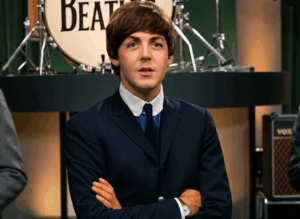





The Surprising Star Who Knocked The Beatles Off No. 1

via "The Beatles" / Youtube
For decades, the music industry has wrestled with a persistent question: do chart positions and commercial success truly reflect an artist’s long-term cultural impact, or are they simply fleeting indicators of popularity? In most cases, the answer leans toward the latter. Yet, in the case of The Beatles, the usual rules did not seem to apply.
While many acts require multiple releases to cement their place in the public consciousness, The Beatles began shifting expectations almost immediately. Their debut single, ‘Love Me Do’, was more than just a modest success—it signaled a changing tide in how chart performance could intersect with artistic identity. Still, what made the group remarkable was their apparent indifference to such metrics. From the beginning, their focus remained fixed on crafting compelling music rather than chasing accolades.
Beyond the Formula: Reinventing the Sound of Pop
As their fame grew, The Beatles resisted the temptation to replicate a winning formula. Instead, they leaned into experimentation, reshaping the sonic landscape of popular music. At a time when predictable structures and safe melodies dominated radio playlists, the band introduced complexity, innovation, and emotional depth.
This willingness to evolve did not come at the expense of commercial success. By their third single, ‘From Me To You’, they had already established a formidable chart presence, holding the number one position for seven consecutive weeks. It was an early indication that their creative risks could coexist with widespread appeal.
Their eventual breakthrough in the United States only reinforced this dual achievement. Amassing 20 number-one hits on the Billboard Hot 100—two more than they achieved in the UK—The Beatles demonstrated a rare ability to dominate across markets while continuing to push artistic boundaries.
When the Crown Slipped—and Why It Didn’t Matter
Despite their near-mythical chart dominance, The Beatles were not entirely immune to competition. In 1967, Engelbert Humperdinck’s ‘Release Me’ famously blocked ‘Strawberry Fields Forever’ from reaching the top of the UK charts. It marked the band’s first significant chart disappointment since 1963’s ‘Please Please Me’.
At the time, the result fueled speculation that The Beatles’ popularity might be waning, particularly amid growing rumors of internal tensions. However, such interpretations failed to grasp the broader context. As Paul McCartney later explained, the contrast in musical styles played a key role: Humperdinck’s release was a “completely different type of thing,” while The Beatles were venturing into more experimental territory that diverged from mainstream expectations.
Humperdinck himself offered a grounded perspective on the moment, telling Goldmine that the band were not “too upset” because they already “had several number ones”. He also fondly reflected on crossing paths with McCartney and recalled that Ringo Starr would frequently attend his performances. For Humperdinck, ‘Release Me’ became a defining milestone: “The single went to number one in many countries throughout the world, and I can go around the world because of that song,” he said.
Yet, in hindsight, the episode reveals more about the limitations of charts than the stature of The Beatles. A single chart position—whether number one or number two—did little to alter their trajectory or diminish their influence. If anything, moments like these underscored the gap between immediate commercial performance and enduring artistic legacy.
In the years that followed, ‘Strawberry Fields Forever’ would come to be regarded not as a missed opportunity, but as one of the band’s most groundbreaking works—a reminder that innovation often outlasts initial reception. While others may have claimed the top spot in a given week, The Beatles were quietly redefining what popular music could achieve, ensuring that their legacy would extend far beyond the limits of any chart.