



Paul McCartney Nearly Rejected This Beatles Guitar Solo
Tensions have always lingered beneath the surface when examining Paul McCartney’s relationship with The Beatles. To McCartney, the group represented a surrogate family—bandmates who filled the role of brothers he never had. Yet by the band’s final years, that sense of unity had fractured. His decision to sue the group, amid disputes tied to Allen Klein, only deepened the divide. While his fallout with John Lennon became the stuff of legend, his more complicated dynamic with George Harrison carried its own long-standing weight.
A Fractured Brotherhood
Harrison’s frustrations dated back to the band’s early years, when he often felt overshadowed and controlled by McCartney in the studio. Even as tensions softened in the late 1970s, Harrison remained adamant that he would never again share a band with McCartney. That unresolved history resurfaced during the Anthology sessions, where old creative habits proved difficult to shake.
Whenever McCartney began shaping arrangements to his liking, it echoed the same dynamic that had once strained their partnership. For Harrison, those moments were reminders of a hierarchy he had long resisted, even as both musicians attempted to move forward.
Anthology and Old Habits
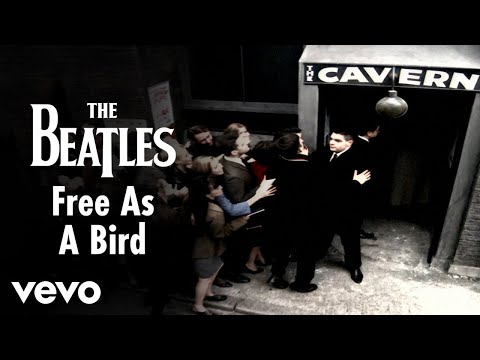
During the recording of “Free As A Bird,” the balance between honoring the past and navigating lingering tensions became clear. With Jeff Lynne assisting as producer, Harrison held a stronger creative position than before. Still, McCartney approached certain ideas with caution—particularly Harrison’s use of slide guitar.
“I was worried because it was going to be George on slide,” McCartney admitted. “When Jeff suggested slide guitar I thought (dubiously), Oh, it’s ‘My Sweet Lord’ again, it’s George’s trademark. John might have vetoed that. But in fact he got a much more bluesy attitude, very cool, very minimal, and I think he plays a blinder.’”
The concern reflected McCartney’s instinct to protect the band’s collective identity, though it also revealed how deeply ingrained their old creative tensions remained. Ironically, McCartney himself had often taken control in earlier sessions, even directing Harrison’s playing or stepping in to perform solos on tracks like “Taxman.”
The Enduring Sound of Harrison
Despite those frictions, Harrison’s contributions to the Anthology recordings proved indispensable. His guitar work on “Free As A Bird” and “Real Love” infused both tracks with character and emotional depth, anchoring them firmly within The Beatles’ sonic legacy.
By the time “Now and Then” was completed years later, McCartney appeared more willing to embrace Harrison’s musical voice. With Harrison no longer present, McCartney’s own slide guitar served as a respectful nod rather than a replacement—an acknowledgment of a style that could never truly be replicated.
Though often cast as the quiet Beatle or the “younger brother,” Harrison’s influence ran far deeper. His musical sensibility helped bind the group’s harmonies, while his slide guitar became one of the most distinctive elements of their sound. Long after his passing, those signature flourishes continue to define what made The Beatles not just a band, but a lasting musical force.