




The Big 4 Wouldn’t Be the Same Without Dave Mustaine
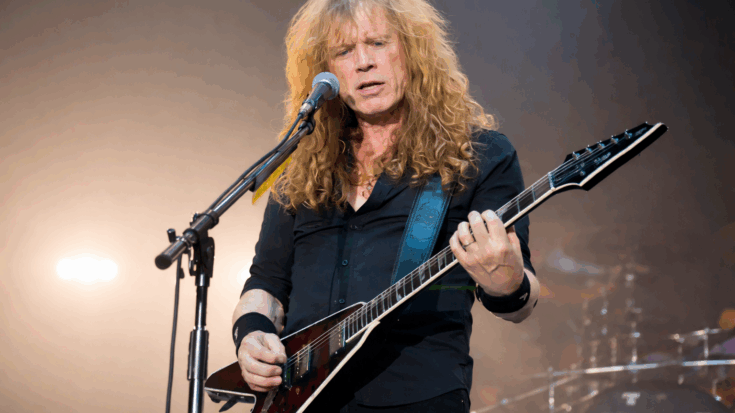
via "Megadeth" / Youtube
Thrash metal has always been loud, fast, and full of attitude. But beneath the noise, there are stories of connection, rivalry, and influence that helped shape the genre. Dave Mustaine is a name that continually appears in those stories. His impact can be seen across all four of thrash metal’s most famous bands—whether through his early work, songwriting, or direct relationships with other artists.
Many fans already know that he played with Metallica before forming Megadeth. That chapter may be in the past, but Mustaine believes his influence goes far beyond that. He argues that his fingerprints can also be found in Slayer and Anthrax, suggesting that his impact is far greater than most people realize.
Let’s take a closer look at how Mustaine influenced each of the “Big 4” bands in thrash metal.
1. Metallica
It all begins with Dave Mustaine’s connection to Metallica. Before Megadeth, Mustaine was a key part of Metallica’s early lineup. He helped establish the band’s aggressive style and contributed heavily to their songwriting during those formative years.
His influence didn’t disappear after his departure. Mustaine wrote riffs that later appeared on Metallica’s early albums, helping define the raw, fast-paced intensity that became a hallmark of thrash metal.
Scott Ian later emphasized how crucial Mustaine was in those early days, stating, “The guy is arguably the godfather of thrash metal.” Reflecting on Mustaine’s time with Metallica, he noted that Mustaine wrote many of the riffs for Kill ’Em All and contributed to Ride the Lightning. “Maybe thrash metal wouldn’t have happened without Dave Mustaine. At least at first, he was the one who pushed the art forward.”
This raises a point fans often debate: although Metallica became one of the biggest bands in the world, part of their original sound stemmed from Mustaine’s creativity. His sharp riffing, aggressive playing, and raw edge helped push Metallica from traditional heavy metal into faster, more intense territory.
Kerry King also recalls being blown away by Mustaine in Metallica’s early days:
“I liked it. I liked speed metal or thrash metal—which they hadn’t named yet—and that’s what they were to me. I liked what they were doing with it, and I was already a fan of Venom. I’ve always liked Venom, and I think Slayer is what Slayer is because it’s a mix of Venom, Judas Priest, and Metallica.”
Mustaine’s time in Metallica was brief, but its impact was lasting. His early contributions helped shape the foundation of thrash metal, and Metallica built upon it.
2. Megadeth
Mustaine didn’t stop after leaving Metallica—he pushed forward. Megadeth became his response, his proving ground, and ultimately one of the most respected bands in thrash metal.
With Megadeth, Mustaine refined his sound and pushed his technical abilities even further. His compositions became sharper, more complex, and more precise. In many ways, Megadeth raised the bar for musicianship within the genre.
Mustaine himself described his influence on other bands by referencing his work with both Metallica and Megadeth: “Well, I’ve been very invested in the metal community. Kerry [King] and I played together, and I taught him how to play Megadeth songs.” This was before Slayer’s most significant albums were released. “Kerry and I had a great time together. I wrote songs for both Metallica and Megadeth. These three bands have had a big impact on my guitar playing.”
Megadeth wasn’t just another band—it was Mustaine’s opportunity to prove what he could accomplish on his own terms. Their music set new standards for speed, precision, and technical complexity, forcing other bands to evolve to keep up.
Megadeth also became a hub for collaboration. At one point, Mustaine even invited Kerry King to join. King later recalled:
“I didn’t have a reason to stay because I had Slayer. I remember talking to him and saying, ‘Yeah, but we have all this dark stuff.’ Mustaine said something like, ‘Well, we’ve got this song that’s pretty Satanic.’ I said, ‘At the end of the day, dude, it ain’t about that. I came to have fun with you.’ I think it went really well, but I needed to get back to my band.”
That moment highlights how Megadeth wasn’t just significant musically—it was also part of a broader creative exchange where bands shared ideas, styles, and energy.
3. Slayer
Slayer is often described as darker, heavier, and more extreme, yet they were still influenced by Mustaine in key ways.
Mustaine points to his early friendship with Kerry King as an important factor in Slayer’s development:
“Well, I’ve been really involved in the metal community. Before Slayer started making all of their important albums, I played with Kerry [King] and taught him how to play Megadeth songs. Kerry and I had a great time together. I wrote songs for both Metallica and Megadeth, so these three bands have had a big impact on my guitar playing.”
That hands-on interaction mattered. It wasn’t just about listening to records—it was about playing together, exchanging techniques, and learning directly from one another. In a genre that values speed and precision, that kind of collaboration can have a lasting impact.
Kerry King himself acknowledged Mustaine’s influence:
“I’ve always looked up to Mustaine since he was in Metallica. I was in the audience with Jeff Hanneman, and I said, ‘Look at that guy! He’s totally tearing it up there!’ He has a terrific flair, and early on, it helped Metallica become what they are now. And let me tell you something—he’s still a superb guitar player.”
That level of respect is telling. While Slayer ultimately forged their own identity, like many early thrash bands, they were shaped by what they saw and heard around them. Mustaine’s aggressive style and technical skill set a benchmark that others sought to match—or surpass.
Over time, Slayer’s sound became darker and more intense, but its roots remain tied to the early thrash movement that Mustaine helped define.
4. Anthrax
Anthrax brought a different flavor to thrash metal, blending speed with groove and a touch of humor. Still, Mustaine believes they were also influenced by his presence in the scene.
“When I met Scott [Ian] and the guys in Anthrax in New York, the same thing happened. Their first album was very different from the one they made after they met me and the guys in Metallica. I think that’s great. I like all of those bands.”
This points to a subtle but important idea: influence doesn’t always come from direct collaboration. Sometimes, it comes from exposure—seeing what others are doing and evolving in response.
As Anthrax became more immersed in the thrash scene alongside bands like Metallica and Megadeth, their sound shifted. The tempo increased, the riffs tightened, and the overall energy became more aggressive.
Scott Ian also openly credited Mustaine’s importance, writing in his memoir:
“Some people say the guy is the godfather of thrash metal. He came up with a lot of the riffs for Kill ’Em All and even some for Ride the Lightning. Maybe thrash metal wouldn’t have happened without Dave Mustaine. He was the one who pushed the art forward, at least at first.”
That kind of praise from a fellow “Big 4” member underscores the breadth of Mustaine’s influence. Even with their distinct identity, Anthrax remained part of a movement Mustaine helped build.
The “Big 4” Legacy: The Bigger Picture
Metallica, Slayer, Anthrax, and Megadeth didn’t just rise to prominence at the same time—they helped define an entire movement. As thrash metal grew in popularity, these four bands became its most iconic names, eventually earning the title “The Big 4.”
The label gained even greater significance years later when the bands shared the stage. In 2010, they officially united as the “Big 4,” beginning with a landmark performance at the Sonisphere Festival in Warsaw, Poland, on June 16. The shows continued across Europe before moving to the United States, including major dates in California and at Yankee Stadium in New York.
For fans, it was a once-in-a-lifetime celebration of thrash metal’s golden era.
There have been discussions about reuniting the “Big 4,” but nothing has materialized on the same scale. With Slayer retired and Megadeth continuing farewell tours, the chances seem slimmer—though in music, surprises are never entirely off the table.
Last Thoughts
Dave Mustaine’s story is deeply intertwined with the rise of thrash metal. From writing riffs for Metallica to building Megadeth into a powerhouse, collaborating with Kerry King, and influencing Anthrax’s evolution, his presence is felt throughout the genre.
What makes his role unique is the blend of direct and indirect influence. In some cases, he wrote the music. In others, he inspired it. And sometimes, his impact came simply from showing up, playing, and leaving a lasting impression.
Whether one views him as a central architect or a controversial figure, it’s difficult to ignore the scope of his influence. When looking at the “Big 4,” Mustaine isn’t just part of the story—he’s woven into all of it.