




You’re Probably Wrong About Why These Famous Bands Really Broke Up
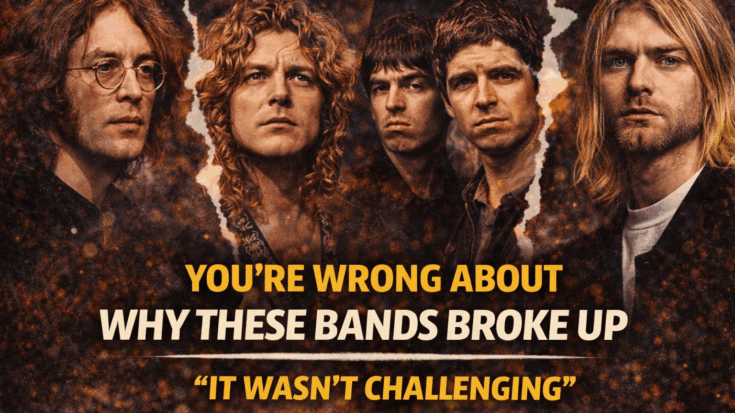
When a popular band breaks up, fans are often astonished, confused, and heartbroken. After the initial chaos, stories begin to emerge—some official, others little more than rumors—attempting to explain why the band fell apart. These narratives can persist for years, reshaping how a band’s past is remembered. Most of the time, however, the “official reason” or dramatic version fans accept is either overly simplistic or simply inaccurate.
Ending a band is rarely easy. It rarely happens because of a single argument or disagreement. Long-term creative partnerships—especially those that function as both a career and a passion—are complex. Shifts in personal lives, finances, artistic goals, and emotional priorities all play a role. What the public usually hears is only the tip of the iceberg.
Years later, once the shock has faded and legal matters have been resolved, band members sometimes speak openly about what truly led to the breakup. More often than not, the real story surprises everyone. Below are several famous band breakups—and the real reasons behind them.
The Police Didn’t Run Out of Steam
By the early 1980s, the reggae-punk trio had already arrived. The Police had grown into a global rock powerhouse. Sting, Stewart Copeland, and Andy Summers delivered a string of hits, including “Every Breath You Take,” “King of Pain,” and “Wrapped Around Your Finger.” Between 1978 and 1983, the band released five albums—an intense workload by any standard.
Many assumed The Police broke up because they ran out of ideas. The absence of a new studio album after 1983 fueled speculation that the band was creatively exhausted. Their brief 1986 reunion—producing only a remix of “Don’t Stand So Close to Me”—seemed to confirm that theory. The reality, however, was far more nuanced.
Sting never viewed The Police as a final destination; he saw the band as a means to an end. His debut solo album, The Dream of the Blue Turtles, was released in 1985 and became a major success while the band technically still existed. The breakup wasn’t driven by personal animosity so much as a shift in creative power. Sting later explained that what began as a collaborative effort gradually became centered around his vision. By the mid-1980s, the band was no longer three equals—it was effectively under Sting’s control. Stewart Copeland’s serious horse-riding accident, which left him with a broken collarbone, further complicated matters. The Police didn’t split because they lacked ideas; they split because circumstances changed and one member wanted to explore life beyond the band.
Journey Didn’t Split So Steve Perry Could Go Solo
Journey is widely regarded as one of the most powerful live rock bands of their era. Known for soaring vocals and multi-platinum albums, the band achieved enormous success despite never landing a number-one single in the U.S. Much of that success rested on Steve Perry’s unmistakable voice, which helped propel eight albums in eight years. At the height of Journey’s popularity, Perry began work on a solo album. His 1984 release, Street Talk, featured hits like “Oh Sherrie” and “Foolish Heart.”
Many fans believed Journey fell apart because Perry wanted to pursue solo stardom. In truth, the situation was far more personal and painful. While working on what would become Journey’s final album, Raised on Radio, Perry’s mother passed away. Though he completed the album and toured behind it, he was grieving deeply. Touring became increasingly difficult as emotional distress combined with the physical strain of constant high-register singing. Perry reportedly required nightly injections of vitamins and medication just to get through performances.
He didn’t leave out of ambition or ego—he left to survive. Emotionally depleted and physically worn down, Perry stepped away because continuing would have been unsustainable. Journey was at a crossroads, but the split wasn’t fueled by a fight or clashing egos. Sometimes the real story unfolds far from the spotlight.
Uncle Tupelo: It Wasn’t Just About Creativity
Uncle Tupelo was a groundbreaking alt-country band of the late 1980s and early 1990s, leaving a lasting imprint on modern Americana. After the breakup, Jay Farrar went on to form Son Volt, while Jeff Tweedy founded Wilco. To outsiders, the split appeared to be a straightforward artistic divergence.
In interviews, Farrar suggested that it simply felt like time to move on after years of doing the same thing. However, there was a deeper and more personal conflict beneath the surface. Farrar later indicated that he believed Tweedy had betrayed him by crossing a line with Farrar’s long-term girlfriend. That revelation transformed what might have been a routine creative disagreement into something deeply personal.
Uncle Tupelo didn’t dissolve solely because of differing musical directions. Trust was broken, personal boundaries were crossed, and the line between professional and personal life disappeared. What fans assumed was an artistic split carried far greater emotional weight for those involved.
The Beatles Didn’t Break Up Because of Yoko Ono
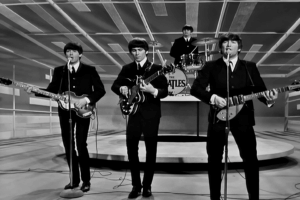
The idea that “Yoko Ono broke up The Beatles” has become a cultural shorthand for blaming an outsider for a band’s collapse. In reality, the situation was far more complex. John Lennon met Ono at a time when the band was already struggling. The death of their manager, Brian Epstein, in 1967 left a leadership void. Epstein had acted as a stabilizing force, and without him, tensions escalated. Lennon later acknowledged that the group had been directionless and strained long before Ono entered the picture.
The breakup became official in 1970 when Paul McCartney announced he was leaving to pursue a solo career. McCartney has repeatedly stated that he didn’t end the band—Lennon did. Ono didn’t cause the breakup; Lennon was already searching for a way out. While her presence may have accelerated events, she wasn’t the root cause. McCartney himself has said that Lennon’s relationship with Ono gave him a new sense of purpose and direction. The Beatles’ story is a reminder that the most dramatic explanations are often fictional. Real life is messier, shaped by overlapping personal, professional, and emotional forces.
Other Common Misunderstandings
These stories are far from unique. Many famous bands have split up for reasons that were misunderstood or misreported at the time. Sometimes the media favors drama. Sometimes, fans want a simple narrative. And sometimes the band members themselves offer a simplified version.
Take The Eagles, for example. Their early-1980s breakup is often attributed to clashing egos. While conflicts existed, the primary causes were relentless touring, constant recording, creative fatigue, and a desire to pursue individual projects. Oasis is another case: sibling rivalry played a role, but years of stress, mental health struggles, and the pressures of fame were equally significant.
Reunions don’t always resolve old wounds, either. Many are short-lived and driven by nostalgia rather than the creative spark that once defined the band. Fans should approach breakups and reunions with a healthy dose of skepticism. The story most people believe is rarely the full picture.
Why Simple Stories Persist
People love clear narratives. Fans often want a villain or a single dramatic reason—especially in music. It’s easier to say, “The singer wanted fame,” than to acknowledge a complicated mix of exhaustion, grief, personal conflict, and artistic evolution. Over time, rumors harden into “facts,” even when reality is far more layered.
Bands are made up of people with fears, ambitions, emotional baggage, and complex personal lives. Their decisions usually reflect those realities, not the neat myths fans prefer. Accepting that complexity may be uncomfortable, but it makes music history richer and more compelling.
What Fans Can Learn
Understanding why bands break up doesn’t diminish the music—it can deepen appreciation for it. Knowing that Raised on Radio emerged from a period of grief, or that The Police’s later years were shaped by shifting power dynamics and ambition, adds emotional resonance to the songs.
Band breakups are rarely the result of a single betrayal or goal. They unfold gradually and differently for each member, shaped by circumstance, personality, and choice. When fans look beyond the rumors, they often discover stories that are just as fascinating—if not more so—than the myths. When your favorite band calls it quits, remember that headlines seldom tell the whole story. Behind the scenes, there is almost always more complexity, more struggle, and more humanity than meets the eye.