The Woman Freddie Mercury Wanted to Be Like—and the Song She Inspired
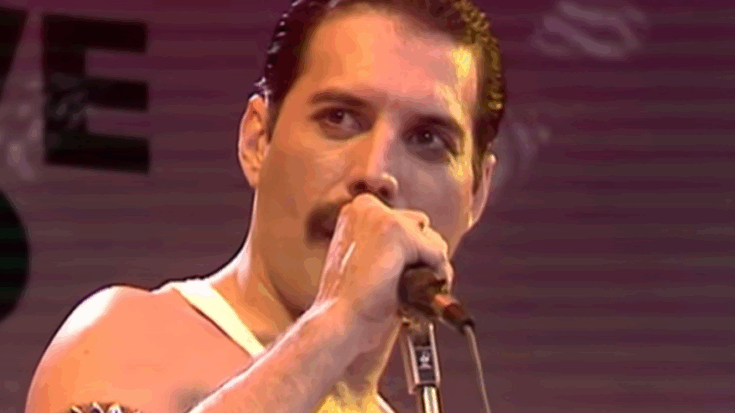
via "Live Aid" / Youtube
There has always been something entirely singular about Freddie Mercury. As a frontman, he carved out a space that few could rival—commanding the stage with theatrical flair, fearless confidence, and an almost magnetic intensity. Like a master of spectacle, Mercury didn’t merely perform; he possessed the room, drawing every eye with a strut that was equal parts bravado and artistry.
Yet beyond the showmanship lay a musician of formidable depth. His talents were layered, his instincts sharp, and his ability to translate emotion into performance set him apart. While many could capture attention, Mercury sustained it—effortlessly.
Chasing the Soul of Aretha
At the heart of Mercury’s artistry was a voice of staggering range and power. His commitment to vocal excellence elevated him into the upper echelon of rock’s greatest singers. Still, even an artist as distinctive as Mercury found inspiration in others—most notably in Aretha Franklin.
Franklin’s voice carried more than technical brilliance; it was steeped in emotional truth. Her gospel-rooted delivery gave her performances a spiritual intensity that resonated far beyond melody. She didn’t just sing songs—she inhabited them.
It was this quality that left a lasting impression on Mercury, ultimately shaping the creative direction of Queen’s ‘Somebody to Love.’ Reflecting on the recording process, he explained:
“We had the same three people singing on the big choir sections. But I think it had a different kind of technical approach because there was this sort of Gospel way of singing, which I think was different to us. Sort of going to Aretha Franklin, sort of made them go a bit mad.”
He continued:
“I just wanted to write something in that kind of thing. I was sort of incensed by the Gospel approach that she had on her albums, the earlier albums. Although it might sound the same kind of approach on the harmonies, it is very different in the studio, because it’s like a different kind of… a different range.”
Reinventing After ‘Bohemian Rhapsody’
Following the monumental success of ‘Bohemian Rhapsody,’ expectations surrounding Queen were immense. Mercury understood the weight of that legacy but refused to be confined by it. Instead, he viewed it as a challenge—to evolve, to experiment, and to push further. He said:
“People will obviously no matter how hard you try will think in terms of your past hits. That’s inevitable.”
“But I think it’s up to the group and musicians to really think in other terms. From my point of view, I mean, as far as the writing side of it is concerned, I said ‘Ok. ‘Bohemian Rhapsody’ is a big hit’.”
Determined to outdo himself creatively, Mercury added:
“But as far as my writing ability is concerned I think I can write better anyway. I mean, I went and wrote, for my estimation, I think a song like ‘Somebody To Love’, is in my estimation, a better sort of… from the writing aspect a better song.”
Brian May later reinforced just how deliberate this artistic pivot was, noting:
“Freddie wanted to be Aretha Franklin. You have to bear this in mind. That explains everything. He loved Aretha. This was his Gospel epic… Freddie came in very well prepared with a lot of vocal parts. We just worked our way through it. A very good feeling. I always remember feeling ‘This is going to be something great’.”
In hindsight, ‘Somebody to Love’ stands not just as a follow-up to a global hit, but as a statement of intent. It reflects Mercury’s refusal to remain static, his willingness to draw from unlikely influences, and his instinct to merge rock with the emotional depth of soul and gospel. More importantly, it underscores a truth often overlooked in discussions of originality: even the most iconic voices are, in part, shaped by the echoes of those who came before them—and in Mercury’s case, those echoes helped him reach even greater heights.