




The Music Genre David Bowie Couldn’t Stand
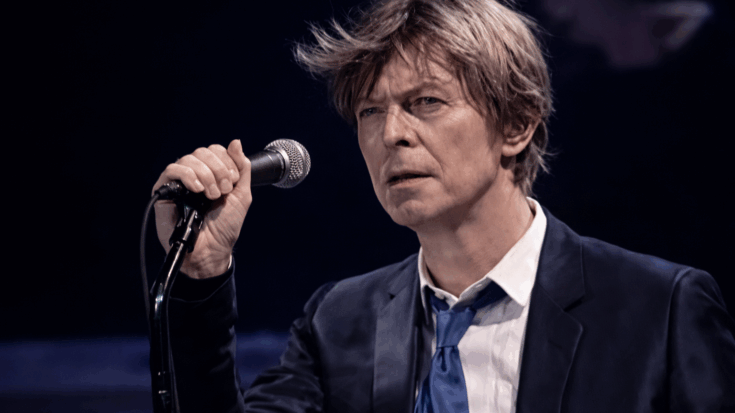
via "Broken Ridge Records" / Youtube
If David Bowie had never existed, the shape of modern music would feel noticeably incomplete. Few artists have embodied reinvention as thoroughly as Bowie, a figure who not only challenged industry norms but reshaped them entirely. Writing his own rules with every release, he built a career defined by risk, curiosity, and a refusal to remain still.
Reinvention as a Lifelong Discipline
From the outset, Bowie resisted the expectations of record labels and audiences alike. Each album arrived as a deliberate departure from the last, turning his discography into a series of bold, stylistic pivots rather than a linear progression. Whether navigating glam rock theatrics or the stark experimentation of his Berlin-era works like Low and Lodger, Bowie approached music as an evolving canvas.
That same spirit carried through to his final statement, Blackstar, a record that merged fragmented jazz textures with an unflinching meditation on mortality. Released just days before his death, it served as both a farewell and a final reinvention—proof that even at the end, Bowie remained committed to artistic exploration.
While many artists spend entire careers refining a single sound, Bowie treated genres as temporary languages. Projects like Young Americans demonstrated his ability to immerse himself in soul and funk, yet even these ventures felt like creative side paths rather than permanent homes.
A Restless Approach to Genre
Bowie’s catalogue reveals an artist who thrived on movement. Songs like “I’m Afraid of Americans” showed his willingness to absorb industrial influences, while “Changes” effectively became his artistic manifesto. Reinvention was not simply a strategy—it was his identity.
Yet even within this expansive creative freedom, Bowie maintained a discerning sense of where he belonged. He explored widely, but not indiscriminately. There were boundaries—not imposed by others, but chosen by himself.
This selective curiosity is what distinguished Bowie from many of his peers. He wasn’t chasing trends or attempting to conquer every genre for completeness’ sake. Instead, he gravitated toward styles that aligned with his sensibilities, leaving others deliberately untouched.
The Genre He Chose to Leave Behind
Among the many directions Bowie explored, country music remained a notable exception. Despite his admiration for artists like Johnny Cash, Bowie openly acknowledged his distance from the genre, stating:
“I think the only music I didn’t listen to was country and western, and that holds to this day. It’s much easier for me to say that, the kind of music I didn’t listen to was pretty much that. I mean everything, from jazz to classical to popular.”
There were fleeting moments—subtle textures within Low, for instance—that brushed against country-adjacent sounds. But Bowie never committed to its traditions or narratives. Unlike The Beatles, who occasionally adopted country stylings with ease, Bowie’s artistic persona was rooted in abstraction, futurism, and theatricality—qualities that rarely intersect with the grounded storytelling of country music.
It is difficult to imagine Bowie occupying the same space as Dolly Parton, not because of any limitation in skill, but because of a mismatch in artistic intent. His voice, while remarkably adaptable, was never suited to the genre’s traditional phrasing or emotional directness.
Instead, Bowie gravitated toward collaborations that complemented his dramatic and cosmopolitan sensibilities, such as his duet with Bing Crosby. Even in these moments, he chose refinement over convention.
Ultimately, Bowie’s decision to sidestep country music says as much about his artistry as the genres he embraced. His legacy is not defined by completeness, but by intention. In an era where versatility is often equated with universality, Bowie demonstrated that true artistic vision lies not in doing everything, but in knowing what not to do, and why.