




The ’70s and ’80s Bands That Went Through the Most Lead Singers
via Journey / YouTube
Rock bands in the 1970s and 1980s didn’t survive on nostalgia alone. Longevity often meant making uncomfortable decisions, especially when the person at the microphone walked away, burned bridges, or simply didn’t fit anymore. While a lineup change could derail momentum, replacing a lead singer was sometimes the only way to keep touring, recording, and staying visible in a fast-moving rock landscape.
Swapping out a frontperson has always been a gamble. A new voice could alienate longtime fans or accidentally push a band into a completely different identity. At the same time, fresh energy and perspective occasionally sparked unexpected creative peaks. Rock history is full of examples where a singer change either saved a band from fading out or sent it into a prolonged identity crisis, sometimes both within the same decade.
Some groups thrived by sharing vocal duties, but others tied their entire sound and image to a single lead singer at any given time. When that voice disappeared, the solution was rarely subtle. Instead, these bands cycled through singers at a startling pace, testing new faces and voices until something stuck. What follows is a look at classic rock bands from the ’70s and ’80s that treated the lead singer position like a revolving door, often changing it five, ten, or even more times just to keep the music going.
Iron Maiden
Iron Maiden’s identity has always been anchored by bassist and founder Steve Harris, but the voice leading the charge has shifted repeatedly, especially in the band’s early years. Before stadiums and mascots, the group cycled through singers while trying to define its sound and presence. Paul Day was first up, joining in 1975, but his lack of stage command made his stint brief and unceremonious.
Dennis Wilcock followed, bringing theatrical flair and later claiming involvement in early songwriting, though his tenure also ended quickly as the band continued to evolve. Stability finally arrived with Paul Di’Anno, whose raw, street-level delivery powered Maiden’s early recordings and first two albums. Offstage chaos, driven largely by substance abuse, eventually made his position untenable, forcing the band to move on yet again.
That move changed everything. Bruce Dickinson’s arrival in 1981 marked Iron Maiden’s definitive era, elevating the band to international prominence throughout the decade. His departure in the 1990s led to another adjustment period with Blaze Bayley, before Dickinson’s return restored the classic lineup. By then, Iron Maiden had already proven that survival sometimes meant risking everything on a new voice.
Deep Purple
Deep Purple’s history reads less like a straight line and more like a series of chapters, each defined by a different lineup and sound. Rather than resisting change, the band categorized its eras into distinct “Marks,” acknowledging how often its internal chemistry shifted. The first major voice belonged to Rod Evans, whose smooth delivery helped carry “Hush” into the charts before creative differences pushed him out.
The arrival of Ian Gillan at the turn of the 1970s ushered in Deep Purple’s most celebrated stretch, pairing his high-powered vocals with heavier, more aggressive material. Tensions with guitarist Ritchie Blackmore, however, made that lineup volatile, and Gillan was out by 1973. His replacement, David Coverdale, steered the band into a bluesier direction until Deep Purple dissolved altogether in the mid-1970s.
Reunions only continued the pattern. Gillan returned in the 1980s, left again, and was briefly replaced by Joe Lynn Turner, whose tenure struggled to win over longtime fans. Poor ticket sales eventually forced another reversal, bringing Gillan back once more. Decades later, his continued presence makes him both an early and late chapter in a band defined by constant reinvention.
Rainbow
Rainbow began as an extension of Ritchie Blackmore’s restless ambition rather than a conventional band project. Initially conceived during a break from Deep Purple, the idea took shape when Blackmore recruited Ronnie James Dio, whose dramatic, myth-infused vocals aligned perfectly with the guitarist’s grand vision. What started as a side experiment quickly became a full-fledged band.
That partnership produced three albums before Dio departed in 1979, leaving Rainbow once again in flux. Graham Bonnet stepped in next, lending his voice to radio-friendly material that produced the band’s biggest hit, yet his stay was short-lived. Joe Lynn Turner then took over, fronting Rainbow through the early 1980s with a more melodic, accessible sound.
Disbandment followed when Blackmore revived Deep Purple, but Rainbow never stayed buried for long. Later revivals introduced new singers, including Doogie White in the 1990s and Ronnie Romero decades later. Each incarnation reflected Blackmore’s shifting priorities, making Rainbow less a fixed lineup and more a revolving platform for whatever voice suited the moment.
Journey
Journey didn’t begin as the arena-rock juggernaut most listeners remember. When Neal Schon formed the band in the early 1970s after leaving Santana, the goal leaned more toward jazz-rock experimentation than chart dominance. Vocals were almost an afterthought at first, shared between members like Gregg Rolie and, briefly, Schon himself as the group searched for a clearer identity.
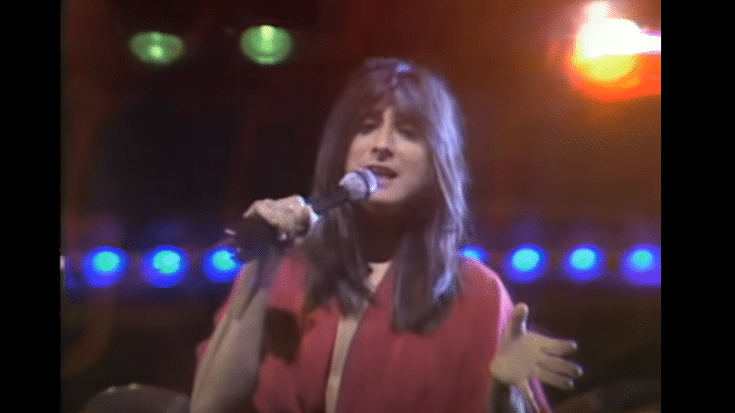
That changed once the band committed to a more melodic, radio-friendly direction in the late ’70s. Robert Fleischman briefly filled the frontman role during this transition, contributing to early songwriting before being replaced by Steve Perry. Perry’s soaring voice became inseparable from Journey’s biggest hits, defining the band’s commercial peak and pushing them into sold-out arenas around the world.
When Perry stepped away after the mid-1980s, Journey’s future became uncertain. Reunions and revivals brought a series of new singers, each tasked with honoring an iconic catalog while keeping the band functional. From Steve Augeri’s long tenure to Jeff Scott Soto’s short stay, and finally Arnel Pineda’s unlikely discovery via YouTube, Journey’s history shows how persistence—and adaptability—kept the band alive long after its defining voice stepped aside.
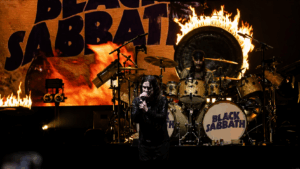
Black Sabbath
Black Sabbath’s early years revolved almost entirely around Ozzy Osbourne, whose unpolished delivery helped shape the sound of heavy metal itself. That stability fractured in the late 1970s as internal tensions mounted, leading to Osbourne’s departure and the beginning of one of rock’s most chaotic frontman sagas. What followed was less a clean handoff and more a revolving door that rarely stopped spinning.
Ronnie James Dio brought renewed focus and power to the band in the early ’80s, delivering two influential albums before moving on. His exit opened the floodgates. Ian Gillan’s brief tenure, followed by a string of short-lived or aborted vocal partnerships, reflected a band struggling to balance legacy, experimentation, and Tony Iommi’s shifting vision for the group.
By the late 1980s and early 1990s, Black Sabbath had cycled through singers at an almost unbelievable rate, sometimes replacing vocalists mid-tour or re-recording entire albums. Tony Martin provided a stretch of relative consistency, but even that ended once original lineup reunions became viable. Counting official, unofficial, and barely-there stints, Black Sabbath’s total of ten lead singers stands as one of rock history’s most extreme examples of survival through constant change.