




Bob Dylan Shared a Rare Compliment About Jerry Garcia
via "Swingin’ Pig" / Youtube
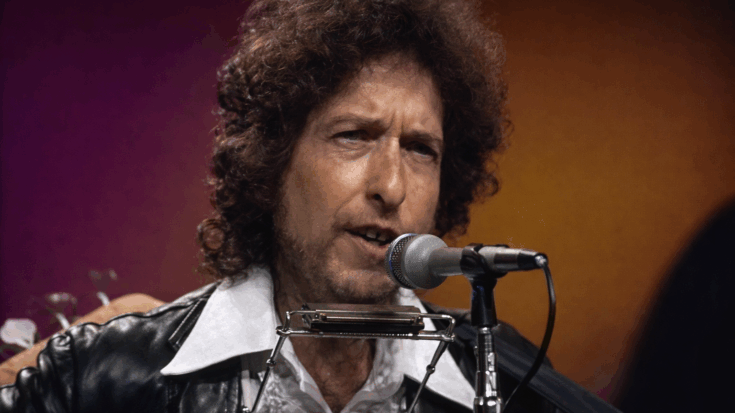
Whenever Bob Dylan stepped into the studio, technical precision was rarely at the forefront of his mind. Instead, his recordings were guided by instinct—an effort to capture a mood rather than polish every note to perfection. If sonic clarity had been his priority, some of the sharper edges of his early acoustic work—like the piercing harmonica that occasionally overtook the mix—might have been softened.
But for Dylan, those imperfections were beside the point. What mattered most were the lyrics and the melody. He viewed his songs not as fixed artifacts, but as living works—pieces that could evolve and find new meaning in the hands of other performers.
That philosophy was rooted in tradition. Songwriters like Carole King and Gerry Goffin built their early careers by writing for others, while Woody Guthrie embraced a folk process that encouraged reinterpretation. Dylan carried that lineage forward, treating songs as communal expressions rather than personal possessions.
When Covers Surpass the Creator
Over the years, Dylan’s work has been reimagined by countless artists, with varying results. Some interpretations failed to resonate with him—he has been candid in suggesting that Guns N’ Roses misunderstood the essence of his material. Others, however, earned his deep admiration.
Among those, Johnny Cash stands apart. To Dylan, having Cash record one of his songs carried immense weight—an honor akin to a musical blessing, regardless of genre boundaries.
Yet it was the Grateful Dead who offered perhaps the most transformative interpretations. Their improvisational approach aligned with Dylan’s own fluid songwriting style, allowing his compositions to expand in unexpected ways. Reflecting on their renditions, Dylan admitted:
“Some of these arrangements I just take. The Dead did a lot of my songs, and we’d just take the whole arrangement, because they did it better than me.”
He continued:
“Jerry Garcia could hear the song in all my bad recordings, the song that was buried there. So if I want to sing something different, I just bring out one of them Dead records and see which one I wanna do.”
A Meeting of Minds—and Its Limits
As rock music expanded in the 1960s, Dylan’s songwriting followed suit. His compositions often broke free from traditional pop structures, unfolding across extended verses that prioritized storytelling over brevity. This approach drew admiration from artists like Bruce Springsteen, who recognized the depth and ambition in Dylan’s work.
The Grateful Dead, with their roots in improvisation and jam-based performance, were uniquely equipped to interpret that expansiveness. Their versions of Dylan’s songs often felt closer to the spirit he imagined, even if his own recordings remained more restrained.
Still, their collaboration was not without its challenges. The Dead’s free-form style occasionally risked overshadowing the core of the song, and Dylan’s own performances have generally avoided leaning too heavily into extended jamming. His strength has always been in maintaining a balance between spontaneity and structure.
Yet the partnership left a deeper, more lasting imprint than any single performance could capture. Rather than simply adopting the Dead’s jam-oriented approach, Dylan internalized their sense of openness—the idea that a song is never truly finished, only rediscovered in different forms. That philosophy would quietly shape his later work, where time, structure, and narrative became increasingly elastic.
In sprawling compositions like Murder Most Foul and Highlands, Dylan moves beyond conventional songwriting altogether, allowing stories to unfold at their own pace, unbound by radio formats or expectations. These tracks don’t chase immediacy; they invite patience, rewarding listeners who are willing to sit בתוך the atmosphere and follow the thread wherever it leads.
Ultimately, Dylan’s evolution underscores a defining truth about his artistry: he was never interested in competing with his interpreters, not even those who reimagined his work more expansively. Instead, he embraced the dialogue between versions—the tension between structure and freedom—as part of the creative process itself. In doing so, he ensured that his songs would continue to grow, not just through his own voice, but through the countless others willing to uncover what still lies hidden within them.