Why the First Song David Bowie Heard in America Meant So Much to Him
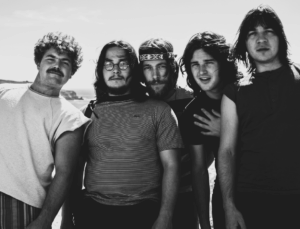
via "Broken Ridge Records"/ Youtube
There is little dispute that David Bowie stood apart as a singular presence within the music world. Renowned for his ever-changing image and unwavering commitment to artistic expression, he cultivated a persona that drew inspiration from a wide array of cultural influences. Like a magpie collecting bright fragments, Bowie absorbed and reassembled the most compelling elements around him into something entirely his own.
Rather than positioning himself in isolation, Bowie openly acknowledged the many inspirations that shaped his work. He embraced the artistic ecosystem he inhabited, using it as a foundation to construct a bold and evolving creative identity.
The Velvet Underground’s Lasting Impact
Among the artists who profoundly shaped Bowie’s direction were Lou Reed and The Velvet Underground. As Brian Eno famously observed, while the band’s debut album sold only around 30,000 copies, “everyone who bought one started a band.” Bowie was no exception. Although he had already been pursuing music for years, encountering the Velvet Underground marked a pivotal turning point in his artistic journey.
Recalling the moment in a PBS interview, Bowie said:
“My manager brought back an album, it was just a plastic demo of Velvet’s very first album in 1965-ish, something like that. He was particularly pleased because Warhol had signed the sticker in the middle, I still have it by the way. He said, ‘I don’t know why he’s doing music, this music is as bad as his painting’, and I thought, ‘I’m gonna like this.’ I’d never heard anything quite like it; it was a revelation to me.”
Bowie later reflected:
“I don’t think I ever felt that I was in a position to become a Velvet’s clone, but there were elements of what I thought Lou was doing that were unavoidably right for both the times and where music was going.”
Early Covers and Artistic Exploration
This early exposure quickly translated into action. Bowie would go on to perform one of the earliest Velvet Underground covers in Britain. “In December of that year (1967), my band Buzz broke up, but not without my demanding we play ‘I’m Waiting For The Man’ as one of the encore songs at our last gig,” he explained. “Amusingly, not only was I to cover a Velvets song before anyone else in the world, I actually did it before the album came out. Now that’s the essence of Mod.”
The experience deepened his desire to connect with the band and their manager, Andy Warhol, particularly during his visits to New York. Reflecting further on their influence, Bowie noted:
“It [Velvet Underground’s debut album] influenced what I was trying to do… One of them was the use of cacophony as background noise and to create an ambience that had been unknown in rock I think.”
From Inspiration to Ziggy Stardust
Bowie continued to champion the band’s work, even highlighting “Sweet Jane” during a 1979 radio show:
“The first single that I heard when I first went to America on the first day that I got there was in New York… He played me an album that had just come out, and he was very excited by this track, and so was I… It’s ‘Sweet Jane’ by the Velvet Underground.”
The influence of that sound would prove crucial in shaping Bowie’s evolution. In the late 1960s, he had explored a more traditional folk style before gradually moving toward the experimental tones of “Space Oddity” and The Man Who Sold the World. By the time he released Hunky Dory in 1971, his music had leaned heavily into pop sensibilities—but he was already searching for a new direction.
Rather than revisiting past ideas, Bowie drew from the raw, streetwise energy of the Velvet Underground, particularly tracks like “Sweet Jane” and “Heroin.” In a rare US radio interview, he revealed that the creation of Ziggy Stardust was influenced by mime, Kabuki theatre, and the pulse of New York art-rock: “Velvet Underground, whatever.”
He once described the resulting sound of Ziggy and the Spiders from Mars as “a British view of American street energy.” For Bowie, the Velvet Underground represented a bold new approach—direct, referential, and unafraid to twist pop conventions. In channeling that spirit, he reinvented himself as a rock icon: a British artist shaped, in part, by the daring innovation of one of America’s most influential bands.