





Johnny Cash Revealed the Bob Dylan Tune Behind ‘Understand Your Man’
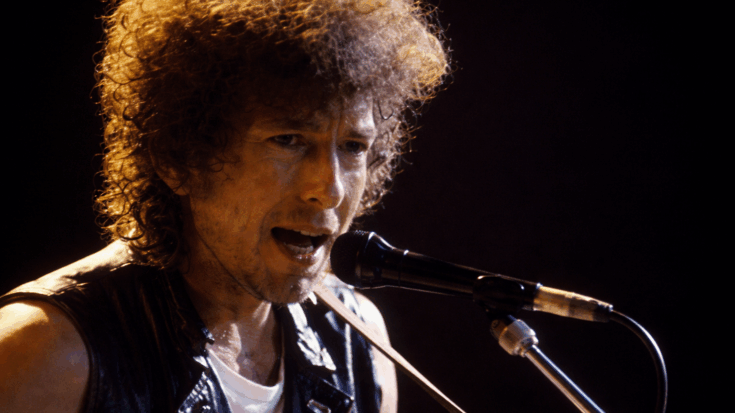
via "YeOldeRock" / Youtube
Johnny Cash’s career was as turbulent as it was brilliant—marked by excess, rebellion, and moments of stark darkness that matched his “Man in Black” image. Yet beneath the mythology stood a songwriter of extraordinary caliber. Widely regarded as one of the finest composers of the 20th century, Cash not only wrote enduring classics but also had a rare gift for interpreting songs penned by others.
What set him apart was his instinct for evolution. While remaining rooted in his signature sound, Cash consistently adapted to the shifting musical landscape. From embracing rock ‘n’ roll in the 1950s to staging bold prison performances, he refused to stand still. That same perceptiveness led him to recognize Bob Dylan as a once-in-a-generation songwriter—an admiration that would grow into one of music’s most genuine friendships.
A Mutual Admiration Between Icons
The relationship between Cash and Dylan was built on deep respect and creative kinship. Both artists frequently praised one another in interviews, covered each other’s songs, and collaborated in informal recording sessions that explored the breadth of American music.
Cash reflected on this connection in Cash: The Autobiography, recalling how Dylan’s music became a constant companion on the road:
“I had a portable record player that I’d take along on the road, and I’d put on [The] Freewheelin’ [Bob Dylan] backstage, then go out and do my show, then listen again as soon as I came off. After a while at that, I wrote Bob a letter telling him how much of a fan I was. He wrote back almost immediately, saying he’d been following my music since ‘I Walk the Line,’ and so we began a correspondence.”
Dylan’s admiration for Cash proved equally profound. Following Cash’s death in 2003, he offered a tribute that underscored the singer’s cultural significance:
“In plain terms, Cash was and is the North Star; you could guide your ship by him—the greatest of the greats then and now. Truly he is what the land and country is all about, the heart and soul of it personified and what it means to be here; and he said it all in plain English. I think we can have recollections of him, but we can’t define him any more than we can define a fountain of truth, light and beauty.”
A Song Revisited—and Reimagined
The bond between the two artists has resurfaced in recent years with the release of a previously unheard live recording of Cash performing Dylan’s “Don’t Think Twice, It’s All Right.” The track appears on Bear’s Sonic Journals: Johnny Cash at The Carousel Ballroom, April 24th, 1968, a sprawling 28-song collection captured by Owsley Stanley.
Long regarded as one of Dylan’s most poignant compositions, “Don’t Think Twice, It’s All Right” embodies the emotional honesty that defined his songwriting. It also held a special place in Cash’s musical world—so much so that its influence extended beyond performance.
According to Cash’s daughter, Cindy Cash, the song’s melody directly shaped one of her father’s own recordings, “Understand Your Man.” While the lyrics were entirely original, the tune bore a striking resemblance—one that fans had long suspected.
“It’s Exactly the Same”: Cindy Cash Confirms the Story
Cindy Cash later addressed the connection, recounting a story her father told her firsthand. Writing in response to a bootleg recording online, she confirmed what many had speculated:
“For all of you who have been observant enough to notice that the melodies are similar on this song and ‘Understand Your Man’, good for you. I am Johnny’s daughter from his first wife, Vivian, and know the story first hand from dad.”
She continued by explaining how the moment unfolded:
“He wrote ‘Understand You Man’ while not in a real good mood,” she continued, “as you can tell, and was having a hard time coming up with a melody which, for him, was a frustrating thing. He could come up with them so fast. So he called Dylan and said, ‘Hey, do you mind if I use the melody of yours from ‘Don’t Think Twice’ for a song I’m writing? I just can’t seem to come up with one?’ Dylan said, ‘I don’t give a shit’…”
Cindy added that the story came directly from Cash himself, recalled during a casual moment at home:
“…this story was told to me word for word by my dad one day when I was singing ‘Don’t Think Twice…’ in the kitchen and asked him why I always went into the words to ‘Understand Your Man’ every time I sang it. He told me this story himself!! I didn’t doubt him for a second. Sounds just like both of them. I laughed all day. So yes, it’s not just similar; it’s exactly the same!”
In the end, the story reflects more than just shared melodies—it captures the spirit of two artists who respected each other enough to borrow, build, and create without ego. Cash’s openness about his influences only deepened his authenticity, reinforcing his reputation as both a musical innovator and an everyman figure. It is this honesty, as much as his artistry, that continues to secure his place among the greatest voices in music history.