




The English Band Ritchie Blackmore Called the Very Best
via "Mercedes-Benz Enthusiast Channel" / Youtube
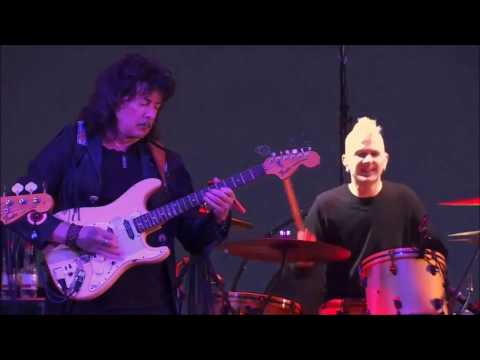
Few figures in classic rock have been as candid—or as unpredictable—as Ritchie Blackmore. As the founding guitarist of Deep Purple, Blackmore built a reputation not only for his innovative playing but also for his unfiltered opinions about fellow musicians.
During the early 1970s, he spoke openly about how he measured a band’s greatness, often using unconventional standards. While he had previously dismissed even giants like The Rolling Stones in characteristically sharp terms, his praise for certain peers revealed a more nuanced perspective—one rooted in authenticity rather than spectacle.
“They’re the Best Band in England”
In an interview with Martin Webb, Blackmore outlined his views on stage performance, emphasizing that movement should enhance, not overshadow, the music. “I like leaping around on stage as long as it’s done with class. Like Free. They’re the best band in England,” he said.
Central to that admiration was frontman Paul Rodgers, whose performance style Blackmore considered a model of restraint and musicality. “Paul Rodgers is a good singer and a brilliant mover,” he noted. “None of this jumping up in the air and doing the splits and all that. He just moves with the music.”
Blackmore contrasted this with Pete Townshend of The Who, suggesting that his stage antics had become overly calculated.
“Not like Pete Townshend, who’s gotten to the point that he waits until the photographers are well-aimed before he leaps. He’s not very spontaneous.”
Free’s appeal, in Blackmore’s view, extended beyond Rodgers’ presence. Tracks like “I’m a Mover” showcased a groove-driven sensibility, anchored by Andy Fraser’s fluid basslines and understated guitar work. Onstage, the band translated that sound into a cohesive, natural performance, creating a connection with audiences that felt immediate and unforced.

Influence, Near Misses, and Musical Divide
Blackmore’s respect for Free was not merely observational—it also informed his own work. In a later interview with Steve Rosen, he acknowledged the band’s impact on Deep Purple’s sound. Reflecting on Mistreated from the 1974 album Burn, he admitted:
“Was influenced by ‘Heartbreaker’ by Free. I get inspired by other people’s songs and write something vaguely similar.”
The admiration nearly led to collaboration. Blackmore revealed that Rodgers had briefly been considered as a potential vocalist for Deep Purple. “That’s right, he was for about a week. I think somebody was going to chop his legs off if he did leave [Free], so he didn’t,” he said, with typical dry humor.
Ultimately, the idea dissolved due to stylistic differences. As Blackmore explained:
“I think he was into a different type of singing. He didn’t want to follow Ian Gillan and all that screaming. Rodgers wasn’t into that, he was more into blues.”
That divide underscored what Blackmore valued most: a sense of musical honesty. In Rodgers and Free, he found a band whose sound and stage presence were inseparable—effortless, instinctive, and, above all, real.