




The Song That Revealed Lennon’s Private Life
via "ECO Scouts" / Youtube
In April 1970, The Beatles officially called it quits, and the music world felt like it had just lost something irreplaceable. For fans across the globe, the breakup was heartbreaking and for many, it was completely unexpected. One day, the band that had defined a generation was still together, and the next, it was over.
At the time, there wasn’t much clear information about what had led to the split. There were whispers of disagreements and creative differences, but nothing solid enough to fully explain such a huge moment. Looking back now, it’s clear that tensions had been building for years, especially during the late 1960s. Still, back then, most of it stayed hidden from the public eye, leaving fans to guess what really went wrong.
Over time, people began forming their own opinions. Some believed that the intense and ever-present relationship between John Lennon and Yoko Ono created distance within the band. Others pointed to the sheer level of talent in the group, suggesting that four strong creative minds simply couldn’t coexist forever without conflict. But the truth wasn’t that simple. The Beatles had gradually transformed from a united musical force into four individual artists, each with his own voice and direction. What once felt like a shared journey had started to branch out into separate paths.
There were also business issues adding pressure behind the scenes. After the death of their manager, Brian Epstein, the band lost someone who had helped keep things organized and balanced. Without that guidance, disagreements became harder to manage.
And then there was the pressure of fame. The Beatles weren’t just popular—they were a global phenomenon. Every move they made was watched, analyzed, and talked about. Living under that kind of spotlight year after year took its toll.
By the time the breakup became official, it wasn’t really a sudden event. It was the result of years of change, growth, and quiet separation. The group had already begun drifting apart long before the announcement. Each member was ready to explore ideas that didn’t quite fit within the band anymore. In the end, it wasn’t just a band falling apart; it was a cultural shift, marking the close of one chapter and the beginning of four very different journeys.
A Painful Past and the Search for Healing
After The Beatles went their separate ways, John Lennon didn’t just focus on music—he turned inward. He began exploring his past, trying to understand the experiences that shaped him into who he was.
Years later, Paul McCartney opened up about Lennon’s early life during an interview with Conan O’Brien at the Tribeca Festival. He shared a more personal side of Lennon, one that many fans didn’t fully see.
McCartney explained that Lennon “had a really tragic life,” pointing to several deeply emotional experiences from his childhood. He continued:
“As a kid, his mother was decreed to not be good enough to bring him up…His father had left the home when John was three. So that’s not too wonderful. John grew up with these sort of little minor tragedies through his life… It made me realise why he had that vulnerability. I always admired the way he dealt with it because I’m not sure I would deal with the stuff he went through that well.”
Those early struggles stayed with Lennon throughout his life. Even at the height of his fame, there were unresolved feelings beneath the surface. Once the band was no longer holding everything together, he finally had the space to face them.
One of the ways he tried to work through his past was by exploring therapy. Lennon became interested in the ideas of Arthur Janov, who developed what was known as “primal scream” therapy. This approach encouraged people to release deep emotional pain, often rooted in childhood experiences.
This influence became very clear in Lennon’s 1970 song “Mother.” The track was raw, emotional, and deeply personal, as he expressed feelings of abandonment and loss. It was a major shift from the music fans had known during his Beatles years.
At the same time, Lennon’s life was far from stable. The early to mid-1970s were filled with ups and downs. He struggled with addiction, dealt with the pressures of fame, and continued searching for answers about himself.
Through it all, Yoko Ono remained a central figure in his life. She was more than just a partner; she played a guiding role, helping him navigate both his personal struggles and his creative journey. Together, they explored activism, art, and self-discovery, even as they faced challenges in their relationship.
The “Lost Weekend” and a Song That Sparked Debate
In 1973, Lennon entered a period that would later be known as his “Lost Weekend.” Despite the name, it lasted around a year and a half and became one of the most talked-about chapters of his life.
During this time, his relationship with Yoko Ono hit a difficult phase, and the two separated. It was during this separation that Lennon grew close to May Pang, who had been working with both him and Ono.
What started as a temporary situation soon became a romantic relationship. For many fans, this was surprising and even controversial. Lennon had been so closely associated with Ono that seeing him with someone else felt unexpected.
Interestingly, Ono was aware of the relationship and didn’t see it as something permanent. She viewed it as a passing phase. Eventually, Lennon returned to her, openly expressing regret for what had happened.
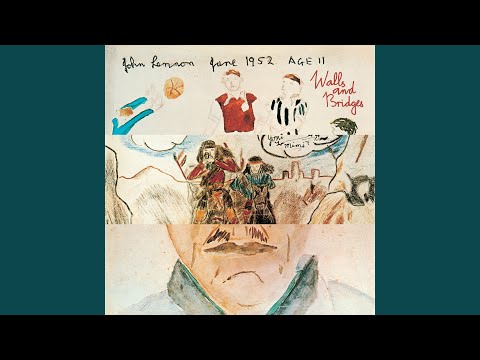
Still, his time with Pang left a strong emotional impact and it found its way into his music. During this period, Lennon worked on his album Walls and Bridges, which included the song “Surprise Surprise (Sweet Bird of Paradox).” According to Pang, the song was written for her. The romantic lyrics read:
“Sweet as the smell of success/ Her body’s warm and wet/ She gets me through this god awful loneliness/ A natural high butterfly/ Oh I, I need, need, need her”.
The lyrics revealed a deeply personal side of Lennon, filled with longing and emotional connection.
Contrary to what most believed, Ono knew about Lennon’s affair and understood it as a fling. She welcomed Lennon back to her life as he expressed public regret for his infidelity. However, in an interview with Larry Kane in the late ’70s, Lennon explained that he had been in love.
“You know Larry, I may have been the happiest I’ve ever been… I loved this woman [Pang], I made some beautiful music, and I got so fucked up with booze and shit and whatever.”
In the end, this chapter of Lennon’s life shows just how closely music, emotion, and real human struggle were tied together in his world, leaving behind songs that still spark curiosity and conversation decades later.