



The Band That Helped Shape The Doobie Brothers’ Sound
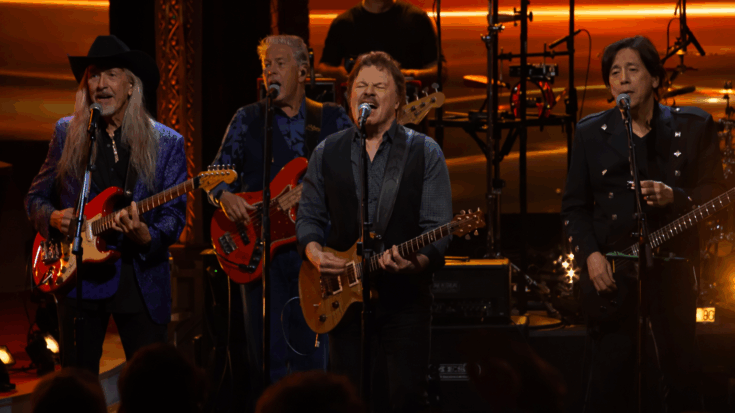
via "The Doobie Brothers"/ Youtube
Few band names in rock history feel as casually conceived—and as enduring—as The Doobie Brothers, a name born not out of strategy but spontaneity.
“Why don’t you call yourselves The Doobie Brothers since you’re always smoking?”
It sounded more like a punchline than the foundation of a serious band identity—hardly the kind of name destined for arenas and platinum records. In hindsight, though, its offhand origin reflects the loose, unpredictable chemistry that often defines rock history.
What began as a throwaway joke from friend Keith Rosen would become one of the most recognizable band names in classic rock. At the time, however, the reaction from the group was far from enthusiastic. “Everybody looked at each other and said, ‘Well, that’s really a stupid name,’” Tom Johnston recalled to The Minnesota Daily in 2013.
The Bay Area Crucible and a Crucial Influence
The Doobie Brothers did not emerge in isolation. Their identity was forged within the fertile musical ecosystem of late-1960s Northern California, where experimentation and genre-blending were not just encouraged but expected.
Living in San Jose, Johnston absorbed the sounds of the Grateful Dead and Jefferson Airplane, but it was Moby Grape that left the deepest imprint. The San Francisco-based group stood apart for their seamless fusion of rock, folk, blues, country, and pop—an approach that quietly set a template for what would later be recognized as the “California sound.”
Johnston’s connection to Moby Grape was not merely that of a fan. Through jam sessions in the Santa Cruz Mountains, he crossed paths with guitarist Skip Spence, forming a creative relationship that would prove pivotal. “I played with a lot of guys who were in the Santa Cruz Mountains, a lot of jam sessions,” Johnston said. “And I also met Skip Spence from Moby Grape early on. Jammed with him quite a bit.”
It was Spence who introduced Johnston to drummer John Hartman, effectively catalyzing the formation of The Doobie Brothers. Hartman had arrived in California hoping to participate in a Moby Grape reunion that never materialized—yet that unrealized project indirectly gave rise to something equally enduring.
The admiration ran deep among the future Doobies. “Moby Grape had a cult following as well, and I was one of the cult,” Johnston explained. “And so was John and so was Pat and so was Tiran [Porter] and so was everybody else I knew.”
Their influence carried into the band’s music in tangible ways. Johnston pointed to “Neal Fandango” as a direct reflection of that inspiration: “That song jumps out at me right off the bat because that has a real Moby Grape flavour to it.” He further praised their artistry, noting, “They had three-part harmonies… a driving drummer… The songs were really good, well-crafted, well-thought-out songs… they weren’t just dumb-headed lyrics.”
Talent, Turbulence, and the Cost of Being Ahead of the Curve
For all their innovation, Moby Grape’s story is one of unrealized potential. Despite critical acclaim and a devoted following, the band struggled to sustain momentum—undermined by both external pressures and internal challenges.
Legal battles with manager Matthew Katz cast a long shadow over their career, particularly after he claimed ownership of the band’s name and later secured rights to their music without their knowledge. These disputes not only stifled their commercial prospects but also fractured their creative output.
Compounding these issues were personal struggles within the band. In 1969, bassist Bob Mosley and Skip Spence began experiencing severe mental health crises. Mosley briefly left to join the Marines before being discharged and later diagnosed with schizophrenia. Though he endured periods of homelessness, his connection to the band remained, culminating in a return for their 1996 album True Blue.
Spence’s decline was more abrupt and widely documented. During sessions in New York, his behavior changed dramatically. “Skippy changed radically while we were in New York,” guitarist Jerry Miller recalled in 2007. “There were some people there who were into harder drugs… and some very weird shit. And so he kind of flew off with those people. Skippy kind of disappeared for a little while.”
His eventual return was marked by a disturbing episode that led to his arrest and hospitalization. Following a psychotic break, Spence attacked Miller’s hotel room door with an axe, resulting in his confinement at the Manhattan Detention Complex and later treatment at Bellevue Hospital. His departure from the band soon followed.
Moby Grape would continue in various forms over the years, reuniting intermittently and releasing music until 1989. The deaths of Spence in 1999 and Miller in 2024 further cemented their legacy as one of rock’s most compelling “what if” stories.
Looking back, Johnston’s reflections carry both admiration and a sense of lingering injustice. “Unfortunately, they burned out really fast,” he said. “But in the small snippet of time they were around, they put out a couple of albums that were just phenomenal. The first one… has yet to be equalled. I played the grooves off of that one.”
Yet perhaps Moby Grape’s true legacy lies not in chart positions or longevity, but in influence—the kind that quietly reshapes the musical landscape without always receiving credit. Their DNA can be heard in bands like The Doobie Brothers, in the layered harmonies, the fluid genre interplay, and the balance between technical skill and songwriting depth.
In that sense, Moby Grape did not simply fade away—they echoed forward, leaving behind a blueprint that others would refine, popularize, and carry into the mainstream.