




The B-Sides That Should Have Been the Hits

via Smurfstools Oldies Music Time Machine / youtube
The Flip Side of History
Every classic rock fan knows the feeling. You are listening to a single you have loved for years, and then you turn it over, or scroll to the track nobody ever plays, and something stops you cold. A melody you did not expect. A lyric that cuts deeper than the song that got all the radio time. A performance so raw and honest that you genuinely cannot understand why the label buried it on the back of a 45.
The B-side was supposed to be filler. It was the throwaway, the afterthought, the track that existed only to give radio stations a reason to keep the vinyl on the turntable. Except that rock and roll history is absolutely littered with B-sides that were not fillers at all. They were masterpieces that someone, somewhere, made the wrong call on. And in a few legendary cases, those wrong calls became some of the most aching, beloved songs in the entire canon.
Here are four of the greatest examples, starting with the one that may have caused the most pain of all.
The Songs That Deserved More
The most heartbreaking B-side in classic rock history is almost certainly this one. Stevie Nicks wrote “Silver Springs” in 1976 during the sessions that produced Rumours, pouring everything she felt about her breakup with Lindsey Buckingham into four devastating minutes. She named it after a highway sign she spotted in Maryland that she thought sounded like a beautiful dream. She then gifted the publishing rights to her mother, Barbara Nicks, so her mother could collect the royalties forever. Then Mick Fleetwood and Buckingham pulled her aside in a parking lot and told her the song was not going on the album. The reason given was length, and the fact that Rumours already had too many slow songs. The producer called it one of the best-engineered tracks from the entire session. Nicks called its exclusion a source of anger for many years. The song was tucked onto the B-side of “Go Your Own Way,” which was Buckingham’s breakup song about Nicks, released on the actual album. Twenty years later, at the 1997 reunion concert The Dance, Nicks finally had her moment. She walked to Buckingham’s microphone, looked him in the eye, and sang every word directly at him in front of 400 people. The performance earned a Grammy nomination. It is now considered one of the greatest live performances in rock history.

“It was the best song that never made it to a record album.”
Richard Dashut, Rumours co-producer, 1997
This almost defies belief. When the Rolling Stones released “Honky Tonk Women” in 1969, they tucked “You Can’t Always Get What You Want” onto the flip side. The song opens with a full choir. It runs over seven minutes. It is one of the most majestic, wide-open pieces of music the Stones ever recorded, a song that sounds like a generation exhaling after a decade of upheaval. It eventually appeared on Let It Bleed and became one of the most enduring songs in the band’s entire catalog, but for its first appearance in the world, it was the B-side to a song about a dirty woman with a honky-tonk style.

Led Zeppelin almost never released B-sides. Their policy was essentially that everything they recorded went on an album, which makes it all the more puzzling that “Hey Hey, What Can I Do” ended up as the only non-album B-side they ever put out. The song is a gorgeous, jangly acoustic folk track with Robert Plant singing in his lower, more mystical register, and it has absolutely no business being a throwaway. By rights it should have been on Led Zeppelin III alongside the other acoustic explorations from those sessions. Instead it spent years as a collector’s item before eventually becoming a deep-catalog radio staple that die-hard Zeppelin fans cite as one of the most underrated songs the band ever made.

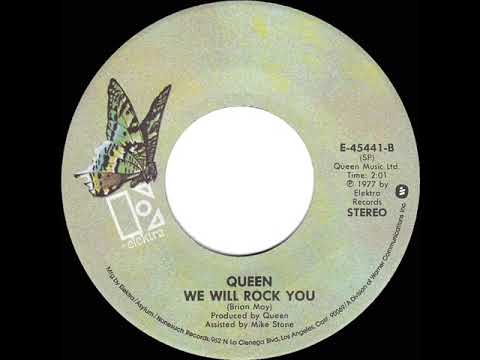
In the United Kingdom and several other markets, “We Will Rock You” was the B-side to “We Are the Champions.” That means one of the most recognizable rhythm patterns in the history of popular music, a song that has been played at sporting events on every continent for nearly five decades, was considered the lesser track. Both songs came from the 1977 album News of the World, and while the pairing was treated as a double-A side in some markets, the original packaging in Britain listed “We Are the Champions” first. History, and every stadium crowd since 1977, has weighed in on that decision.
What the B-Side Taught Us
There is something worth sitting with in all of these stories. Every one of these songs was heard by the people who made it, and by producers and label executives who were paid to know what worked. And in every case, someone looked at a masterpiece and said: put it on the back. The instinct that drove rock and roll was never really about industry wisdom. It was about the music finding its audience anyway, through word of mouth, through late-night radio, through a fan pressing play and suddenly needing to tell everyone they knew.
The B-side did not make these songs lesser. It just made the discovery more personal. And that is the thing about great music. It does not need to be handed to you. Sometimes the best part is the finding.