




The 60-Second Guitar Solo That Changed Rock Forever

Via Guitar Frontier / Youtube
When a Single Minute Rewired the World
There are moments in music history so seismic that the world before them and the world after them are simply not the same place. Some come dressed in grandiose ceremony, stadium lights, and thundering crowds. Others arrive quietly, almost accidentally, tucked between tracks on an album that the label wasn’t even sure would sell. The greatest guitar solos belong to a different category entirely. They arrive like a bolt from a clear sky, and when they end, you realize something inside you has shifted permanently.
We are talking, specifically, about the kind of solo that stops a guitarist mid-strum and makes them put the instrument down. The kind that makes a teenager press rewind seventeen times in a row. The kind that, fifty years later, still makes the hair on the back of your neck stand up like you’re hearing it for the very first time.
Three solos, in particular, stand at the summit of rock guitar history. Each one is roughly sixty seconds to two minutes long. Each one changed everything.
Eruption, Comfortably Numb, and Hotel California: Three Solos, Three Earthquakes
Eddie Van Halen’s “Eruption” arrived in 1978 like a hydrogen bomb dropped on the rock guitar world. At just one minute and forty-two seconds, it introduced two-handed tapping, gonzo whammy bar dives, and artificial harmonics to mainstream audiences in a single, breathless performance. What makes the story even more remarkable is that it almost never happened at all. Producer Ted Templeman overheard Van Halen rehearsing it in the studio before a club show and insisted it go on the album. It was not planned. It was not polished for months in a recording booth. It was a man doing what he did every night in a smoky club, and it shattered every rule about what a guitar solo could be.
“When Eruption came on, it sounded otherworldly. It didn’t sound like a human. It sounded like an alien.”
Jerry Cantrell, Alice in Chains

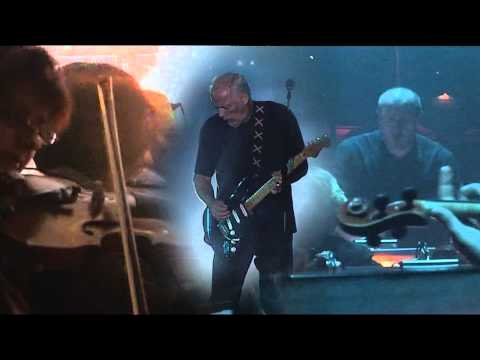
David Gilmour’s second solo in “Comfortably Numb” operates on an entirely different frequency. Where Van Halen exploded outward, Gilmour turned inward, and the result is arguably the most emotionally devastating two minutes in rock history. Gilmour has said he recorded five or six complete solos, then pieced together the final version note by note from the best moments of each take. He played it on a Fender Strat through a Big Muff delay pedal and a Yamaha rotating speaker cabinet, a setup that gave the solo its unmistakable floating, otherworldly quality. Planet Rock listeners once voted it the greatest guitar solo of all time, with all of rock history eligible. Still Gilmour.
Then there is Hotel California. Don Felder and Joe Walsh, both wielding Gibson EDS-1275 double-neck guitars, constructed a dual guitar outro that Guitarist magazine readers voted the greatest solo in history. It is the rare solo that functions as a complete musical conversation between two players, a dialogue rather than a monologue, and its winding, interlocking melodies somehow perfectly capture the elegant dread that the song builds for the entire four and a half minutes before it arrives.

Why These Moments Still Hit So Hard Decades Later
There is a question worth sitting with: why do these solos still feel urgent? We have heard them thousands of times. They play on classic rock radio every single day. And yet, when that second solo in “Comfortably Numb” lifts off the fretboard, something animal happens in your chest. The same thing occurs when Van Halen’s tapping runs cascade down the neck, or when Felder and Walsh lock into that final Hotel California spiral.
The answer, according to musicians who have spent careers studying the question, is that the greatest solos never prioritized technique over emotion. They used technique in service of feeling. Van Halen’s tapping was jaw-dropping, yes, but the thing that stopped people cold was the sheer attitude, the sense of a player absolutely on fire with no interest in pulling back. Gilmour’s restraint was technically remarkable, but what listeners respond to is the ache. The space between his notes carries as much weight as the notes themselves.
These men were not showing off. They were saying something that could not be said in words. And fifty years on, we are still listening.