




Bob Dylan Words That Spark Debate Today
via "Swingin’ Pig" / Youtube
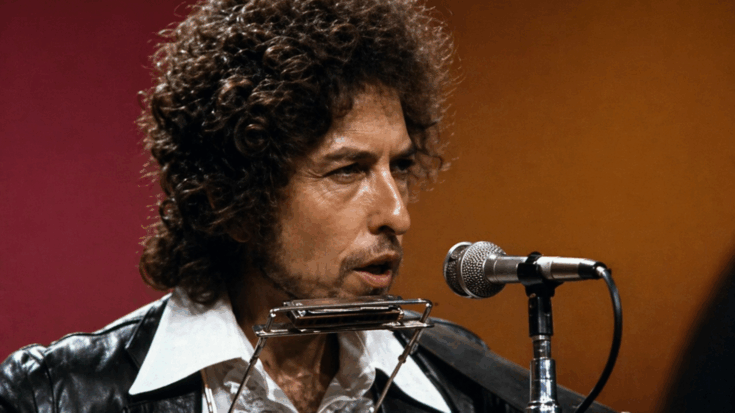
It is nearly impossible to discuss the craft of lyric writing without invoking Bob Dylan. Widely regarded as one of the most influential songwriters in modern music, Dylan reshaped the boundaries of what popular music could achieve. Emerging from the folk scene of Greenwich Village, he carried poetic sensibilities into the mainstream, inspiring contemporaries such as The Beatles, Leonard Cohen, and Joni Mitchell.
His legacy is not merely anecdotal—it is institutional. Dylan’s receipt of the Nobel Prize in Literature cemented his place as a literary force, while a catalog exceeding 600 songs underscores both his productivity and cultural reach. The reported $300 million sale of his publishing rights to Columbia Records further highlights the enduring value of his work.
Yet, such scale inevitably introduces inconsistency. For an artist who redefined lyrical ambition, even minor shortcomings can feel disproportionately glaring.
Moments of Brilliance—and Missteps
At his peak, Dylan’s writing remains unparalleled. Lines from “Like A Rolling Stone” continue to resonate as some of the most iconic in popular music:
“How does it feel / To be on your own / With no direction home / Like a complete unknown / Like a rolling stone?”
Elsewhere, songs like “Masters of War,” “Positively 4th Street,” and “It’s Alright, Ma (I’m Only Bleeding)” demonstrate a command of language that borders on the poetic sublime.
However, Dylan’s vast output also reveals a more uneven side. “Ballad in Plain D” stands as a rare example of self-acknowledged regret. Reflecting on the song, Dylan told author Bill Flanagan in 1985:
“Oh! Yeah. That one… That one I look back and I say, ‘I must have been a real schmuck to write that.’ I look back at that particular one and say, of all the songs I’ve written, maybe I could have left that alone.”
Then there is “Wiggle Wiggle,” often cited among his weakest compositions. Its repetitive phrasing—“Wiggle to the front, wiggle to the rear / Wiggle till you wiggle right out of here…”—suggests either deliberate absurdity or a rare lapse in lyrical rigor.
Other lines scattered across his catalog have similarly puzzled listeners. “The sun ain’t yellow, it’s chicken” has long sparked debate over its intent, while passages from “Ring Them Bells” and “Bob Dylan’s 115th Dream” veer into awkward or overly whimsical territory. These moments, though relatively rare, stand in stark contrast to his finest work.
Absurdity, Experimentation, and the Limits of Genius
Perhaps no song better encapsulates Dylan’s more divisive tendencies than “I Shall Be Free No.10.” Intended as a blend of social commentary and surreal humor, the track often falters under the weight of its own ambition. Its Cold War musings—“Well, I don’t know, but I’ve been told / The streets in heaven are lined with gold… Wowee! pretty scary!”—undercut their own seriousness with an abrupt, almost flippant tone.
The song’s more surreal passages, including the infamous “weird monkey” verse, push the boundaries of absurdity to a point that feels less insightful than indulgent. Lines like “Yipee! I’m a poet and I know it / Hope I don’t blow it” further blur the line between satire and self-parody.
Defenders argue that such lyrics represent a deliberate embrace of absurdist tradition, suggesting that Dylan was critiquing societal contradictions through exaggerated nonsense. There is some merit to this interpretation—after all, Dylan has long resisted conventional structures in both form and meaning. However, not all experimentation yields clarity, and not every abstraction lands with purpose.
In hindsight, these moments reveal something more valuable than simple missteps: they illustrate the risks inherent in artistic freedom. Dylan’s willingness to explore, to follow ideas without restraint, is precisely what enabled his greatest achievements. The same openness that produced towering works also allowed for occasional misfires.
Rather than diminishing his legacy, these flawed lyrics underscore its humanity. They remind listeners that even the most celebrated artists are not infallible, and that brilliance often emerges from a process unafraid of failure. In that sense, Dylan’s weaker moments are not just exceptions—they are essential counterpoints that make his greatest work feel even more extraordinary.