



Mick Jagger’s Message To Andy Warhol Surfaces
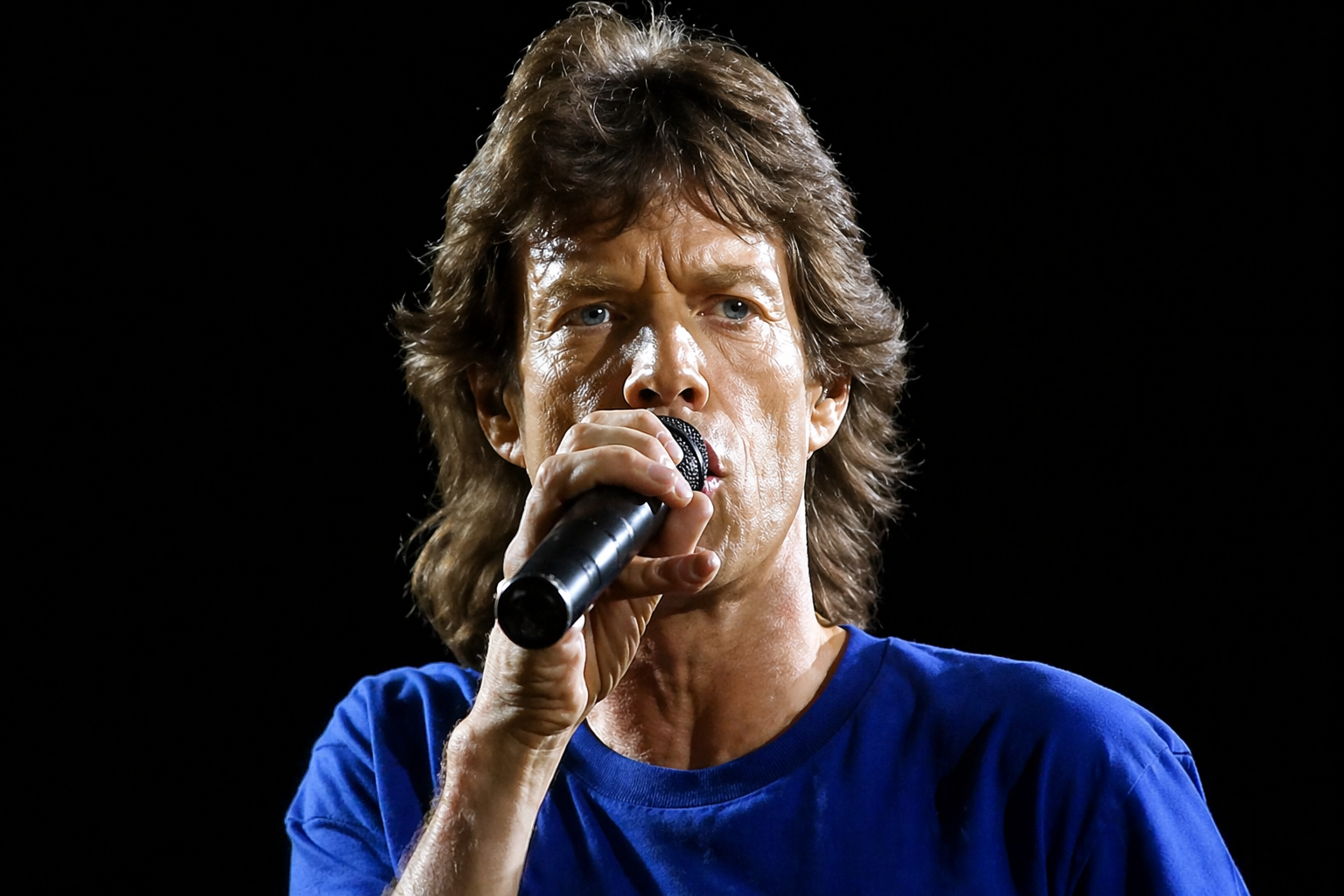
via "Live Aid" / Youtube
By the early 1970s, Andy Warhol had cemented his status as one of America’s most influential visual artists. Known for his silkscreen technique and fascination with repetition, he produced instantly recognizable works—from vivid portraits of Marilyn Monroe to the now-iconic depictions of Campbell’s Soup Cans. At the same time, Warhol thrived as a fixture of New York’s cultural elite, moving effortlessly between studios, parties, and the city’s most fashionable social circles.
“He would wake up early every day and go to his studio and paint, break for lunch, and work all afternoon—often spending hours on the phone—then at night he would always go out and socialize. He went everywhere,” recalled Debbie Harry, reflecting on Warhol’s tireless routine.
A Meeting Delayed
Warhol’s eventual collaboration with Mick Jagger on the Sticky Fingers cover in 1971 was not the product of a long-standing friendship. The two first met in 1964, during The Rolling Stones’ debut U.S. tour, at a dinner party hosted by model Baby Jane Holzer.
“Everyone was there,” Jagger later recalled in a 1977 conversation published in Interview magazine, Warhol’s own publication. “But Andy and I never spoke to each other again for about seven years.”
There was no clear reason for the gap. As Warhol would later note, their reconnection came down to a specific request tied to the album artwork: “When I had to photograph your zipper for the cover of Sticky Fingers.” “Yeah,” Jagger confirmed, “that’s when we had to talk to each other…again.”
The Letter and the Vision
Despite the years of silence, Jagger placed full trust in Warhol’s creative instincts. In April 1969, he sent a letter to Warhol’s New York office along with materials intended to inspire the artwork. Jagger wrote:
“Dear Andy, I’m really pleased you can do the art-work for our new hits album. Here are 2 boxes of material which you can use, and the record,”
“In my short sweet experience, the more complicated the format of the album… the more f*****d-up the reproduction and agonizing the delays. But, having said that, I leave it in your capable hands to do what ever you want………..and please write back saying how much money you would like.”
In a humorous aside, he added:
“He will probably look nervous and say ‘Hurry up’ but take little notice. Love, Mick Jagger.”
Although the zipper featured on the final cover did not belong to Jagger—and its true subject remains uncertain—Warhol’s concept proved unforgettable. He was reportedly paid £15,000 for the work, a substantial sum at the time.
An Icon Is Born
Upon its release on April 23, 1971, Sticky Fingers was both a commercial powerhouse and a critical success. Its bold, provocative cover—complete with a working zipper—quickly became one of the most recognizable images in rock history.
The collaboration between Warhol and Jagger ultimately underscored a larger cultural moment, where music and visual art collided at the highest level. Decades later, the Sticky Fingers sleeve remains a defining example of that intersection—proof that Warhol’s influence extended far beyond the gallery and deep into the fabric of rock ‘n’ roll itself.