




The Rolling Stones Album Fans Still Debate
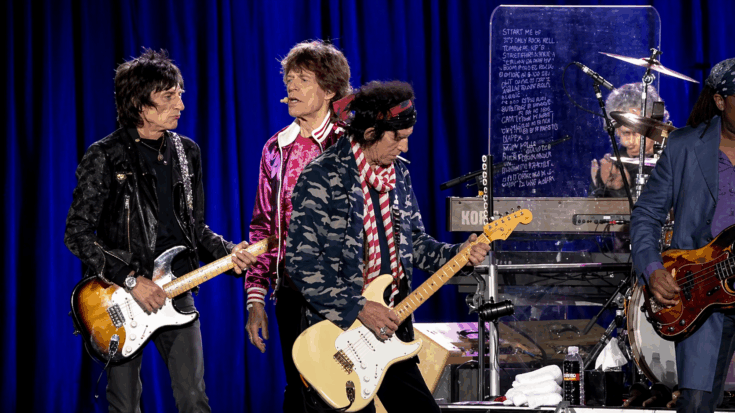
via "Felipe Manson" / Youtube
By the mid-1970s, The Rolling Stones appeared unstoppable. Commercially, they were at their absolute peak—albums dominated the charts, and tours sold out almost instantly. To the outside world, the band seemed untouchable.
But behind the scenes, a different story was unfolding. Internal tensions and excess began to take their toll, and the music itself reflected a subtle but growing fatigue. During the sessions for It’s Only Rock ‘n Roll, Keith Richards was reportedly barely present. Live performances, once electrifying, had by around 1972 begun to feel more mechanical than transformative. The sheer scale of the band’s success seemed to weigh on their creativity, with each new release feeling less like an event.
This decline stood in stark contrast to their extraordinary run from Beggars Banquet through Exile on Main St.—a sequence widely considered one of the greatest in rock history. Yet momentum began to falter soon after, with Goats Head Soup sounding hastily assembled, followed by the uneven but still respectable It’s Only Rock ’n Roll.
Transition, Turbulence, and a New Guitarist
Determined to regain their footing, the Stones returned to the studio in late 1974, recording in Munich before continuing sessions in the Netherlands in early 1975. However, uncertainty loomed after guitarist Mick Taylor’s abrupt departure in December 1974.
The search for a replacement became a pivotal moment. High-profile names such as Jeff Beck, Peter Frampton, and Steve Marriott were all considered before Ronnie Wood ultimately secured the role. Even then, the transition period was far from smooth.
Recording sessions were paused as the band returned to touring in mid-1975. It would take nearly another year before they resumed work, revisiting Munich and later moving to Montreux, Switzerland, to complete the album. The prolonged process reflected a band struggling to stabilize both creatively and internally.
‘Black and Blue’: Experimentation Meets Uncertainty
When Black and Blue was finally released on April 23, 1976—nearly 18 months after sessions began—it presented a markedly different sound. A blend of funk, soul, jazz, and reggae influences largely replaced the guitar-driven rock that had defined much of their early-’70s output.
While these stylistic shifts aligned with the band’s long-standing connection to Black musical traditions, the result divided critics. Writing in Creem, Lester Bangs delivered a blunt assessment:
“This is the first meaningless Rolling Stones album.”
Still, the record was not without its strengths. The soulful ballad “Fool to Cry” and the groove-driven “Hot Stuff” emerged as standout tracks, released together as a single with the former reaching the Top 10. The sessions also featured notable contributions from Billy Preston, Nicky Hopkins, and guitarists Wayne Perkins and Harvey Mandel.
Although Wood played on only three tracks, his presence was symbolically cemented with an appearance on the album’s back cover and recognition as a full-time member. In many ways, Black and Blue captured a band in transition—still commercially dominant, yet grappling with identity, direction, and the weight of its own legacy.