




Original Foreigner Vocalist Lou Gramm Details Speech Recovery After Brain Surgery
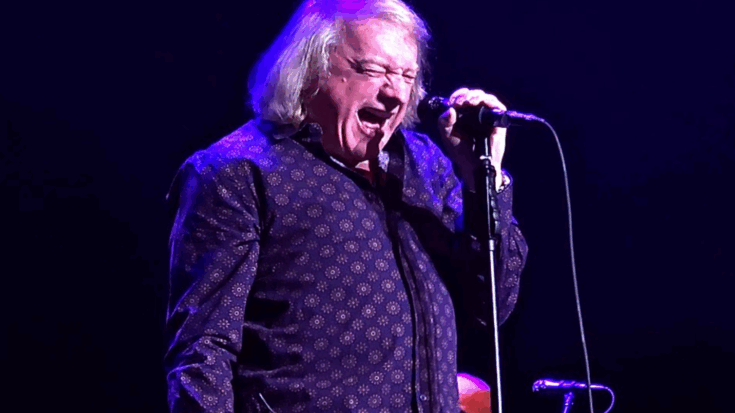
via Brian Cilli / YouTube
A Life-Changing Diagnosis Comes to Light
On a recent episode of the Rock & Roll High School podcast, hosted by two-time Grammy Award-winning producer and music executive Pete Ganbarg, original Foreigner singer Lou Gramm opened up about a serious health battle that changed his life nearly three decades ago. Gramm spoke in detail about being diagnosed with a rare type of brain tumor known as a craniopharyngioma. While the tumor was not cancerous, it caused severe complications that affected both his health and his career.
Gramm explained that the tumor’s location made it especially dangerous. “[It was] not a cancerous brain tumor, but a large brain tumor that had tentacles that were wrapped around my optic nerve and pituitary gland and made my adrenals defunct,” he said. The surgery that followed damaged his pituitary gland, leading to major weight gain and forcing him away from performing for a long period.
Recovery Was About More Than Singing
Ganbarg noted that he had heard Gramm needed to re-learn how to sing after surgery. Gramm corrected that idea, explaining that the struggle started even earlier. “I had to re-learn how to talk,” he said. He recalled a conversation with his surgeon after the procedure. “My surgeon told me, he says, ‘Lou,’ he says, ‘do you know the operation took 19 hours?’”
The surgeon advised him to take significant time off. “‘Lou,’ he says, ‘I’d like you to, to take a year and a half off to make sure everything is as good as we hope it is.’” The doctor stressed that staying close to home would allow quick treatment if problems developed. Because of the operation, Foreigner’s management canceled the first leg of the band’s tour.
Pressure to Return Too Soon
Despite medical advice, the tour was rescheduled much sooner than expected. Gramm said, “Strangely enough, they rescheduled the tour about three weeks after I got outta surgery.” His doctor strongly opposed this plan, warning about air pressure during flights and the physical strain of performing so soon after such trauma.
Still, Foreigner’s shows were booked again about a month after Gramm left the hospital. Ganbarg remarked that it must have been extremely difficult to perform under those conditions. Gramm responded honestly. “Challenging? I couldn’t remember the words to the songs.”
View this post on Instagram
Coping on Stage With Memory Loss
Gramm described how he adjusted his stage setup to get through performances. “I used to dance around a lot on stage. I planted my mic stand in one place and had the beginnings of the first three or four words of every verse written out in a semicircle around me.” He added, “And we toured the world like that.”
The challenges went beyond memory. His balance and speech were also affected, making each show a careful effort. Even so, Gramm continued performing, driven by a mix of responsibility and determination.
Doctors Warned Him to Prepare for the Worst
Gramm previously discussed his diagnosis in an October interview with LifeMinute.tv. He shared how grim the early outlook was. “I went to three brain surgeons and they all did MRIs and they sent me home to put my affairs in order because they didn’t think I had a chance of surviving the operation.”
One night changed everything. “That night, I watched ‘60 Minutes’ on TV, and there was a segment about a brain surgeon in Boston who used laser surgery to operate on inoperable tumors.” The program included the doctor’s phone number. Gramm acted fast. “So eight o’clock the next morning I was on the phone with his secretary.”
A 19-Hour Operation and Its Aftermath
Within days, Gramm was undergoing more tests. “They brought me in Thursday and I did some more tests. And Friday morning at four in the morning, they were wheeling me into the operating room.” The surgery lasted nearly an entire day. “[It was a] 19-hour operation.”
Although the procedure succeeded, the surgeon warned him about ongoing struggles. Gramm recalled being told his balance might be off and that finding words during conversation could be difficult. Again, he was advised not to tour for at least a year and a half, advice that was not followed.
Touring Against Medical Advice
Gramm said that just two months after surgery, he was back on the road. “And I couldn’t remember the words of the songs.” To cope, he relied on written prompts. “I had them written out in a semicircle around my mic stand.”
He explained the system worked by triggering memory. “Every time I’d come to a verse I couldn’t remember, I’d look down and see the words. I’d read the first three words, and then the rest of it would come to me.”
Early Symptoms and Fear
In a November 2023 interview with Chicago’s 97.1 FM The Drive, Gramm described the first signs something was wrong. “I just started having bad headaches and short-term memory loss.” He said several doctors refused to operate because of the tumor’s location.
“I [initially] couldn’t get anybody to operate on it,” he said, adding that normal surgery would have been “just a death sentence.” After multiple MRIs, doctors again told him to put his affairs in order. “I kind of went into shock,” Gramm said.
Forced Back on Stage
Gramm returned to Rochester after his diagnosis and soon after played shows with Foreigner. “My surgeon told me because of the length and breadth of the operation, he didn’t want me touring for at least a year to a year and a half,” he said.
But the band faced financial pressure. “‘Look, we had to cancel a number of shows because of your surgery and we have to make them up now or we’re gonna be sued,’” Gramm recalled being told. He agreed to perform despite the risks.
Steroids, Weight Gain, and Adjustment
During recovery, Gramm was placed on heavy steroids. “I was on massive steroids and within six months, my weight doubled.” He explained that he had weighed 145 pounds for over a decade. Within a year, that number doubled.
After stopping the medication, his weight dropped again, though not fully. “I had to throw every stitch of clothes that I had been wearing to that point.” He donated them and adjusted to a new normal.
Writing It All Down
In his book Juke Box Hero: My Five Decades In Rock ’N’ Roll, Gramm detailed the tumor’s size and impact. “It was a non-cancerous tumor, but it was the size of a large egg and it was in my frontal lobe and it had tentacles wrapped around my pituitary and optic nerve.”
He wrote that he noticed symptoms in his 40s, including extreme headaches, memory issues, and vision problems. “My long and short-term memory started to become spotty,” he said, adding that his eyes would sometimes cross.
Foreigner, Then and Now
Gramm was the voice behind Foreigner’s biggest hits, including “Feels Like The First Time,” “Cold As Ice,” “Hot Blooded,” and “I Want to Know What Love Is.” He was replaced by Kelly Hansen in 2005.
Guitarist Mick Jones, the band’s last original member, later faced health issues of his own, including heart surgery in 2012. In February 2024, Jones revealed he was battling Parkinson’s disease.
Returning as a Guest
In recent years, Gramm has appeared as a guest at select Foreigner shows, joining the band for classic songs. He has shared the stage with Luis Maldonado, who took over lead vocals last October, allowing fans to reconnect with the voice that helped define Foreigner’s sound.