




On This Day in 1987: U2’s Surprise Rooftop Performance Forced Police Shutdown
via U2 / YouTube
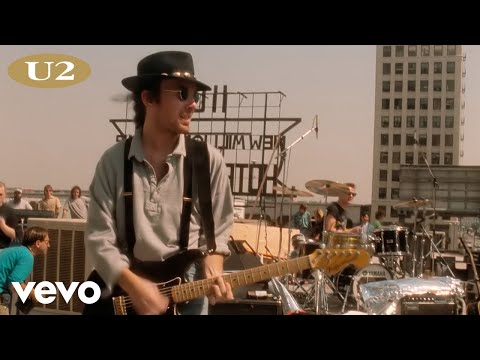
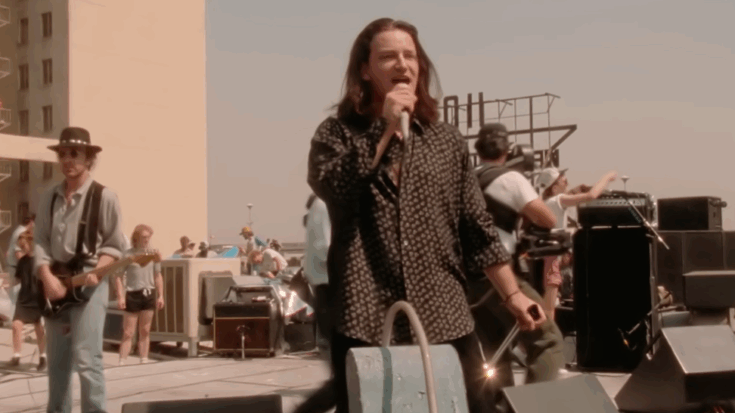
On March 27, 1987, Irish rock band U2 turned an ordinary downtown Los Angeles street into an unexpected live music event that quickly drew massive crowds and forced police intervention. The band climbed onto the roof of a liquor store at the corner of 7th Street and Main Street to film the music video for their single “Where the Streets Have No Name,” creating one of the most famous moments in music video history.
What began as a carefully planned shoot soon grew into a public spectacle. Radio stations had announced that U2 would be filming in the area, and hundreds of fans rushed downtown, blocking traffic and filling nearby streets as the band prepared to perform above them.
A Rooftop Inspired by Rock History
The idea for the performance was partly inspired by the Beatles’ 1969 rooftop concert in London, which had also ended with police shutting down the show. U2 wanted to recreate that sense of spontaneity while promoting The Joshua Tree, the album that helped push the band to global success in 1987.
Directed by Meiert Avis, the video opened with helicopter shots and radio broadcasts warning that large crowds were expected. Soon after, Bono, the Edge, Adam Clayton, and Larry Mullen Jr. appeared on the rooftop and launched into the song as fans gathered below. More than 1,000 people reportedly surrounded the building, cheering as traffic slowed to a standstill.
Chaos Builds in Downtown Los Angeles
As the performance continued, the growing crowd raised safety concerns for local authorities. Police officers arrived and warned the production team that the gathering was becoming difficult to control. Scenes of officers speaking with crew members were not staged; they captured the real tension unfolding during filming.
U2 performed an eight-song mini set during the shoot, repeating “Where the Streets Have No Name” four times to capture enough footage. The band also played songs including “People Get Ready,” “In God’s Country,” “Sunday Bloody Sunday,” and “Pride (In the Name of Love).” Traffic congestion worsened as more fans arrived after hearing about the free rooftop concert.

Racing Against the Shutdown
The production team anticipated possible interference and prepared for it. The roof had been reinforced for safety, and a backup generator was installed in case authorities cut power during filming. That precaution proved useful when officials attempted to halt the event.
Near the end of filming, police moved to shut the performance down due to safety risks caused by the growing crowd. Footage shows officers approaching the rooftop while fans below booed the decision. According to the director, the events shown in the video unfolded “almost in real time,” adding authenticity to the final cut.
A Music Video That Became Iconic
The finished video blended live performance footage with documentary-style scenes of the crowd and police response. Its raw energy helped define MTV’s late-1980s era and strengthened U2’s reputation as a band willing to take creative risks.
Released as a single later that year, “Where the Streets Have No Name” became a defining track from The Joshua Tree. The rooftop video later won the Grammy Award for Best Performance Music Video, cementing its place in rock history and ensuring that the chaotic afternoon in downtown Los Angeles would remain one of the band’s most remembered performances.