




KISS Drummer Eric Singer Didn’t Expect to Play Again
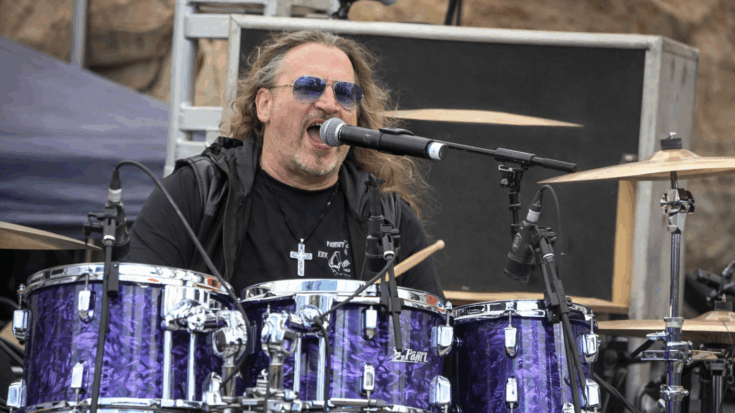
via "Dummycast" / Youtube
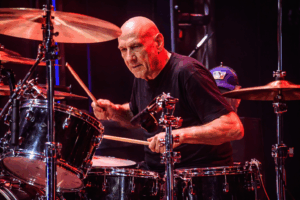
At a recent appearance captured by Podcast Rock City Live during the Indy KISS Fan Expo, longtime KISS drummer Eric Singer offered a candid, wide-ranging reflection on his career—touching on uncertainty, timing, and what it means to uphold a band’s legacy long after its original era.
Waiting in the Wings During KISS’s Reunion Era
When KISS reunited its original lineup in 1996, Singer admitted he never expected to return to the fold.
“No. Well, you don’t know what in life’s gonna happen, so I didn’t think so.”
Instead, he spent much of that year at home, unsure of what direction his career would take. In a gesture he still appreciates, Gene Simmons and Paul Stanley kept Singer and guitarist Bruce Kulick on retainer as a contingency plan in case the reunion faltered.
“They kept Bruce and I on a retainer for that whole year… If it doesn’t work out with the reunion, we still have a band.”
Singer even passed on a touring opportunity with Vince Neil, choosing instead to remain available should KISS need him again—a decision that would ultimately prove pivotal.
A Changing Industry—and an Unexpected Return
Singer also reflected on the broader musical landscape of the early ’90s, when grunge reshaped mainstream tastes and sidelined many established rock acts. Even Alice Cooper paused touring for several years amid declining demand.
By the late ’90s, however, the tide began to turn. Singer rejoined Cooper in 1998, toured with Brian May, and soon found himself back in the orbit of KISS. From 1998 through 2008, he balanced commitments between Cooper and KISS before the latter’s schedule intensified. What followed was a sustained run that lasted until the band’s farewell touring cycle concluded in 2023.
Singer’s return came after the revolving-door period involving original members Peter Criss and Ace Frehley. By 2004, the lineup solidified with Stanley, Simmons, Singer, and guitarist Tommy Thayer—a formation that would define the band’s modern era.
Legacy, Lineups, and the Weight of Expectation
Singer did not shy away from addressing one of the most persistent debates among fans: the legitimacy of newer members performing in the band’s classic makeup.
“If a band can’t continue on because somebody quits… that shouldn’t prevent the remaining members from continuing on.”
He pointed to bands like Styx and Foreigner as proof that evolution doesn’t necessarily diminish authenticity—if anything, it can reinforce it when handled with care.
On the subject of perception, Singer dismissed the idea that wearing the Catman persona changes his musicianship.
“I don’t play any different in makeup than I do out of makeup.”
He was equally direct in rejecting claims that he had ever been instructed to imitate Criss.
“That’s completely ridiculous… I don’t play anything like Peter Criss.”
Yet beyond the rebuttals, Singer’s perspective ultimately points to something deeper than technique or image. His role in KISS has never been about replication—it has been about continuity. In a band built as much on mythology as music, stepping into an established character inevitably invites scrutiny. But for Singer, the responsibility lies not in recreating the past, but in sustaining its spirit with integrity.
In that sense, his tenure represents a bridge between eras—honoring what came before while ensuring the music remains alive, relevant, and powerful onstage.