




John Lennon’s Emotional Message Hidden in a Song
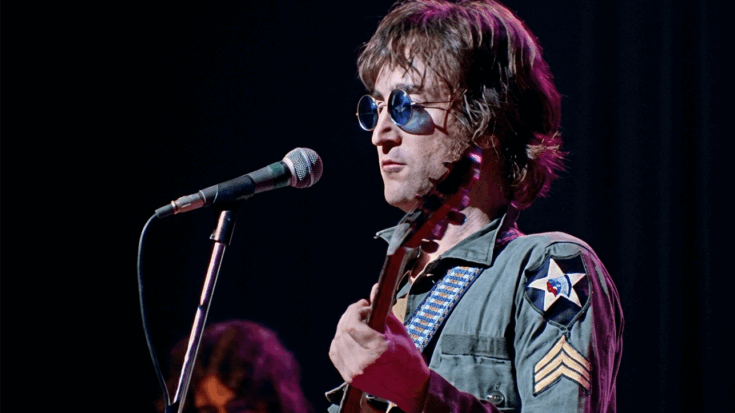
via "TheBeatlesPerformances" / Youtube
Looking back across the expansive catalogue of The Beatles, it becomes clear why narrowing their work down to a single “best” song is such a daunting task. Throughout the 1960s, the group released an astonishing number of tracks, moving seamlessly between bright, radio-ready pop and more daring, introspective compositions.
That sheer diversity has helped cement their enduring reputation. For every fan, there is a different favourite—whether it’s a nostalgic hit tied to a memory or a deeper cut that resonates on a personal level. But favourites are subjective by nature. Identifying the best song demands something more considered, a deeper engagement with craft, context, and intent. One useful lens, perhaps, is the perspective of the band members themselves.
Lennon’s Turning Point
Among those reflections, John Lennon was often candid about his relationship with the band’s music. Alongside Paul McCartney, George Harrison, and Ringo Starr, he occasionally shared favourites—but rarely spoke in definitive terms about what he considered their best. One exception came in 1965, when discussing the single ‘Help!’. “We think it’s one of the best we’ve written,” Lennon said at the time, referring to the title track for the band’s film of the same name.
On the surface, ‘Help!’ appeared to follow the familiar Beatles formula: an upbeat tempo, catchy melody, and mass appeal. Yet beneath that exterior, something had shifted. Earlier hits had thrived on youthful exuberance and romantic optimism; here, Lennon introduced a more vulnerable voice. The lyrics hinted at anxiety and self-doubt, marking a subtle but significant evolution in the band’s songwriting.
“I Meant It, It’s Real”
Behind the success, Lennon was already grappling with the pressures of global fame. The relentless pace of recording, touring, and public attention left him yearning for the relative anonymity of his earlier life. In that context, ‘Help!’ takes on a different meaning—not simply a commissioned film track, but a genuine emotional release.
In later years, Lennon repeatedly cited the song as one of his personal favourites. During a 1970 interview, he listed it alongside ‘I Am the Walrus,’ ‘Strawberry Fields Forever,’ and ‘In My Life.’ When asked to explain its significance, his answer was direct:
“Because I meant it, it’s real. The lyric is as good now as it was then, it’s no different, you know.”
He was equally frank about the recording itself:
“It was just me singing ‘help’ and I meant it, you know. I don’t like the recording that much, the song I like. We did it too fast to try and be commercial.”
By 1980, reflecting further, Lennon acknowledged that he hadn’t fully understood the song at the time of writing. “When ‘Help’ came out, I was actually crying out for help. Most people think it’s just a fast rock ‘n’ roll song.” He added:
“I didn’t realise it at the time; I just wrote the song because I was commissioned to write it for the movie. But later, I knew I really was crying out for help.”
Summing up that turbulent period with characteristic bluntness, Lennon later admitted:
“Anyway, I was fat and depressed, and I was crying out for help.”
In hindsight, ‘Help!’ stands as a pivotal moment in The Beatles’ evolution. Often dismissed as another step in their commercial ascent, the track instead reveals the first clear crack in the band’s polished image. It captures Lennon at a crossroads—caught between the demands of superstardom and a growing need for personal honesty. Far from being just another hit, ‘Help!’ remains one of his most revealing works, and perhaps one of his greatest contributions to the band’s legacy.