Bob Dylan’s First TV Appearance Had a Strange Twist
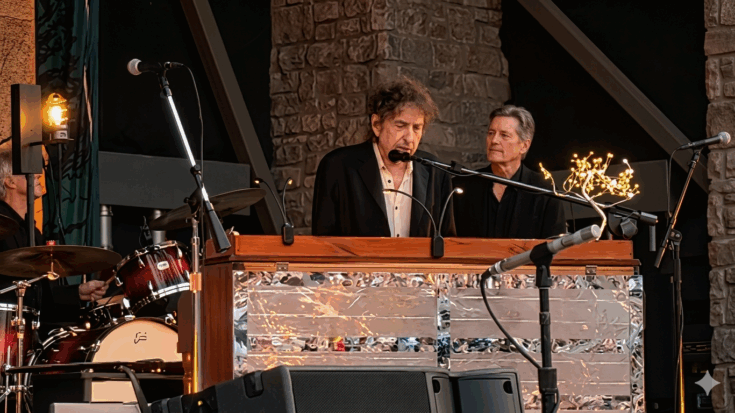
via "georgiannalee" / Youtube
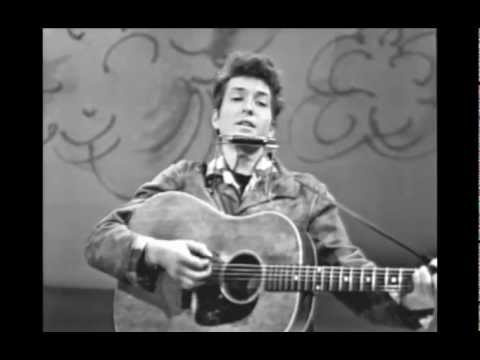
Back in the chilly winter of 1962, a young man from Minnesota stepped off a plane in London, carrying a guitar case and a head full of stories. At the time, hardly anyone in England knew who Bob Dylan was. Back home in the United States, his first album hadn’t exactly set the world on fire. In fact, critics were so unimpressed that they started calling him “Hammond’s Folly,” poking fun at John Hammond, the legendary talent scout who had dared to sign him to Columbia Records. Interestingly enough, the United Kingdom was the only place where that debut record actually made a dent in the charts, peaking at a modest number 13.
He wasn’t yet a household name, but Dylan was more than happy to accept an invitation from a British TV executive named Philip Saville to head across the Atlantic. Saville had spotted the 21-year-old folk singer performing in one of those smoky, crowded dive bars in Greenwich Village where the beatniks used to hang out. He was so captivated by the kid in the gingham shirt that he knew he had to bring that energy to the London scene. The plan was pretty straightforward: Dylan was supposed to act and sing in a brand-new TV drama called Madhouse on Castle Street. Little did anyone know that this trip would end up being a massive turning point in music history.
A Cold Winter and a New Sound
When Dylan landed in London, he walked right into one of the coldest winters the UK had ever seen. But the freezing temperatures didn’t seem to bother him much. He just turned up his collar, grabbed his guitar, and started hopping from pub to pub. He spent his nights playing for whoever would listen, soaking up the local atmosphere before his big television debut. While he was there, he realized he wasn’t alone in the frost; his manager, Albert Grossman, and the legendary folk singer Odetta were already hanging around the swanky Bond Street area. Dylan checked himself into the Mayfair Hotel and started meeting the locals.
One of the best things about this trip was the musical education Dylan received. He met some incredible English folk musicians who showed him the ropes of traditional British tunes. “I ran into some people in England who really knew those [traditional English] songs,” Dylan later said. “Martin Carthy, another guy named [Bob] Davenport. Martin Carthy’s incredible. I learned a lot of stuff from Martin.” If you listen closely to his later work, you can hear the echoes of those English melodies and storytelling styles.
He was always very open about the fact that his music didn’t just appear out of thin air. He was like a sponge, soaking up everything from old-school rock to big-band swing. As he put it himself:
“These songs didn’t come out of thin air. I didn’t just make them up out of whole cloth. Contrary to what Lou Levy said, there was a precedent. It all came out of traditional music: traditional folk music, traditional rock ‘n’ roll and traditional big-band swing orchestra music.”
During a speech at MusiCares years later, he expanded on how these early experiences shaped his songwriting.
“I learned lyrics and how to write them from listening to folk songs. And I played them, and I met other people that played them back when nobody was doing it. I sang nothing but these folk songs, and they gave me the code for everything that’s fair game, that everything belongs to everyone.”
Even though he was learning a ton and feeling inspired, the pressure of the upcoming TV show was starting to weigh on him. He was a bit nervous about the whole “acting” thing. However, he quickly realized that the London folk scene was a lot less formal than the nightclub circuit in New York. Peggy Seeger, the half-sister of Pete Seeger, remembered how low-key the environment was. She noted, “What might have puzzled Dylan was the non-nightclub atmosphere the folk clubs had.” She further explained, “There were no lights, there were no microphones… there was no ritualised nightlife to it. It was a bunch of ordinary people coming to their pub.” This grounded, “no-frills” vibe probably helped Dylan feel a bit more at home, even if the TV studio was a different beast altogether.
The Mystery of the Lost Performance
By the time January rolled around, it was time for Dylan to earn his 500 guineas—a pretty decent paycheck back then, playing a character named Lennie. Philip Saville had high hopes for him. Saville later explained his reasoning for hiring the young singer:
“He just struck me as someone who had a few things to say about the world and I loved the way he put over his songs. I thought, wouldn’t it be wonderful to match this wonderful play with someone with equally extraordinary potential? I managed to convince the BBC to bring him over.”
There was just one tiny problem: Dylan wasn’t actually an actor. He had neglected to mention that part during the hiring process. Maybe he just wanted a free trip to London, or maybe he thought he could just wing it. When it came time to actually rehearse the lines, the truth came out. Saville told The Independent about the awkward moment:
“When it came to reading through the play, and this character had a lot of lines, he was very anarchic, he said, ‘I can’t say this, I’m not an actor. All I can do is sing songs.’ I thought, ‘oh great, now is the time to tell me’.”
Because Dylan couldn’t or wouldn’t act out the script as written, the production had to be tweaked. Instead of a traditional performance, his haunting music became the heartbeat of the show. The play itself was a bit of a mystery. Written by Evan Jones, it told the story of a man who locks himself in a room at a boarding house and decides to “retire from the world.” His sister and the other guests spend the play trying to figure out why. A trailer for the show hyped up Dylan’s involvement, saying:
“21-year-old folk singer, Bob Dylan, has been brought over specially from America to take part. Bob Dylan’s special kind of haunting music forms an integral part of tonight’s strange play.”
Even though he didn’t have many lines, his presence was powerful. Saville described Dylan’s character as a young man who “rumbled everybody.” He told the BBC, “He was the person who made them aware of what it was to have blood in your veins. He was the person who created trouble, if you like.” It’s almost poetic that Dylan played a character who woke people up and caused a little bit of “good” trouble, because that’s exactly what he would go on to do for the rest of his career. Unfortunately, we can’t actually watch this historic performance today. In a move that still breaks the hearts of music historians, the BBC eventually wiped the original tapes. All that survives are a few grainy audio recordings of Dylan singing “The Ballad of the Gliding Swan” and a song that would soon change everything: “Blowin’ in the Wind.” In a way, the loss of the footage only makes the story more legendary. It’s as if Dylan arrived like a ghost in the snow, sang his songs, and then vanished back into the winter wind.
The most incredible part of the story is how “Blowin’ in the Wind” ended up in the play at all. It wasn’t even in the original plan! Toward the end of his stay, Dylan moved out of the Mayfair Hotel and crashed at Philip Saville’s house. One morning, Saville woke up and heard something beautiful coming from the stairs. He recalled:
“The following morning, I got up just to pee and everything and I heard this music come up. Guitar sounds. And I wandered along the landing.”
As Saville walked toward the sound, he saw a scene straight out of a movie.
“There at the bottom of the landing – I had a little baby then – were two Spanish au pairs. Anyway, there he was, at the top of the stairs singing [what turned out to be ‘Blowin’ in the Wind’]. These two lovely little girls were like two little robins or starlings looking up at him. He didn’t know I was behind him and I just applauded. Then I said, ‘Bob, would you sing that on the opening and closing of the production?’”
And just like that, one of the most famous songs in the history of music was introduced to a mainstream audience. Saville had originally wanted Dylan for the play simply because of a chance encounter in New York. He remembered thinking:
“Well, this is too good to be true. When I heard his songs and I saw him, and he was so young and tousled-haired, I thought if I could just get this on! And I was willing to fight to get Bob Dylan to bring him to England.”
It turns out Saville’s instincts were spot on. That 500-guinea investment didn’t just get the BBC a singer for a quirky TV play; it helped launch a legend. Dylan left London shortly after, but the impact of that trip and the songs he shared stayed behind. He arrived as a kid from Minnesota and left as the man who had the answers “blowin’ in the wind.” It was a short trip, but it was the start of a journey that would eventually lead him to a Nobel Prize and a permanent spot in the hearts of millions of people around the world. Though the video of that night is gone, the echo of his voice on that cold London night still rings out today.