




Jeff Buckley’s “Lover, You Should’ve Come Over” Finds New Life on the Hot 100—Nearly 30 Years Later

Nearly three decades after his death, Jeff Buckley has quietly reached a new commercial milestone—one driven by modern listening habits and the viral mechanics of social media rather than traditional radio exposure.
A Long-Delayed Chart Moment
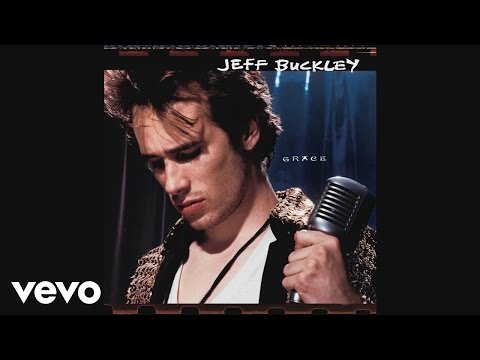
Buckley’s enduring ballad “Lover, You Should’ve Come Over” has entered the Billboard Hot 100 for the first time, debuting at No. 97 on the chart dated January 31, 2026. Originally released on his revered 1994 debut album Grace, the song’s late-breaking success reflects Billboard’s evolving methodology, which now gives significant weight to streaming activity.
According to Luminate, the track earned 3.8 million official U.S. streams between January 16 and 22, accounting for nearly all of its chart points. Though never issued as a single during Buckley’s lifetime, the song has enjoyed a gradual ascent, first appearing on the Hot Rock and Alternative Songs chart at No. 22 in April 2025.
TikTok and the Revival of a Classic
The song’s recent surge can be traced directly to its resurgence on TikTok, where short-form videos have introduced Buckley’s music to a younger audience. Users have widely adopted the song—particularly its climactic vocal passage—to soundtrack moments of reflection, heartbreak, and emotional confession, transforming a deeply personal ballad into a shared digital language.
The platform’s emphasis on repetition and emotional immediacy has proven especially suited to the song’s structure. Buckley’s soaring howl, once confined to album listeners and late-night radio, now circulates endlessly through algorithm-driven feeds, allowing the track to find renewed relevance without any formal promotional campaign. In this sense, TikTok has functioned as both curator and amplifier, reframing a 1990s album cut as a contemporary viral moment.
A Legacy Still in Motion
Buckley wrote “Lover, You Should’ve Come Over” for his girlfriend Rebecca Moore, and later described its origin during a 1995 concert in Italy: “I wrote this song while lying listening to the telephone in my apartment. But she never called.” Built on a sparse guitar arrangement and vivid opening imagery—“Looking out the door I see the rain / Fall upon the funeral mourners”—the song’s emotional clarity has also made it a frequent choice for film, including its use in the 2024 drama Miller’s Girl, starring Jenna Ortega.
Buckley died in 1997 after accidentally drowning in a Tennessee river while working on his second studio album. He left behind a single completed LP and a reputation that has only expanded with time. That continued reassessment was highlighted by the recent documentary It’s Never Over, Jeff Buckley, directed by Oscar-nominated filmmaker Amy Berg.
The song’s arrival on the Hot 100 underscores how legacy music now moves through culture. Long after traditional promotional windows have closed, platforms like TikTok allow emotionally resonant work to resurface organically, guided by listeners rather than labels. In Buckley’s case, the renewed attention suggests that his music has not merely survived the passage of time—it has adapted to it, finding new meaning in a digital era that continues to discover him anew.