




How One Killer’s Story Ended Up in Classic Rock

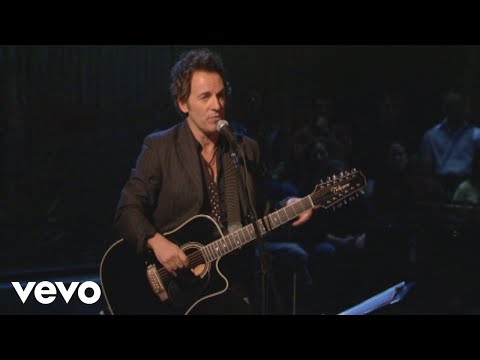
via "Bruce Springsteen" / Youtube
Western culture’s long-standing fascination with true crime stretches far beyond modern cultural landmarks like Silence of the Lambs or infamous figures such as Ted Bundy and the Zodiac Killer. Even before Jack the Ripper became a household name, society had already begun mythologizing its most violent outliers. Much like outlaw gunfighters and mafia kingpins, serial killers occupy a disturbing space in the cultural imagination—reviled, yet remembered.
Their notoriety reflects something deeper than morbid curiosity. These figures are so incomprehensible that they become unforgettable, feeding into a cultural paradox: the fear of being forgotten can feel just as powerful as the fear of death. This tension has made true crime a recurring subject not only in pulp fiction and documentaries but also in more introspective artistic spaces, including music.
From Murder Ballads to Rock’s Inner Darkness
Long before rock music embraced psychological storytelling, folk and country traditions were already steeped in murder ballads—songs that chronicled violent acts with stark, narrative clarity. As rock evolved in the late 1960s, artists began to reinterpret these themes, shifting from simple storytelling to deeper explorations of motive, identity, and consequence.
For songwriters who came of age in the 1950s, real-life crimes became formative reference points. One of the most chilling was the case of Charlie Starkweather, a 19-year-old who, alongside his 14-year-old girlfriend, carried out a killing spree across Nebraska and Wyoming between 1957 and 1958, leaving 11 victims in their wake. His eventual execution in 1959 intensified anxieties around youth violence in America and inspired a wave of sensationalist literature about drifting killers on the open road.
Artists like Jim Morrison of The Doors absorbed these stories into their creative psyche. Only a few years younger than Starkweather, Morrison also followed the case of Billy Cook, another young drifter turned murderer. These figures would later inform Morrison’s work, including his 1969 experimental film HWY: An American Pastoral. Reflecting on the project, Morrison told Village Voice in 1970:
“It started out, I had an idea for a film about a hitchhiker who becomes a mass murderer… you know, the kind of thing that happens every year or so. Kind of like this zodiac character, except, you know, Starkweather and Billy Cook… We went out in the desert to start shooting it; while we were out there, the film took over and just went in its own direction and became something a little different.”
The film’s production coincided eerily with the real-life murders committed by Charles Manson and his followers, lending an unsettling immediacy to Morrison’s subject matter. He would revisit the theme musically in ‘Riders on the Storm,’ the final song he recorded with The Doors, delivering one of rock’s most haunting warnings:
“There’s a killer on the road / His brain is squirmin’ like a toad… If you give this man a ride / Sweet family will die / Killer on the road.”
Nebraska, Isolation, and the American Void
The Starkweather case continued to ripple through popular culture well into the following decade. In 1973, Terrence Malick’s Badlands reimagined the events through a stark, poetic lens, starring Martin Sheen and Sissy Spacek. The film would go on to influence Bruce Springsteen, who drew directly from Starkweather’s perspective for the title track of his 1982 album Nebraska:
“I can’t say that I’m sorry / For the things that we done / At least for a little while, sir / Me and her, we had us some fun.”
For Springsteen, the story was less about sensational violence and more about the quiet unraveling of the American psyche. Speaking to Rolling Stone in 1984, he explained:
“Nebraska was about that American isolation… What happens to people when they’re alienated from their friends and their community and their government and their job. Because those are the things that keep you sane, that give meaning to life in some fashion.”
He concluded:
“And if they slip away, and you start to exist in some void where the basic constraints of society are a joke, then life becomes kind of a joke. And anything can happen.”
In hindsight, Springsteen’s reflections feel less like commentary on a single case and more like a broader diagnosis of a recurring American condition. The enduring power of Nebraska lies in its refusal to sensationalize; instead, it frames violence as a byproduct of disconnection, where ordinary lives can drift into extraordinary darkness. By confronting that uncomfortable reality, Springsteen—and the artists before him—shift the narrative away from mythologizing killers and toward understanding the fragile social fabric that allows such stories to unfold in the first place.