





Hit Songs That Sparked Claims They Were Stolen From Other Artists
via Apo458 / YouTube
Making music is challenging. Ideas can come from anywhere, even from another popular song. When that happens, things can get messy, and lawyers, judges, and even juries may have to step in to sort them out. It’s not unusual for songs to sound similar when there are only twelve notes in Western music. Crafting a song that genuinely connects with people, however, is an art. It’s rare for something to be entirely new, and sometimes artists walk a fine line between paying tribute and imitating.
Twelve incredibly popular songs have been accused of taking ideas—or even entire sections—from other songs. These similarities have caused legal troubles and other complications.
“Creep” by Radiohead
The 1993 hit “Creep” by Radiohead became an anthem for people who feel alienated and misunderstood. Thom Yorke wrote the song about a short-lived, obsessive crush, but it soon ran into legal trouble. In 1974, the Hollies made the song “The Air That I Breathe” famous, which featured an eight-bar melodic section with a similar chord progression. Songwriters Mike Hazlewood and Albert Hammond sued Radiohead, and the band eventually settled, granting them co-writing credit.
Years later, listeners compared Lana Del Rey’s song “Get Free” to “Creep.” Del Rey offered to split the royalties, but Radiohead initially wanted full credit. The matter was resolved privately somewhere in the middle. “Creep” became a reminder that even decades-old songs can cause problems years later.

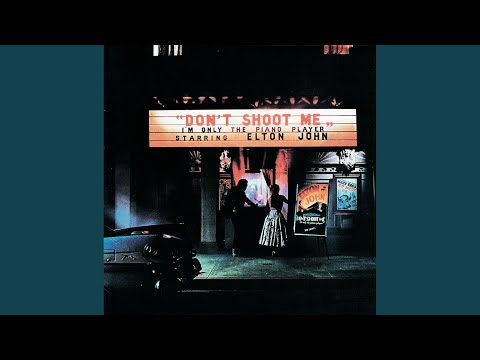
“Crocodile Rock” by Elton John
Elton John’s 1972 song “Crocodile Rock” is a playful tribute to the early days of rock and roll. Its bouncing falsetto “la-la-la” refrain closely resembles a similar phrase from Pat Boone’s 1962 song “Speedy Gonzales.” Boone noticed the similarity but was not offended, saying he felt honored by it. Although the matter never reached court, it shows how an homage can come close to crossing legal lines.
“Stay With Me” by Sam Smith
Sam Smith’s 2014 ballad “Stay With Me” topped the charts and won multiple Grammy Awards. The melody of its chorus closely resembled Tom Petty’s 1989 hit “I Won’t Back Down.” Petty’s publishers contacted Smith’s team, and Smith acknowledged the similarity, stating that it was unintentional. To resolve the issue, Petty and Jeff Lynne were added as co-writers. Sometimes, coincidence can unexpectedly link artists together.

“Rapper’s Delight” by the Sugarhill Gang
Released in 1979, “Rapper’s Delight” by the Sugarhill Gang helped introduce rap music to a wider audience. Its iconic bassline was taken from Chic’s disco hit “Good Times,” which producer Sylvia Robinson used without prior permission. Nile Rodgers of Chic threatened legal action after noticing the similarity, leading to an out-of-court settlement. Rodgers and Bernard Edwards were credited as songwriters, setting an important precedent for sampling in hip-hop.

“The Old Man Down the Road” by John Fogerty
In the 1980s, John Fogerty of Creedence Clearwater Revival was sued under unusual circumstances. After releasing “The Old Man Down the Road,” his former record label boss, Saul Zaentz, claimed it sounded too similar to CCR’s “Run Through the Jungle.” Fogerty argued that it was simply his natural writing style. He performed both songs live in court to demonstrate their differences, and the judges ruled in his favor. The case showed that artists can maintain a signature sound without copying their past work.

“Good 4 U” by Olivia Rodrigo
Olivia Rodrigo’s 2021 hit “Good 4 U” drew comparisons to the angsty rock sound of Paramore. To avoid legal issues, Rodrigo’s team credited Hayley Williams and Josh Farro as co-writers due to similarities with Paramore’s 2008 song “Misery Business.” Rodrigo explained that she was inspired by female alternative rock artists from the 1990s and 2000s. The situation highlights how difficult it can be to distinguish between admiration and borrowing, especially under industry pressure.

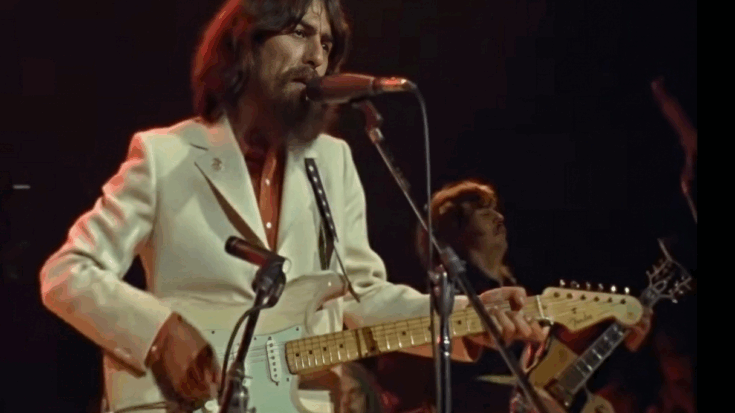
“My Sweet Lord” by George Harrison
George Harrison’s 1970 song “My Sweet Lord” became a global hit after the Beatles’ breakup. However, its melody closely resembled “He’s So Fine” by the Chiffons. Harrison claimed the similarity was unintentional, but the court ruled otherwise. He was ultimately ordered to pay around $1.6 million in damages, proving that even sincere, spiritual songs are not exempt from legal scrutiny.

“Surfin’ USA” by The Beach Boys
Brian Wilson’s 1963 surfing anthem “Surfin’ USA” borrowed heavily from Chuck Berry’s “Sweet Little Sixteen.” To avoid a lengthy legal battle, Berry was given songwriting credit and the publishing rights. The case illustrates how early rock and roll often involved shared musical ideas, sometimes requiring formal recognition.
“Blurred Lines” by Pharrell Williams and Robin Thicke
Released in 2013, “Blurred Lines” blended smooth R&B with party-ready energy. Marvin Gaye’s estate claimed the song was heavily inspired by Gaye’s 1977 hit “Got to Give It Up.” After multiple appeals, the court ruled in favor of Gaye’s family, awarding them roughly $5 million. The case sparked widespread debate about where inspiration ends and imitation begins.

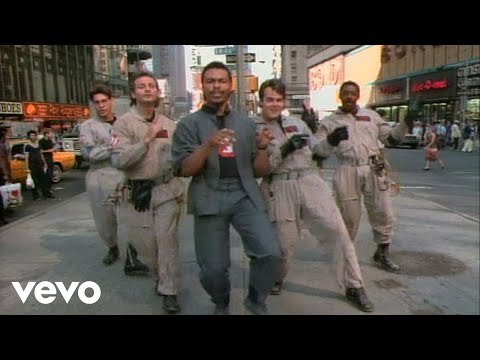
“Ghostbusters” by Ray Parker Jr.
The theme song for the 1984 film Ghostbusters faced legal challenges when Huey Lewis claimed it borrowed heavily from his song “I Want a New Drug.” The dispute was settled out of court, with confidentiality agreements keeping details secret for years. It served as a reminder that even movie theme songs are not immune to plagiarism claims.
“Ice Ice Baby” by Vanilla Ice
Vanilla Ice’s “Ice Ice Baby” topped the charts in 1990, driven by its instantly recognizable bassline. That bassline closely mirrored Queen and David Bowie’s “Under Pressure.” Vanilla Ice initially denied copying the song, but the dispute was settled before trial. Queen and Bowie received credit, underscoring their influence on early 1990s hip-hop.

“Stairway to Heaven” by Led Zeppelin
For decades, listeners noted similarities between the opening of Led Zeppelin’s “Stairway to Heaven” and Spirit’s 1968 instrumental “Taurus.” Although Spirit guitarist Randy Wolfe died in 1997, his estate filed a lawsuit years later. After prolonged legal battles, Led Zeppelin was cleared in 2020. The case demonstrated how difficult it can be to define plagiarism, especially when common chord progressions are involved.

When Inspiration Goes Too Far
These twelve examples show how difficult it can be to distinguish between influence and infringement in music. Some artists intentionally pay tribute, others settle disputes in court, and a few successfully defend their originality. With only twelve notes available, overlap is inevitable, especially when money, fame, and reputation are at stake.
Writing a song that resonates with millions while remaining innovative is no easy task. Even the most celebrated artists face lawsuits, royalty disputes, and public scrutiny. These tracks remind us that music is an evolving art form—one that thrives on inspiration, creativity, and occasionally, a bit of drama.