




New Homicide Theory About Kurt Cobain’s Death Sparks Fresh Debate
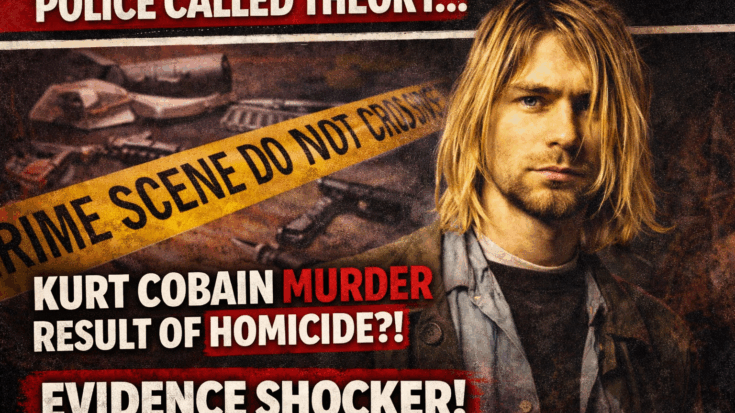
More than 30 years after his death shocked fans and reshaped rock culture, the final hours of Kurt Cobain are once again under scrutiny. Independent forensic researchers now argue that the official ruling of suicide deserves renewed examination.
Cobain, the Nirvana frontman and reluctant voice of a generation, was found dead at his Seattle home on April 5, 1994. The King County Medical Examiner determined he died by suicide from a self-inflicted gunshot wound using a Remington Model 11 20-gauge shotgun—a conclusion later supported by the Seattle Police Department.
A New Forensic Challenge to an Old Conclusion
A recently published, peer-reviewed forensic paper disputes that long-standing determination. The analysis was conducted by a private team of forensic scientists that included veteran specialist Brian Burnett, known for his work on cases involving overdoses combined with gunshot trauma.
Independent researcher Michelle Wilkins, who worked with the team, said Burnett reached a blunt assessment after reviewing the evidence. “This is a homicide. We’ve got to do something about this,” he told her.
According to Wilkins, the group identified multiple autopsy findings that they believe conflict with an immediate gunshot death. “There are things in the autopsy that go, well, wait, this person didn’t die very quickly of a gunshot blast,” she said. “The necrosis of the brain and liver happens in an overdose. It doesn’t happen in a shotgun death.”
Evidence, Anomalies, and an Unusually Clean Scene
The forensic report points to fluid in the lungs, bleeding in the eyes, and damage to the brain and liver—conditions the team says are common in heroin overdoses, which cause slow breathing and oxygen deprivation, but unusual in rapid gunshot deaths. Investigators originally stated Cobain injected himself with roughly ten times the amount of heroin typically used even by heavy users.
The condition of the crime scene also raised questions. Cobain’s sleeves were rolled up, and a heroin kit containing capped syringes and neatly arranged drug remnants was found several feet away. “We’re supposed to believe he capped the needles and put everything back in order after shooting up three times, because that’s what someone does while they’re dying,” Wilkins said. “Suicides are messy, and this was a very clean scene.”
Wilkins also questioned whether Cobain, potentially comatose, could have handled the shotgun. “If you look at the crime scene photos, you can see how big that gun is,” she said. “Imagine he’s comatose and dying… it’s six pounds.”
Further concerns centered on the placement of Cobain’s hands and the spent shell casing. His left hand was reportedly gripping the muzzle end of the barrel, yet the shell was found where it should not have landed. Replication tests suggested that if a hand were placed in that position, the weapon would not have ejected a shell at all. “So not only is there a shell where it shouldn’t be, there shouldn’t even be a shotgun shell,” Wilkins said.
She also emphasized the lack of blood on Cobain’s left hand. “If you ever look at photos of shotgun suicides, they are brutal. There is no universe where that hand is not covered in blood.”
Official Resistance and a Lingering Cultural Impact
Despite the findings, authorities remain firm. A spokesperson for the King County Medical Examiner’s Office said the office followed all procedures and sees no reason to reopen the case. The Seattle Police Department confirmed the investigation remains closed.
Wilkins stressed that the forensic team is not calling for arrests, but for transparency and a willingness to review evidence that has never been fully reexamined. “We weren’t saying, arrest people tomorrow,” she said. “We were saying, you have these… the extra evidence that we don’t have.”
She also pointed to the broader cultural consequences of Cobain’s death being framed as suicide. “In 2022, a kid took his life because he believed Cobain did,” Wilkins said. “The copycat suicides have never stopped.”
For Wilkins, the issue extends beyond forensic disagreement to how Cobain’s death has been mythologized within rock culture, shaping public memory and influencing vulnerable listeners for decades. Until authorities agree to reexamine the evidence, the questions surrounding his final moments will continue to linger—unresolved, uncomfortable, and inseparable from the legacy he left behind.