




David Bowie Turned Down These 3 Bands—More Than Once
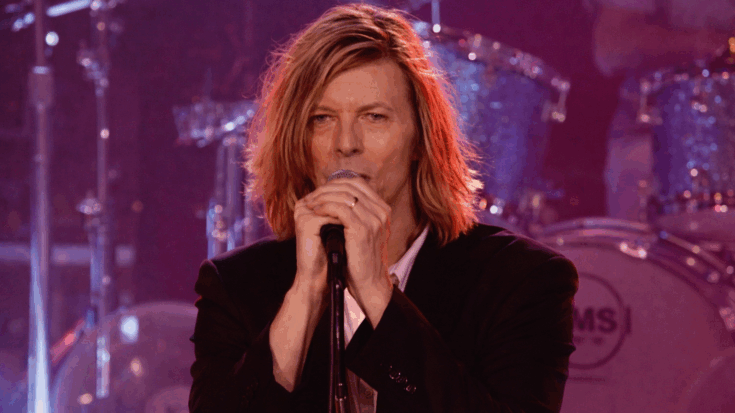
via "Scozatron" / Youtube
Few artists in modern music embodied creative openness quite like David Bowie. Despite cultivating a singular identity, Bowie consistently invited audiences into a broader artistic universe—one shaped not only by his own work, but by the musicians, writers, and cultural figures he admired.
To engage with Bowie’s catalogue was to step into a curated world of influence. Fans didn’t simply follow Bowie; they followed his references, his inspirations, and his recommendations. Whether it was introducing listeners to Brian Eno and Roxy Music, or sharing his now-famous list of essential books—featuring writers like Yukio Mishima—Bowie acted as both creator and cultural conduit.
At the core of his artistry was a desire that extended beyond self-expression. “I suppose for me as an artist, it wasn’t always just about expressing my work; I really wanted, more than anything else, to contribute in some way to the culture I was living in,” he once explained. That philosophy shaped not only his output but also the way his influence rippled across generations.
Bowie understood influence as a shared, evolving process. “I think what happens is you look at somebody and maybe something you had as a small seed in your own mind, you see that somebody has extended that or gone quite a long way with it,” he said, acknowledging the cyclical nature of artistic inspiration. Drawing from figures like William S Burroughs and Lou Reed, Bowie in turn became a source of inspiration for countless others.
“You think ‘Yeah that person is doing what I really like to do…’ so that kind of influence I’m proud, if I have been influential on people in that way,” he added. “That’s really good.”
Even after his passing, Bowie’s presence looms large. His influence has only intensified with time, reinforcing his reputation as one of Britain’s most important cultural figures—a sentiment famously echoed by Johnny Marr.
Yet for all his openness, Bowie was also discerning. His willingness to collaborate made the occasions when he declined all the more telling. In some cases, those refusals revealed as much about his artistic standards as his collaborations did.
The Artists Bowie Turned Down
Red Hot Chili Peppers: Persistence Meets Politeness
The Red Hot Chili Peppers were among the many artists eager to work with Bowie, particularly inspired by his Berlin-era output. Their pursuit was persistent, if ultimately unsuccessful.
“In the beginning, we would call him, and he would say no, respectfully,” Anthony Kiedis recalled in an interview with KLOS. “After a while, the phone line went quiet, but that didn’t stop them. Later, we would write long emails explaining everything and why it was time for us to really get our ships on, and he always respectfully declined.”
Undeterred, the band continued to ask. “We asked him to produce By the Way… and then we asked him again for our next record, which was Stadium [Arcadium],” Kiedis said. “He said no to us, like, two or three times.”
Their efforts extended to Brian Eno, who also declined multiple times. Still, Kiedis remained pragmatic:
“His mate [Brian] Eno… has said no eight times. All good. You gotta ask. And by the way, ‘no’ is a reasonable answer. It’s one of a couple of answers you could get, and it’s acceptable.”
In hindsight, Bowie’s repeated refusals suggest not indifference, but a clear sense of alignment—an understanding of when a collaboration simply didn’t fit his creative vision.
Coldplay: A Brief and Blunt Critique
At a time when Coldplay were being touted as the next Radiohead, the band approached Bowie with a demo, hoping he might contribute vocals. His response was as concise as it was decisive.
“It’s not a very good song, is it?”
The band chose not to press the issue. Drummer Will Champion later reflected on Bowie’s standards:
“He was very discerning – he wouldn’t just put his name to anything. I’ll give him credit for that.”
While the rejection may have stung, it underscored a defining trait of Bowie’s career: an unwavering commitment to artistic integrity, even when dealing with some of the biggest names in contemporary music.
Dave Grohl and Foo Fighters: A Lesson in Finality
For Dave Grohl, Bowie was more than a peer—he was a lifelong influence. That admiration culminated in a surreal moment in 1997, when Foo Fighters performed at Bowie’s 50th birthday concert at Madison Square Garden.
“So when he walked (levitated?) onstage that night, I felt as if I were being visited by another life form,” Grohl later wrote.
Years later, Grohl reached out to Bowie while working on a potential film soundtrack, convinced he would be perfect for one of the tracks. Bowie initially replied that the project was “not his thing.” Interpreting that as a possible opening, Grohl continued to follow up—until Bowie responded with unmistakable clarity:
“All right, now that’s settled, then fuck off.”
Grohl would later recount the exchange with humor and relief:
“With every muscle in my body loosening from the crippling anxiety of the past few minutes, I sunk back into my living room chair, born again. Hallelujah! I could finally breathe knowing that David Bowie did not actually wish me to ‘fuck off’ (or maybe he did, but in the nicest way possible, and even that was an honour).”
The Art of Saying No
If Bowie’s career is often defined by what he embraced, these moments highlight the importance of what he chose to decline. His refusals were not dismissive, but deliberate—guided by instinct, taste, and a deep understanding of his own artistic direction.
In an industry often driven by opportunity and visibility, Bowie’s selectivity stands out. He did not collaborate for the sake of relevance or commercial gain; he collaborated when there was genuine creative synergy.
Ultimately, these near-misses serve as a reminder that legacy is shaped as much by restraint as it is by output. Bowie’s ability to say no—firmly, thoughtfully, and sometimes bluntly—only reinforces the precision of his artistic identity.