




Decades Later, John Bonham Still Leads the Conversation on Rock’s Greatest Drummers
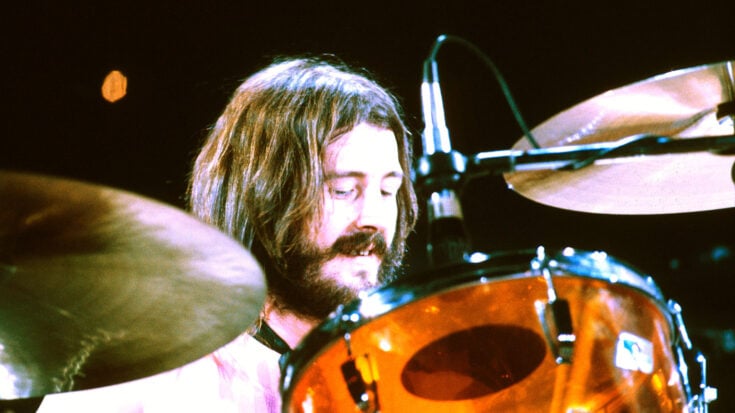
John Bonham of Led Zeppelin (Photo by Jeffrey Mayer/WireImage)
The Name That Keeps Returning
Rock music has never stopped arguing about greatness. Guitar players get debated endlessly. Singers split opinion. Drummers, though, tend to bring the conversation to one name faster than most. More than 40 years after his death, John Bonham still sits at the front of that discussion.
He was only 32 when he died in September 1980. His time with Led Zeppelin lasted from the band’s start in 1968 until that final year. Yet the length of his career has never seemed to matter much. What people remember is the impact. Bonham changed the physical feeling of rock records. He made drums sound larger, heavier, and more alive.
That reputation has held across generations. Rolling Stone ranked him the greatest rock drummer of all time. Another outlet called him “the undisputed king of rock drumming.” And a institute for drummers in London placed him at the top of the instrument’s history. Critics, musicians, and fan polls rarely agree so cleanly, but Bonham remains one of the rare exceptions.
Where the Sound Lives
Part of what made him different was not just power. Plenty of drummers could hit hard. Bonham had weight, but he also had control. Classical-music.com described his playing with three qualities: “immense power, an untouchable internal clock, and a deep, soulful groove.” That combination is why his performances still feel immediate decades later.
Listen to the first Led Zeppelin album and it becomes obvious. The opening track, “Good Times Bad Times,” introduced a bass drum sound that caught listeners off guard. His footwork was so fast and sharp that many people thought they were hearing two bass drums. He was using one.
Jimmy Page later said he found that confusion amusing. The surprise made sense. Bonham was doing something unfamiliar. He could push rhythm with force while keeping it precise. There was aggression in his playing, but never chaos.

Still the Standard
The London Drum Institute pointed to “Whole Lotta Love,” “Rock and Roll,” and “Moby Dick” as some of the clearest examples of his range. Those recordings show why his style became instantly recognizable. His bass drum triplets, the attack, the space between notes—together they formed what many drummers simply call the Bonham sound.
“John Bonham didn’t just play the drums,” Classical-music.com wrote. “He made them sound like a force of nature.”
His death on September 25, 1980 ended more than a career. Led Zeppelin broke up immediately after. The band’s position was direct: without Bonham, there was no Led Zeppelin.
That choice probably says as much about his place in rock history as any ranking ever could. The group did not look for a replacement. They stopped.
More than 44 years later, rock still produces brilliant drummers. New names keep arriving. Styles keep changing. But when the question comes up again—who was the greatest—John Bonham remains the standard against which everybody else is measured.