

A Funk Pioneer Is Gone — Parliament-Funkadelic Fans Are Mourning Billy Bass
via WBPTV / Youtube
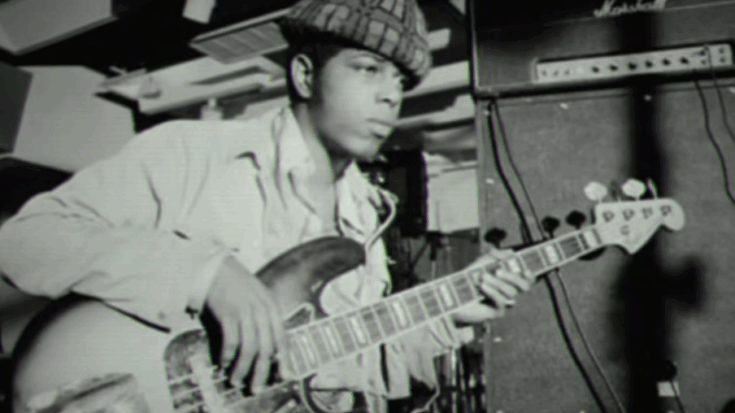
Founding Parliament-Funkadelic bassist Billy Bass Nelson has died at the age of 74, just two days before his 75th birthday. No cause of death has been made public. The loss marks the passing of one of the earliest architects of the P-Funk universe, a musician whose influence was foundational, even if his name often remained in the background.
George Clinton, the visionary bandleader behind Parliament-Funkadelic, confirmed the news Monday morning via social media. Earlier in the month, Clinton had shared that Bass was being kept “in our thoughts and in our hearts,” without offering further details.
From Barbershop Jam Sessions to a Breakthrough Hit
Born William Nelson, Billy Bass’s story with P-Funk began not on a grand stage, but in a neighborhood barbershop. As a teenager, he worked for Clinton, who at the time was leading a vocal group known as the Parliaments. Bass soon became more than an employee—he became a collaborator.
In his 2014 autobiography, Clinton recalled how Bass helped shape the group’s first major hit, 1967’s “(I Wanna) Testify.”
“It comes from an afternoon in the barbershop with the other guys, shooting the shit, and Billy Bass Nelson banging on the guitar,” Clinton wrote.
“He was just strumming simple chords, and I was singing a lyric that had been stuck in my head for a while: ‘I just want to testify what your love has done for me.’ Billy and I sang that and let the words settle around us.”
Clinton remembered immediately sensing the song’s potential.
“The more we played this new song, the more I knew it would work, not only on the radio but also live. It was so infectious… even there in the barbershop I could tell that there were so many turnarounds you could do once you got to vamping.”
The Birth of Funkadelic’s Psychedelic Edge
When legal troubles forced Clinton to abandon the Parliament’s name, the group’s direction shifted dramatically. Electric guitars took center stage, and a new band name emerged—Funkadelic, reportedly coined by Bass himself.
In the documentary One Nation Under a Groove, Bass recalled a pivotal moment when Funkadelic’s sound truly crystallized. Opening for Vanilla Fudge, the band lost its equipment en route to the show. The headliners stepped in, offering their own gear.
“These guys were like superstars, right? But they were real nice and agreed to let us use their equipment as long as we didn’t tear it up,” Bass said.
Playing through the powerful, state-of-the-art setup was a revelation.
“None of us had ever played on any equipment like that… It was so large it was ridiculous. That was the night that we found our niche.”
A Complicated Legacy Within the P-Funk Universe
Bass went on to perform on Funkadelic’s first three groundbreaking albums—Funkadelic and Free Your Mind… and Your Ass Will Follow (both 1970), and 1971’s Maggot Brain—as well as Parliament’s 1970 debut, Osmium. In addition to anchoring the basslines, he also handled lead vocals on select tracks, giving early Funkadelic some of its raw, communal edge.
According to Clinton’s official website, Bass was the first of many musicians to leave the P-Funk organization over financial disputes, a recurring theme in the collective’s turbulent history. Though he briefly returned for 1975’s Let’s Take It to the Stage, his absence during P-Funk’s commercial peak left his contributions underrecognized by the broader public.
In later years, Bass built a diverse résumé, performing alongside acts such as the Commodores, Chairmen of the Board, Fishbone, Jermaine Jackson, Parlet, Lionel Richie, Smokey Robinson, and Lenny Williams. Beginning in 1994, he rejoined Parliament-Funkadelic for various reunion tours, reconnecting with a legacy he helped create.
While Bass may never have enjoyed the same spotlight as some of his P-Funk peers, his role in shaping the sound, spirit, and very name of Funkadelic remains undeniable. His death closes a chapter on the formative years of one of funk’s most radical movements—but the grooves he helped lay down continue to ripple through generations of music that followed.