




Rock Legend Dave Mason Dies
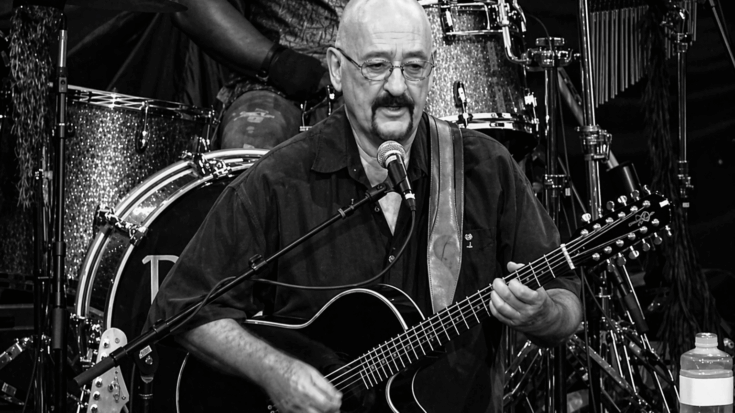
via "Dave Mason" / Youtube
The passing of Dave Mason marks the end of a quietly influential chapter in British rock history. A founding member of Traffic and later a short-lived contributor to Fleetwood Mac, Mason died on April 19 at the age of 79, leaving behind a catalog defined as much by its understated brilliance as its longevity.
According to a statement shared by his family, Mason’s final moments reflected the grounded, personal life he maintained away from the spotlight. “After cooking an amazing dinner with his beloved wife Winifred, [Dave] sat down to take a nap with sweet Star (the Maltese) at his feet,” the post read. “He passed away peacefully, in his favorite chair, surrounded by the beautiful Carson Valley that he loved so much. A storybook ending. On his own terms. Which is how he lived his life right up until the end.”
A Quiet Exit After Years of Health Struggles
Mason’s later years were marked by a series of increasingly serious health issues that gradually pulled him away from the stage. In September 2024, while preparing for dates on his Traffic Jam tour, doctors discovered what was described as a “serious heart condition” during a routine checkup, prompting the immediate cancellation of scheduled performances.
The setback came just weeks after the release of his memoir, Only You Know & I Know, adding a reflective note to an already transitional period in his life. By March 2025, his condition worsened when he was hospitalized due to a “serious infection” that “developed quickly,” forcing him to cancel another three months of concerts. By September of that year, Mason had formally retired, with his final live performance having taken place in August 2024.
Songs That Outlived Their Creator
Though Mason’s résumé includes a string of solo successes—most notably the 1977 Top 20 hit “We Just Disagree”—his legacy remains most closely tied to “Feelin’ Alright?” Originally recorded with Traffic, the song found a second life when Joe Cocker transformed it into a rock standard.
Cocker’s version notably dropped the question mark from the title, subtly reshaping its emotional tone. Mason himself later pointed out the irony behind the song’s interpretation. “The song is about not feeling too good myself! That’s what the song’s about. It’s not really about feeling alright, at all,” he said in 2014, laughing. “But that being said, without Joe’s version it would never have gotten the enormous amount of attention it got. So, you know, it’s open to interpretation.”
That openness defined much of Mason’s work—melodic, accessible, yet often tinged with introspection. It also reflected his early role within Traffic, where his songwriting instincts leaned more commercial than those of his bandmates, ultimately contributing to his exit from the group.
From Traffic to Fleetwood Mac—and Beyond
Born in Worcester, England, Mason’s upbringing was far removed from the mythology of rock stardom. The son of shopkeepers, he described his youth as a “Tom Sawyer existence,” recalling “running around fields and building rafts and treehouses,” while also noting, “I was very introverted.”
Music became his outlet, leading to early collaborations with Jim Capaldi, Chris Wood, and Steve Winwood, culminating in the formation of Traffic in 1967. Yet his time with the band was brief. “It just happened that the way I wrote was commercial,” Mason later reflected.
“In the end, it was basically a fact of Steve Winwood and Jim calling me to a meeting one day and saying: ‘We don’t want you in the band. We don’t like your music, we don’t like what you do, so we really don’t want you in the band anymore.’ And that’s why it ended, basically.”
Following his departure, Mason built a durable solo career and collaborated with a wide range of artists, including The Rolling Stones, Jimi Hendrix, and Paul McCartney. Reflecting on those moments, he remained characteristically modest:
“I don’t spend a lot of time thinking about it, to be honest — unless I’m doing an interview – but, yeah, I’ve been fortunate enough to be in some pretty interesting places at the right time, I guess.”
His 1993 stint with Fleetwood Mac, at the invitation of Mick Fleetwood, came during a turbulent period for the band. Mason appeared on 1995’s Time, though the album and tour struggled to find footing. “Things just kind of petered out,” he later admitted, noting that the absence of key members made the lineup feel incomplete.
Inducted into the Rock & Roll Hall of Fame in 2004 as part of Traffic, Mason nonetheless remained committed to the road on his own terms, performing in smaller venues long after his arena days had passed. “It’s too late to change jobs now,” he once said. “I love playing, so why not keep doing it while I can?”
That philosophy ultimately came to define Mason’s career as much as any hit song. While many of his contemporaries became legacy acts tethered to nostalgia, Mason continued to approach music as a living, evolving practice—less about spectacle and more about connection. In later years, his shows may have moved from arenas to intimate theaters, but the intent remained unchanged: to play, to communicate, and to remain present in the music itself.
In that sense, Mason’s legacy resists easy categorization. He was neither a constant chart-topper nor a reclusive cult figure, but something in between—a musician’s musician whose work quietly permeated decades of rock history. And perhaps that is the most fitting coda: a career sustained not by reinvention or reinvention narratives, but by a steady, unwavering commitment to the craft.