




Yungblud Pushes Back on the Idea That Rock Music Needs Saving
via Jérôme AGLS / Youtube
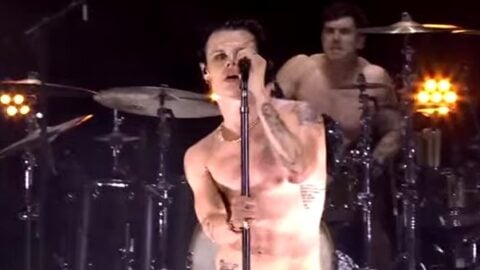
Yungblud has once again pushed back against the long-running claim that rock music is on its deathbed, calling the idea both misguided and outdated. Speaking on The Howard Stern Show, the British artist addressed the familiar question of whether rock needs to be “saved” and made it clear he rejects the premise entirely.
“Who’s Going to Save Rock?”
Asked about the recurring narrative that rock is dying, Yungblud argued that the genre has always operated in cycles—and that its value is often recognized only in retrospect. He dismissed the notion that any one artist should be responsible for reviving it, calling that kind of pressure unrealistic and unnecessary.
“Rock music is so brilliant in it gets its flowers in hindsight because it’s such a sacred genre,” he said. “Every dad says, ‘I don’t like that band. It sounds like a band that they knew as a kid.’” According to Yungblud, this constant comparison to the past is precisely why rock periodically fades from the mainstream, only to return when audiences rediscover its power. “People always put so much pressure on one person bringing it back. Who’s going to save rock and roll when that’s a load of bullsh*t.”
A Genre That’s Still Moving Forward
Rather than seeing decline, Yungblud pointed to the current energy across rock’s many subgenres as proof of its continued evolution. From hardcore to punk to indie, he highlighted a new wave of artists keeping the genre alive and pushing it in different directions.
“I think with it all, it’s spherical at the minute,” he said, citing hardcore acts like Knocked Loose and Turnstile, punk bands such as Amyl and the Sniffers and Lambrini Girls, and indie names including Fontaines D.C. and Geese. For Yungblud, this diversity reflects a genre that’s expanding rather than shrinking.
He also explained that his own creative goal has been to reintroduce a sense of scale and ambition. “What I really wanted to do on this album was to bring a sense of theater and showmanship and adventure and 9-minute songs back in a 2025 way,” he said, framing his work as part of a broader cultural moment rather than a solo mission.
Community, Collaboration, and a Big 2025
Yungblud emphasized that none of this momentum happens in isolation. He credited the strength of his fan base and creative community for supporting risk-taking and allowing him to push boundaries. “We have a community, we have a culture, we have a fan base that will go with us,” he said. “It was mad to do, but to see the amount people have got behind it and loved it has been f*cked up.”
That support has been reflected in a standout year. His fourth studio album, Idols, released in June 2025, was widely praised for its scope and ambition. Fox Reviews Rock described it as “by far the most rock like of the albums so far by Yungblud,” highlighting its depth, maturity, and boundary-free production. Singles such as “Hello Heaven, Hello,” “Lovesick Lullaby,” and “Zombie”—the latter featuring Florence Pugh in its cinematic video—lean heavily into the theatricality Yungblud champions.
Beyond his solo work, Yungblud also bridged generations by collaborating with Aerosmith on the EP One More Time, the band’s first new release in more than 12 years. Featuring duets with Steven Tyler across all five tracks and driven by Joe Perry’s guitar work, the EP debuted at No. 1 on the UK Albums Chart, becoming Yungblud’s second chart-topper of 2025.
Although health issues forced him to cancel the remainder of his 2025 tour in November, Yungblud’s output this year underscores his broader point. Rather than waiting for someone else to rescue rock music, he’s treating it as a living, adaptable form—one that thrives through community, collaboration, and a willingness to take creative risks. In that sense, rock doesn’t need saving at all.