




Why Black Sabbath’s “Iron Man” Still Hits Harder Than Anything Made Today
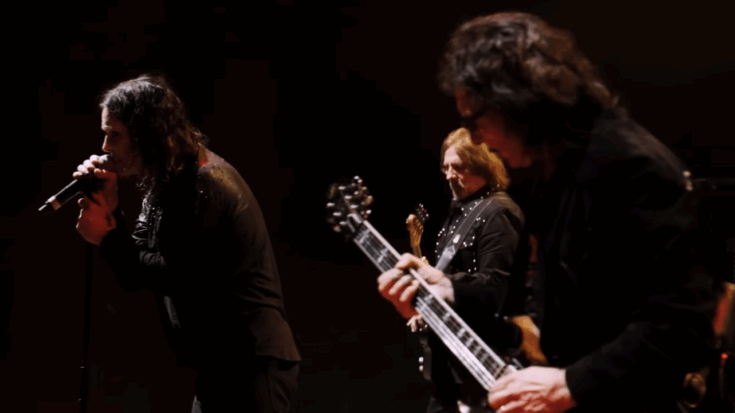
Via Black Sabbath /Youtube
“Iron Man” Still Hits
Five decades after Tony Iommi’s opening riff shook the world, the song hasn’t aged — it has only deepened. Here’s why no modern track comes close.
There are riffs, and then there is that riff. The moment the needle drops — or the stream begins — on Black Sabbath’s “Iron Man,” something primal happens in the chest. It is not nostalgia. Nostalgia is warm and hazy. This is cold iron and low thunder, and it lands as hard in 2026 as it did in 1970. Ask yourself honestly: when was the last time a new song stopped you dead in your tracks the way those first four notes do? The answer, for most of us, is telling.
1. The Riff Is an Elemental Force, Not a Product
Tony Iommi lost the tips of two fingers on his right hand in a factory accident before he ever recorded a note. To compensate, he detuned his guitar and fashioned prosthetic fingertips from melted plastic. The result was a tone no studio engineer had ever heard — lower, heavier, more physical than anything rock had produced. “Iron Man” is the purest expression of that accident-born sound. The main riff doesn’t feel composed; it feels discovered, the way geologists discover a vein of ore. Modern rock production, obsessed with clarity, compression, and algorithmic approval, irons out exactly the kind of rough imperfection that made Iommi’s guitar sound like a machine grinding to a halt. You cannot A/B test your way to that riff. You cannot optimize for it. It exists because a man in pain found a new way to play.

2. Ozzy’s Vocal Performance Is Human in a Way Auto-Tune Has Made Extinct
Ozzy Osbourne was not a technically pristine singer. His voice wavers, cracks slightly at the edges, and carries a quality that is less “trained performer” and more “man genuinely unsettled by what he is singing.” That is precisely the point. “Iron Man” tells the story of a time traveler who witnesses the apocalypse, returns to prevent it, and becomes the very instrument of the destruction he tried to stop — a tragedy of isolation and irony. When Ozzy sings it, you believe him. There is no ironic distance, no winking at the camera. The vocal commitment is total. Compare that to the processed, pitch-corrected, emotionally managed vocals that dominate rock and metal today. Perfection in a voice communicates control. Ozzy’s voice communicates danger. The difference is everything.
“Perfection in a voice communicates control. Ozzy’s voice communicates danger. The difference is everything.”
3. The Song’s Structure Refuses to Flatter the Listener
Pop songwriting in the modern era is engineered for retention. The hook arrives within thirty seconds or the algorithm buries the track. Verses are short. Choruses are enormous. There is no room for discomfort, for a passage that doesn’t immediately reward. “Iron Man” opens with a full minute of instrumental escalation before Ozzy sings a word. It dares to be slow. It dares to be unglamorous in its mid-section. The drum breakdown by Bill Ward is not flashy; it is relentless, like machinery that won’t stop. That structure respects the listener enough to make them wait. It treats the song as an experience to be endured and survived, not a product to be consumed. No streaming-optimized release in 2026 would survive that editorial decision — and that is precisely the loss we have accepted without noticing.

4. It Invented a Mood That Has Never Been Equaled, Only Imitated
Heavy metal as a genre is largely an extended footnote to what Black Sabbath created in Birmingham between 1968 and 1975. But “Iron Man” did something even more specific: it created the aesthetic of the doomed protagonist, the lumbering anti-hero, the tragedy wrapped in noise. Every “heavy” song released in the decades since owes something to the emotional grammar of this track — the sense that weight itself is a form of meaning, that slowness is not laziness but dread. The imitators are not frauds. Some of them are genuinely brilliant. But there is a difference between speaking a language and being the one who invented it. Sabbath invented it. Every band since has been translating.
5. It Was Made Without a Safety Net, and the Listener Can Feel It
Black Sabbath recorded their first album in a single twelve-hour session. They had no producer guiding them toward commercial viability, no A&R notes steering them away from the weird and the frightening, no data on what their target demographic wanted to hear. They were four working-class kids from a post-industrial English city making the music that felt true to where they came from: dark, heavy, a little frightening, and shot through with a kind of beauty that only emerges in ugly places. Music recorded with that kind of freedom has a specific quality — a rawness that no amount of post-production warmth can fake. The listener’s nervous system knows the difference between a risk taken and a risk simulated. “Iron Man” is a real risk. Most of what fills the charts today is a simulation of one. That gap is not bridgeable with better gear or better marketing. It is only bridgeable by actually having something to lose.

The Tragedy
The tragedy isn’t that no one makes music like “Iron Man” anymore. The tragedy is that the conditions that produced it — the desperation, the rawness, the indifference to approval — have been systematically eliminated from the music industry. Until those conditions return, in some form, the old iron will keep outweighing the new gold.