




What Gene Simmons Said About His Former Bandmate
via "vriesdich" / Youtube
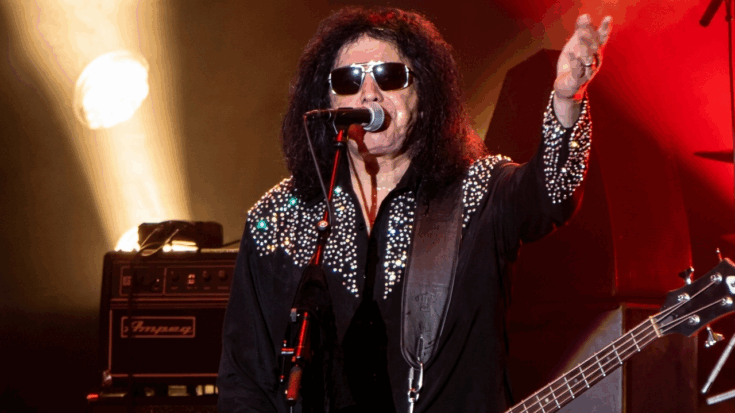
Gene Simmons has once again pulled back the curtain on the volatile history of KISS, offering a candid perspective on his decades-long relationship with former guitarist Ace Frehley. Speaking on the Inside of You with Michael Rosenbaum podcast, Simmons acknowledged the backlash he often receives when addressing Frehley’s struggles with substance abuse.
“It’s been up and down for 50 years with Ace. And the fans often would hate me for telling the truth…”
Simmons said:
“When the kids are at home and there’s mom and dad and all of a sudden dad gets thrown out of the house, the kids don’t understand — they love mom and dad — why mom kicked dad out of the house.”
He extended the analogy further, framing fans as emotionally invested observers who rarely see the full picture. Simmons explained:
“And she tries to explain to them: ‘He was a drunk, he was a loser, he was late, didn’t show up on time, didn’t do what he was supposed to do, was barely around the kids, but he’s your father.’ And the fans are like kids. They don’t know.”
Talent Undeniable, Reliability Questioned;
Despite the criticism, Simmons did not downplay Frehley’s artistic impact. He described the guitarist as a magnetic figure in the band’s early days, someone fans were naturally drawn to. He said:
“If you would’ve met Ace at the beginning [of KISS] — God bless him — you would’ve fallen in love with the idea, who he is and all that.”
However, Simmons argued that success magnified deeper issues, referencing Niccolò Machiavelli to underline how power can influence behavior.
“And then [as Niccolò] Machiavelli [said], [when you] have power, [you must sometimes] abuse it. It affects all of us in different ways. Me too. But Ace turned to beverages and chemicals. Early on, he wouldn’t show up… I mean, he wouldn’t show up to do his guitar parts on even ‘Destroyer’ early on.”
Simmons emphasized that while Frehley’s influence on generations of guitarists remains unquestioned, the realities of band life demanded consistency.
“And the fans don’t like to hear this because he’s so talented and everybody, all the new guitar players, were influenced by him and all that,” he noted.
“Yeah, but when you’re together in a band, you’re together more time than your family members or your wife or kids. So he’d be late and all this stuff.”
Cycles of Excess and Lingering Regret
The bassist also drew parallels with original drummer Peter Criss, describing how both founding members struggled once fame and money entered the picture.
“And Peter [Criss, original KISS drummer], we love him, and God bless, he’s still around, but really from the early days, as soon as the money and the fame came in, it was like the dark cloud came over…”
Simmons said:
“And they were both in and out of the band three separate times. And the fans just couldn’t understand it.”
Looking back on KISS’s 50-year run, Simmons admitted he carries some regret about how those situations were handled, suggesting he should have been more decisive in confronting substance abuse issues earlier—despite the pair’s foundational role alongside Paul Stanley.
The band’s internal conflicts ultimately shaped its evolution. Frehley was replaced permanently by Tommy Thayer in 2002, while Eric Singer became part of the lineup that carried the band through its final touring years, culminating at Madison Square Garden.
Frehley’s death on October 16, 2025, following a fall at his New Jersey home, added a tragic final chapter to an already complicated legacy. Reflecting on the circumstances, Simmons suggested that deeper lifestyle factors may have played a role, offering a sobering conclusion to one of rock’s most influential—and turbulent—stories.