




Two Legendary Bands Receive Long-Awaited Honor
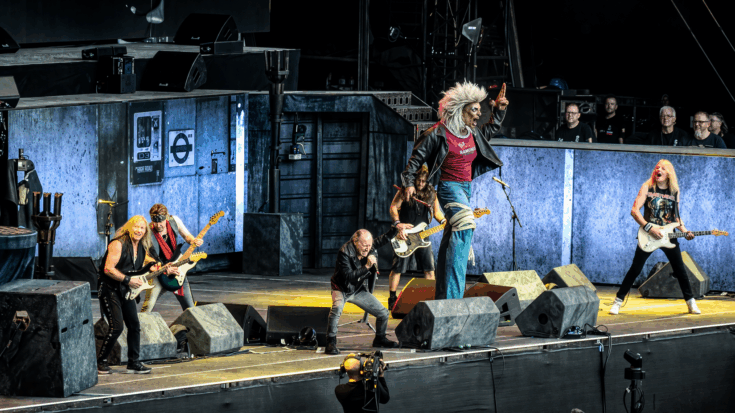
via "Adam Lord" / Youtube
The Rock & Roll Hall of Fame has announced its Class of 2026, with two of Britain’s most influential yet outspoken acts—Oasis and Iron Maiden—finally securing induction.
On paper, the pairing feels unlikely. Iron Maiden’s legacy was forged in the late ’70s and solidified in the ’80s as one of heavy metal’s most enduring forces. Oasis, meanwhile, defined a generation in the ’90s with a swaggering Britpop sound that rejected the genre’s bombast. Yet for all their musical differences, both bands share a long history of publicly criticizing the very institution now set to honor them.
That contradiction adds intrigue to this year’s ceremony—raising a simple but compelling question: will either act show up?
Oasis: From Mockery to Moment of Triumph?
Oasis’ journey to induction has been relatively swift. First eligible in 2024, the band landed nominations in both 2024 and 2025 before finally earning entry on their third attempt.
Still, the band’s relationship with the Hall has been anything but reverent. Brothers Noel Gallagher and Liam Gallagher have spent years dismissing the institution, often in characteristically blunt terms.
Recalling a 2019 conversation with a Hall representative, Noel didn’t mince words: “I said, ‘Let me f—ing stop you there. I know what it is, I know where it entails. It won’t be f—ing happening, ok?’” Even after visiting the museum and acknowledging its appeal—“it’s a great place and all that”—he remained firm: “I won’t be doing it.”
Liam, as expected, has been even more incendiary. Across interviews and social media, he has labeled the Hall “a load of bollox” and “full of wankers,” while also criticizing its broader inclusivity. “As much as I love Mariah Carey and all that, I want to say: do me a favour and f— off,” he remarked. “It’s like putting me in the rap hall of fame… I’ve done more for rock n’ roll than half of them clowns on that board.”
Yet, in typical Liam fashion, contradiction follows closely behind defiance. When asked directly by a fan, he admitted he would likely attend, joking he’d “Obv go collect it… thank all the fans… and wreck the gaff.”
For a band that built its identity on swagger and confrontation, the Hall stage could offer the ultimate platform—not for validation, but for spectacle.
Iron Maiden: Reluctance, Resistance, and Recognition
While Oasis’ wait was brief, Iron Maiden’s absence from the Hall has long been viewed as one of its most glaring omissions. Eligible since 2005, the band’s exclusion has sparked years of debate among fans and critics alike.
Frontman Bruce Dickinson has been unwavering in his disdain. In 2018, he dismissed the institution entirely: “Rock and roll music does not belong in a mausoleum in Cleveland… it’s a living, breathing thing, and if you put it in a museum, then it’s dead.” He doubled down on that stance, insisting, “If we’re ever inducted, I will refuse—they won’t bloody be having my corpse in there.”
By 2022, his tone had only sharpened. “I actually think the Rock and Roll Hall of Fame is an utter, complete load of bollocks,” he said, adding that it was “run by a bunch of sanctimonious bloody Americans who wouldn’t know rock’n’roll if it hit them in the face.”
In contrast, bassist Steve Harris has taken a more measured position. “I’ve never been worried about [induction],” he said in 2023. “I’m not one way or the other.” While not opposed, Harris questioned the process itself, noting that fan votes ultimately carry minimal influence. “It doesn’t really represent anything.”
This internal contrast—between outright rejection and quiet indifference—makes Iron Maiden’s response all the more difficult to predict.
Ceremony or Statement? What Happens Next
If history is any indication, Oasis may treat the ceremony less as a formal honor and more as an opportunity for theatrical defiance. The band’s past interactions with major awards—particularly in the U.K.—have often blended irreverence with participation. Acceptance speeches have doubled as provocations, celebrations, and, at times, outright chaos.
Should they attend, it is unlikely to be a conventional appearance. Instead, it may become a defining moment of the night—part victory lap, part critique, and entirely in keeping with the band’s legacy of contradiction.
Iron Maiden, however, presents a more complex scenario. Dickinson’s long-standing objections suggest he is unlikely to take part, raising the possibility of a partial band presence. Members such as Harris, Nicko McBrain, and Adrian Smith could still appear, representing the group while maintaining a respectful distance from the frontman’s stance.
That dynamic opens the door to an unusual outcome: an induction that feels both celebratory and incomplete. Without Dickinson, a live performance may be off the table—or reimagined through collaborators, peers, or artists influenced by Maiden’s legacy.
Ultimately, the 2026 Rock Hall ceremony may say as much about the institution as it does about its inductees. By honoring artists who have openly challenged its relevance, the Hall finds itself in a rare position—celebrating figures who have never sought its approval. Whether Oasis and Iron Maiden choose to attend, boycott, or redefine the moment entirely, their induction underscores a larger truth: rock’s most enduring voices are often the least willing to play by anyone else’s rules.